GPS Controller for delivery fleet route optimisation Dubai 2026
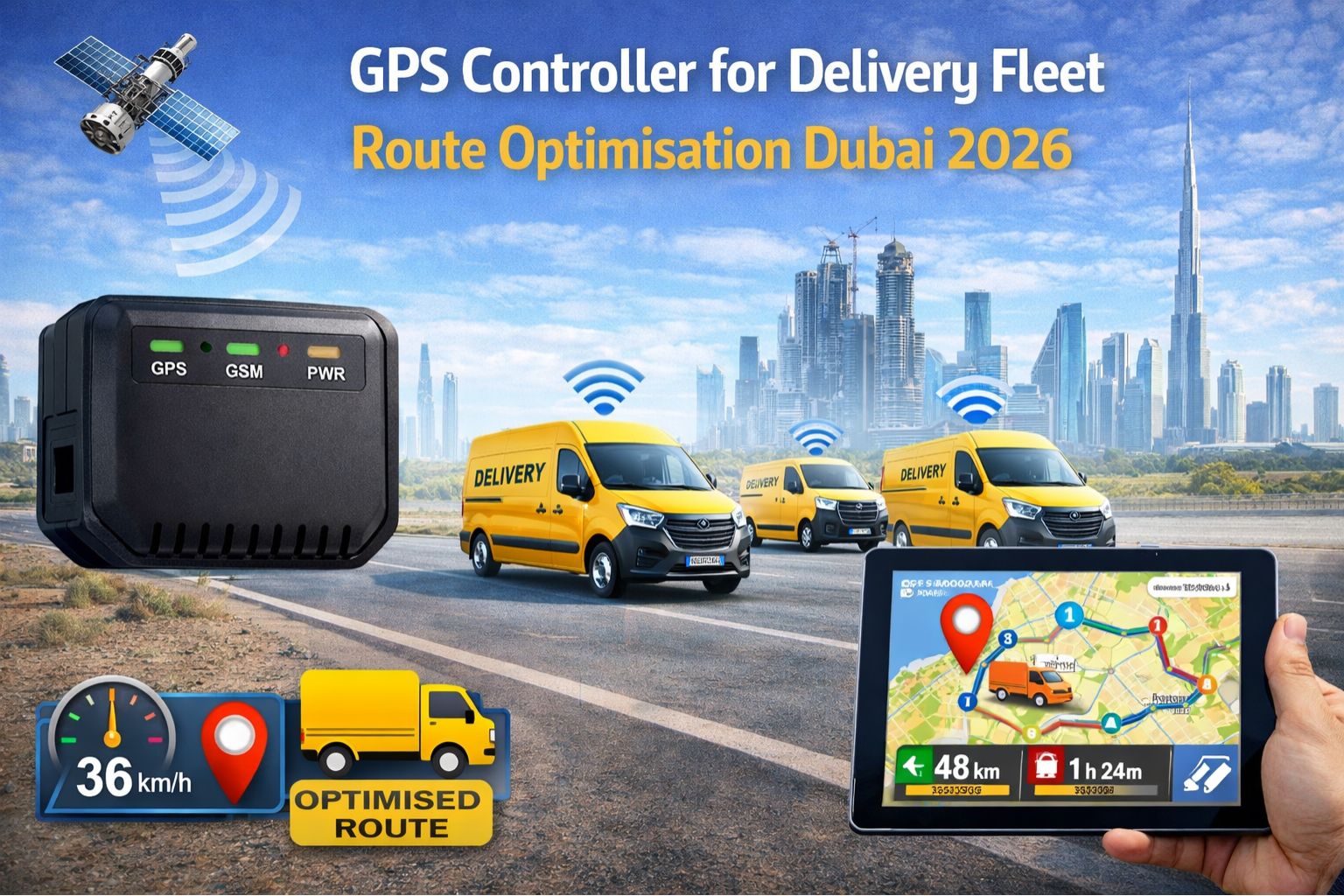
GPS Controller for delivery fleet route optimisation Dubai 2026
In Dubai's 2026 delivery landscape, a GPS controller isn't just about plotting points on a map; it's the central nervous system that has to reconcile live satellite signals with hyper-local traffic flow, geofence triggers, and real-time order updates to prevent everything from cascading. The real keyword here is real-time reconciliation—because when the controller's processing loop lags, even just a bit, drivers get outdated turns and the entire schedule can collapse.
What Route Optimisation Actually Means for a Dubai Fleet
For a dispatcher in Al Quoz or Jebel Ali, optimisation means the GPS controller is dynamically weighting a dozen live variables: not just distance, but real-time construction from RTA feeds, last-minute customer reschedules, parking availability in Downtown, and even that micro-delay of a driver confirming a pickup over a sluggish 4G connection. I've heard from one fleet manager that a 500ms delay in processing a new order could mean a van is already committed to the Sharjah bridge, which adds 40 minutes to its loop. Just like that.
The 2026 Reality: Where Optimisation Engines Break
At scale, with 100+ vehicles, the failure often isn't in the algorithm itself but in the data pipe. The controller might receive perfect traffic data, but if the GNSS module on a device is dealing with multipath signal bounce between Dubai Marina towers, the reported location becomes a 100-meter ghost. Suddenly, the planned route is irrelevant. That's exactly why many fleet management platforms now demand sub-second telemetry refresh; without it, the "optimised" route is basically a historical document, not an active guide.
The Costly Mistake: Assuming Static Maps and Stable Signals
The most common operational error is treating the GPS controller's output as a fixed itinerary. In reality, it's a live, and frankly fragile, consensus. A major risk happens when dispatchers ignore the "estimated GPS accuracy" field in the telemetry stream, just assuming a pin on Sheikh Zayed Road is exact. If the controller is fed low-accuracy positions, it will still confidently route vehicles into dead ends or non-existent service roads, burning fuel and shattering customer SLAs. This misunderstanding directly escalates into driver confusion and missed delivery windows.
Decision Help: Tune, Reconfigure, or Replace Your Controller Logic
Your decision boundary is pretty clear: if missed ETAs are isolated to specific zones (like Deira's souk area), you probably tune by adjusting the controller's acceptance threshold for low-accuracy signals. If failures are widespread and correlated with high vehicle counts, you likely need to reconfigure its integration with live traffic APIs and telematics hardware. But if the system can't incorporate real-time variables like dynamic geofencing alerts for customer sites or adhere to Dubai's evolving compliance logging mandates, then a core redesign or replacement of the controller logic is unavoidable. That's where a purpose-built gps controller framework becomes non-negotiable, just for operational survival.
FAQ
Question: How does GPS signal delay affect route optimisation in Dubai?
Answer: Signal delay, or jitter, creates a location data lag. So the controller optimises based on where the vehicle *was*, not where it *is*. That causes turns to be missed, forces unnecessary U-turns on major arteries, and creates compounding delays the algorithm often can't recover from in time.
Question: What's the biggest compliance risk with a faulty route optimiser?
Answer: Inaccurate timestamps and location logs for proof-of-delivery. If a controller's timeline doesn't match the driver's actual GPS breadcrumb trail, the audit logs fail. That creates disputes with clients and risks non-compliance with Dubai's digital freight regulations, which require a verifiable chain-of-custody.
Question: Can you optimise routes in real-time during Dubai's peak traffic?
Answer: Only if the GPS controller has a sub-second update cycle and prioritises traffic flow data over pure shortest-path logic. During peaks, the optimal route is often the *slower* roads with consistent flow—a nuance many basic systems miss, leading them to re-route vehicles right into gridlock.
Answer: The boundary comes down to data freshness and integration depth. If your current system can't consume and act on live RTA incident feeds, real-time parking availability, and instant customer rescheduling via API within a single planning cycle, it's fundamentally reactive. For 2026's demands, you need a proactive gps controller that treats the route as a fluid, constantly negotiated path, not just a static line to follow.


Comments
Post a Comment