GPS Controller for defence logistics supply chain visibility 2026
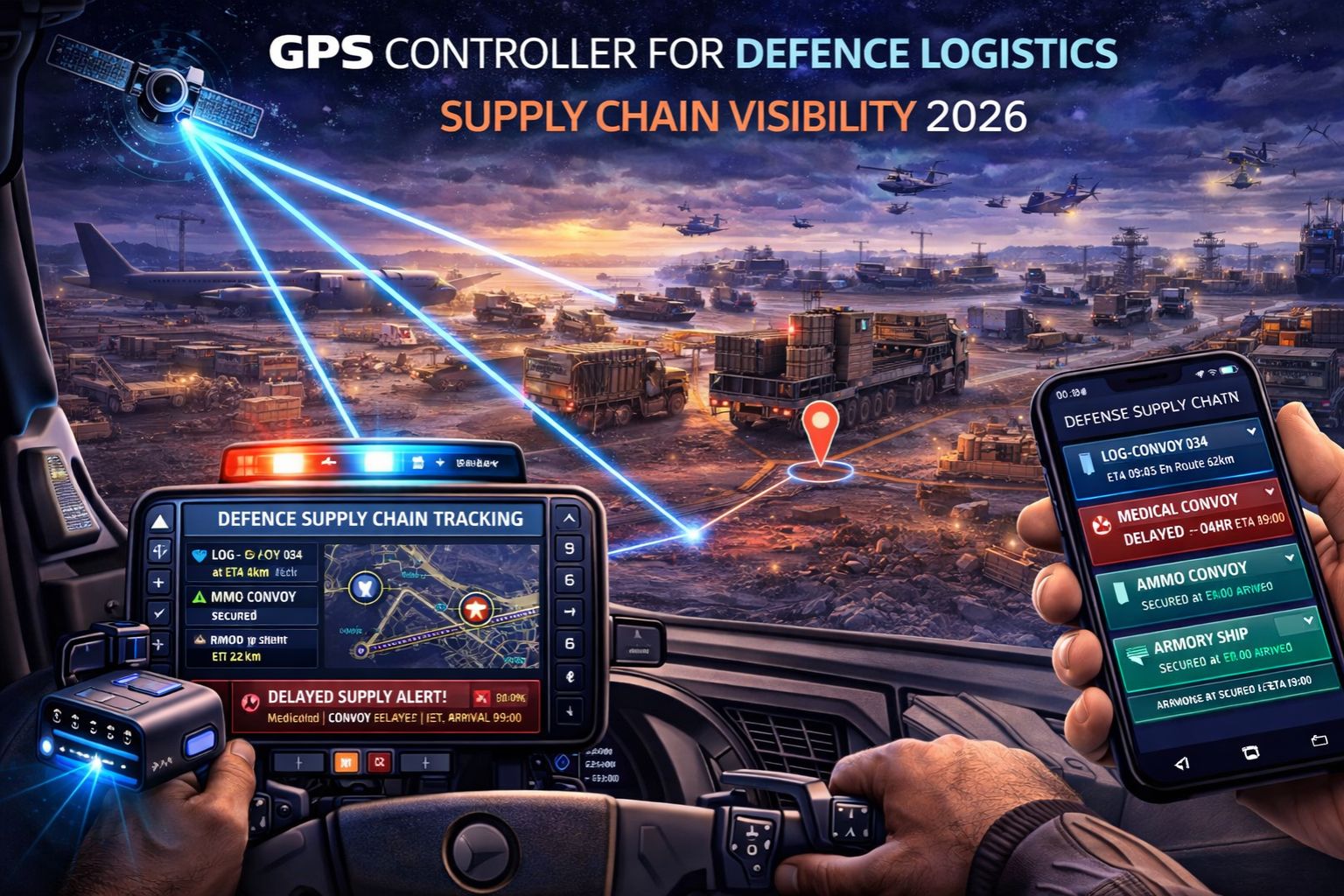
GPS Controller for defence logistics supply chain visibility 2026
When a defence logistics convoy's location data shows a 12-minute delay, it's not a tracking glitch—it's a supply chain visibility failure with immediate operational consequences. In 2026, the role of a GPS controller has to extend beyond simple vehicle tracking. It's about managing encrypted data streams, ensuring signal integrity across denied environments, and providing an audit-proof chain of custody for sensitive cargo. That's where standard commercial telematics just fail, especially under sovereign data requirements.
What Defence Supply Chain Visibility Actually Means in 2026
Visibility here means knowing not just where an asset is, but its exact status, ambient conditions, and chain of custody in real-time, with zero data compromise. That requires a GPS controller that can handle multi-constellation GNSS signals (GPS, GLONASS, Galileo) for redundancy. It has to operate in the low-bandwidth or intermittent connectivity zones common in theatre, and provide encrypted location pings that can't be spoofed or intercepted. It's non-negotiable for IoT asset monitoring in secure logistics.
The Reality of Signal Loss and Data Gaps at Scale
Under real operational scale, the failure point is rarely the GPS device itself. It's the controller's inability to maintain a trusted data pipeline. We've seen convoys entering mountainous regions where commercial trackers just default to last-known location, creating a false "stationary" signal for hours while the actual asset moves. The controller has to distinguish between a genuine stop and a signal loss, escalating alerts based on pre-set rules tied to cargo criticality—not just generic geofence breaches.
Common Missteps That Escalate Risk
The most dangerous assumption is that any real-time tracking platform can be retrofitted for defence-grade visibility. A common misunderstanding is treating encryption as a simple VPN layer, without grasping that end-to-edge encryption for location telemetry needs specific hardware-security module integration at the device level. Without this, data sovereignty is breached the moment a ping leaves the vehicle. That creates a compliance gap no software patch can fix, and it undermines the entire fleet management software stack.
When to Tune, Reconfigure, or Replace Your Tracking Foundation
The decision boundary is pretty clear: if your current system can't provide an immutable, time-stamped log of location data with cryptographic proof of origin, you're beyond tuning. Reconfiguring commercial software might address reporting delays, but it can't solve fundamental signal trust issues. You need a redesign around a controller built for assured positioning. This is where platforms like gps controller are architected from the ground up for environments where data integrity is as critical as the location itself.
FAQ
Question: What is the biggest difference between commercial and defence-grade GPS tracking?
Answer: The core difference is data assurance. Commercial tracking prioritizes cost and battery life, often tolerating data gaps or using less secure transmission. Defence-grade systems, managed by a specialized GPS controller, mandate encrypted, tamper-evident data streams with guaranteed delivery and full audit trails—even in signal-denied environments.
Question: How does GPS signal delay specifically impact defence supply chains?
Answer: A delay of even a few minutes can cause a critical failure in dynamic routing for high-value convoys. It can lead to missed aerial resupply windows, or create dangerous gaps in situational awareness for command centers. It basically turns real-time tracking into historical reporting, which is operationally useless for in-transit visibility.
Question: Can't we just use more frequent GPS pings to solve visibility issues?
Answer: More pings drain vehicle batteries, increase data costs exponentially, and can actually create more network noise without solving the core issue of data integrity. The solution isn't more data, but smarter, more trusted data controlled by a system that validates each ping's source and timing before it enters the logistics dashboard.
Question: What is the final sign we need a new system, not just an upgrade?
Answer: The final sign is when your team cannot cryptographically prove the time and location of a specific asset event for an audit, or when you have to manually reconcile tracking data with other logs. If your visibility requires human verification, the automated system has failed. At that point, a foundational replacement with a controller designed for assured data is the only path forward.


Comments
Post a Comment