GPS Controller for cold storage truck temperature monitoring 2026
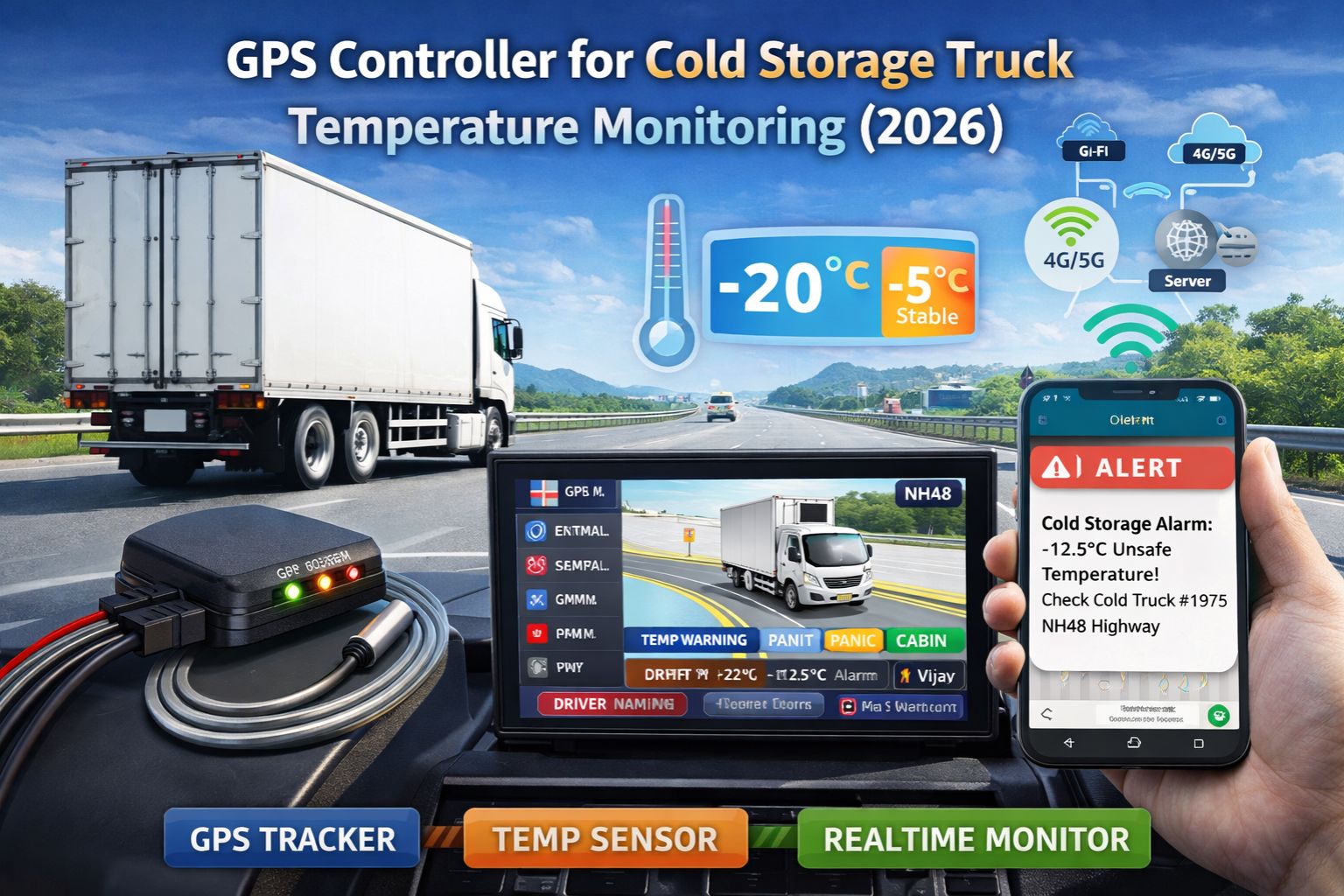
GPS Controller for cold storage truck temperature monitoring 2026
Here's the scenario that keeps logistics managers up at night: your GPS controller for a cold storage truck loses its cellular signal in 2026. On your dashboard, the temperature line just flatlines. But in the trailer, the actual readings are quietly creeping into the danger zone. That's the real problem—a silent, growing lag between a thermal event and you even knowing it happened.
What cold chain monitoring delay really means
Calling it a "data gap" softens the blow. What it really means is this: a truck is in a dead zone for three-quarters of an hour. The compressor fails ten minutes in. You get the alert thirty-five minutes later when it finds a signal, but by then the Pharma-grade cargo has been sitting at 12°C. The shipment is now worthless, and you're left scrambling to explain the gap in the compliance report.
The reality at fleet scale
Now, multiply that. With 50 reefers on the road, even a 99% uptime stat is cold comfort—it basically guarantees a couple of your units are in the dark at any given time. And in practice, we see controllers that do cache data, but they mess up the timestamps. So you hand audit inspectors a reconstructed log, and they immediately point out the "inconsistencies." It looks sloppy, even if the cargo was technically safe.
The common mistake that escalates failure
Everyone's first instinct is to blame the GPS antenna. It's rarely the main culprit. The real choke point is usually the IoT modem—it can't keep a steady data session alive when the truck hops between cell towers. So your critical temperature alerts just pile up in a local queue instead of firing off. Teams will spend a fortune and weeks swapping out antennas, when the actual fix is buried in the controller's heartbeat settings and data protocol.
When to tune, reconfigure, or replace
So, when do you patch it and when do you pitch it? The line is pretty clear. If your data is consistently late by just a few minutes, you can probably tweak the alert thresholds and transmission intervals. But if you're staring at gaps over 15 minutes, or your logs are missing those crucial compliance timestamps, then the hardware itself is the issue. The firmware or modem in that old box can't handle what 2026's networks demand. At that point, replacement isn't an upgrade; it's the only path to reliable IoT asset monitoring. It becomes a straight-up operational necessity.
FAQ
Question: How does a GPS controller monitor truck temperature?
Answer: Basically, it taps into the reefer unit's own thermostat, usually through a wired sensor or the vehicle's CAN bus system. It logs the temp at set times and tries to send that data—along with location—back to your platform via cellular.
Question: What causes the biggest temperature data delays?
Answer: The worst delays come from cellular blackouts, obviously—rural routes, downtown urban canyons. But it's made worse by the controller's own logic. A lot of them prioritize sending simple location pings over getting the critical temperature alerts out, which is backwards when you think about it.
Question: Can old GPS units handle 2026 monitoring needs?
Answer: Honestly, most units older than four or five years are a liability. They don't have the right modem bands or the processing firmware to maintain the "always-on" connection that modern cold chain compliance requires. The risk is just too high.
Question: What's the first sign my monitoring is failing?
Answer: Keep an eye on the mismatch. If the driver's paper log doesn't match your digital graph, that's a huge red flag. Or if you get a "vehicle arrived at warehouse" alert twenty minutes after the unloading started. That lag is the canary in the coal mine.


Comments
Post a Comment