GPS Controller for cold chain refrigerated truck UAE 2026
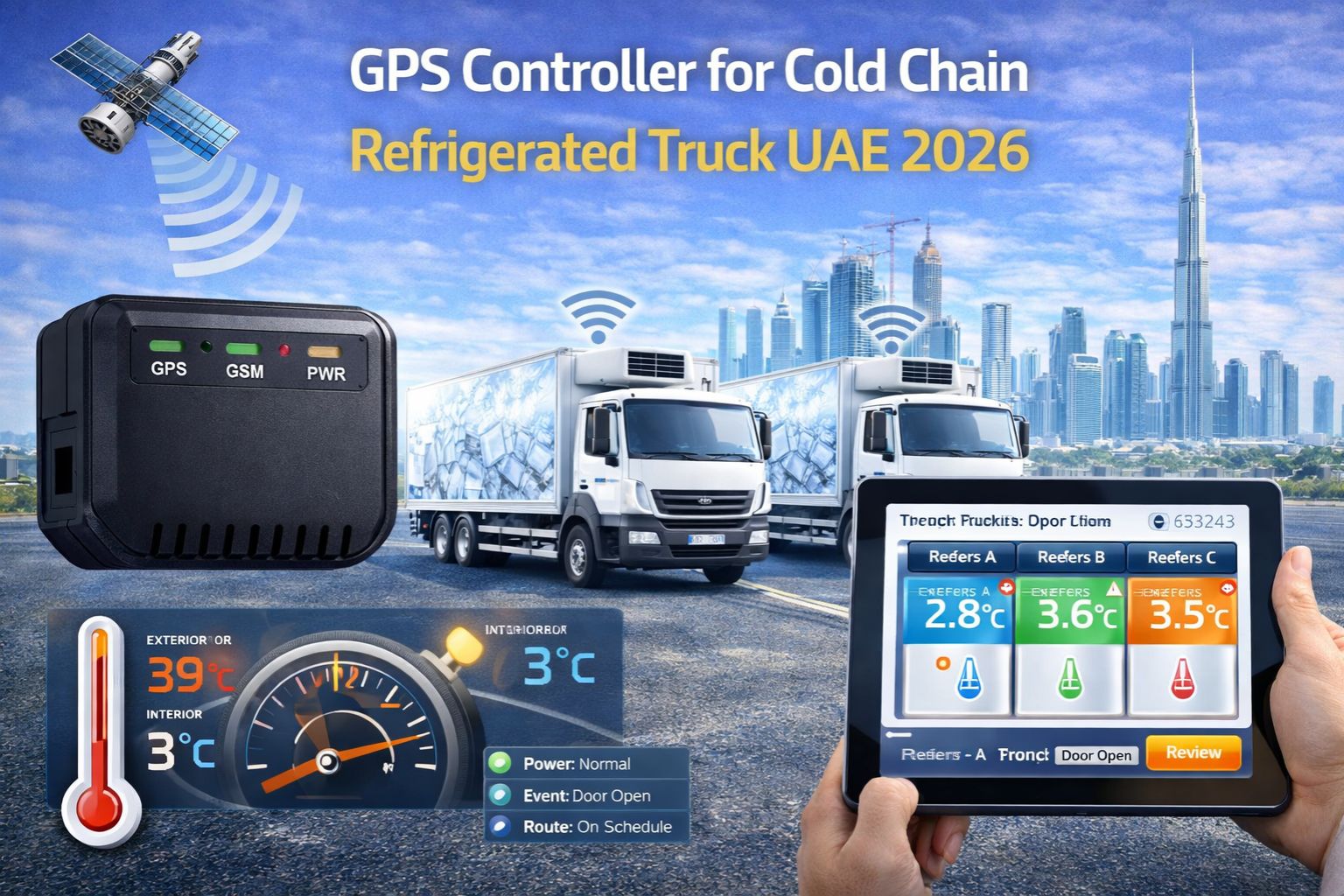
GPS Controller for cold chain refrigerated truck UAE 2026
In the UAE's 2026 logistics landscape, calling a GPS controller for a refrigerated truck just a "tracker" misses the point entirely. It's become the central nervous system for preventing temperature drift—the kind that can spoil a multi-million dirham pharmaceutical shipment before it even reaches Dubai's ports. What I see trip people up isn't the location data; it's when that data is live, but the critical temperature and humidity readings lag or get stuck in local storage. That gap creates a black hole for compliance when the auditors come knocking.
What This Means for Your Reefer Fleet
For me, clarity here boils down to integrated telemetry. It's the difference between seeing a truck parked in the midday Sharjah sun on a map, and simultaneously watching the reefer unit's compressor struggle and the internal temperature creep past, say, the 2°C–8°C vaccine threshold. I've reviewed cases where the GPS pinged every minute, but the temperature sensor only reported every fifteen. That setup completely missed a critical five-minute compressor failure that ruined the cargo. This isn't just tracking; it's synchronized condition monitoring. The location data gives you the "where" to explain the "why" behind a temperature event.
The 2026 UAE Compliance Reality Check
When you're operating at scale, especially with contracts tied to the Dubai Health Authority or major retail chains, the audit trail is everything. A common, costly misunderstanding is thinking a simple temperature log is enough. By 2026, auditors will expect a time-stamped, unbroken chain that links GPS location, external ambient temperature, reefer engine runtime, and door-open events. A gap in that data—often caused by a controller storing info locally in a cellular dead zone near the mountains—isn't just a glitch. It's treated as non-compliance, a risk on par with a failed shipment. Your compliance reports are only as strong as your weakest data link, and that link is often the one you didn't realize was broken.
The Costly Mistake: Treating It as Just a Tracker
The typical failure pattern is assuming any GPS device with a temperature probe will do. The non-obvious detail that gets overlooked is the controller's sampling rate and its logic for prioritizing data. Can it push a critical alarm for a rapid temperature rise ahead of routine location pings on a congested UAE network? A standard tracker might queue that temperature breach behind five location updates, leading to a 90-second delay alerting the dispatcher. By then, the thermal mass of the cargo has already shifted, and the damage is done. This kind of operational latency is where well-intentioned assumptions turn into direct financial loss.
Decision Help: Integrate, Reconfigure, or Replace?
Your choice really comes down to data integrity. You can *Tune* your current system if you're seeing minor telemetry lag but it generally functions; this means adjusting reporting intervals and alarm thresholds. *Reconfigure* is the move if you have capable hardware, but the software fails to properly correlate location with sensor data—this often needs a middleware or API layer to fix. The *Replace* boundary is hit when the controller simply cannot provide a unified, real-time stream of location and sensor data with guaranteed delivery. That's a fundamental requirement for 2026 UAE cold chain contracts. If internal fixes can't bridge the silos between your tracking map and your temperature logs, then a redesign with a purpose-built telematics platform becomes the only viable path. A modern gps controller architecture is built from the ground up for this specific fusion of data streams.
FAQ
Question: What is the main benefit of a GPS controller for reefer trucks vs. a standard tracker?
Answer: The core benefit is integrated data correlation. A standard tracker tells you where it is. A controller unifies real-time location with live temperature, humidity, the reefer unit's fuel usage, and door sensors. It creates one auditable event log where every temperature anomaly is directly linked to a location, time, and a possible cause—like an extended stop in a hot zone.
Question: How does GPS help with cold chain compliance in Dubai?
Answer: It provides geofenced proof of custody. The GPS data stamps the exact time a shipment entered and left a warehouse, port, or distribution center. Combined with temperature data, it proves the chain was unbroken and within spec at every geographic checkpoint. That's not just helpful; it's mandatory for audits from bodies like the Dubai Municipality.
Question: Can temperature data be faked or altered in transit?
Answer: In a poorly configured system, yes—if the data is only stored on a local logger in the cab. A robust GPS controller system sends encrypted, time-stamped telemetry packets directly to the cloud in near real-time. Frankly, any attempt to physically tamper with the sensor or its wiring is itself logged as a tamper event with a GPS timestamp, creating its own proof of malfeasance.
Question: When should a fleet manager replace their old tracking system for cold chain?
Answer: You've hit the replacement boundary when you can't automatically generate a single report that merges route history with a temperature graph and event log. If your team is manually comparing spreadsheets from the GPS provider with PDFs from the reefer unit just to explain a spoilage incident, the system is failing. That manual reconciliation is error-prone, it won't scale, and it definitely won't satisfy 2026's automated compliance demands. That's the signal you need a unified fleet management software platform.


Comments
Post a Comment