GPS Controller fleet software immune to Iran BeiDou GPS war disruption 2026
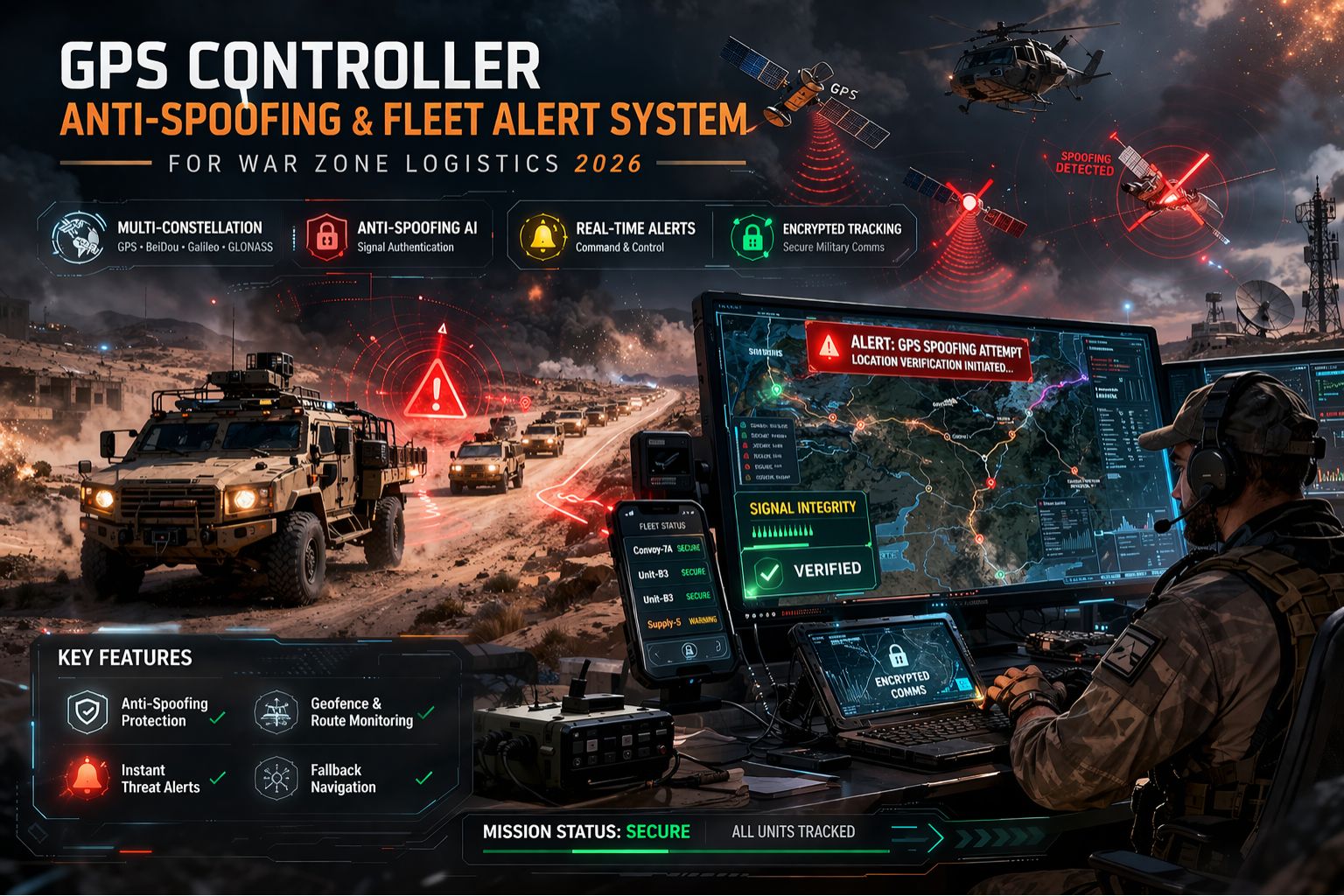
GPS Controller fleet software immune to Iran BeiDou GPS war disruption 2026
Look, when geopolitical conflict kicks off signal warfare—say a 2026 scenario where Iran disrupts or spoofs BeiDou and GPS—standard fleet tracking software just fails. Operations go blind, compliance logs are empty. The thing is, immunity doesn't come from a better antenna. It requires a software architecture that treats location as a messy, multi-source data stream, not a single, fragile satellite fix.
What GPS immunity means during a signal war
Immunity here isn't about a perfect signal. It's about keeping a verifiable location trail when the primary GNSS feeds get jammed or spoofed. In practice, imagine a truck entering a known spoofing corridor near a border. Your software shouldn't show it teleporting 200 meters off-road. Instead, it holds a last-known-valid position while cross-referencing inertial sensor data and cellular tower triangulation to stitch together a probable path—what we call continuous location inference. The non-obvious, critical detail? The timestamp. Immune software has to log the *exact moment* GNSS became untrusted. That's what you need for audit defense later.
The reality of operating during constellation disruption
At real operational scale, the failure mode isn't just a blank map. It's a cascade of bad automated decisions. Geofence alerts fire for vehicles that haven't actually moved. Route optimization engines recalculate based on false locations, sending drivers into dead ends. Fuel reports get messed up, correlating idle time to spoofed coordinates that show engines "off" while the truck is moving. And a common trap is thinking backup GLONASS or Galileo signals are a safe haven. In a targeted regional conflict, all civilian-grade satellite signals in that theater are vulnerable. The real boundary condition is data latency. If your software waits more than, say, 10 seconds to downgrade trust in a GNSS source, that corrupted data has already poisoned your entire telemetry pipeline.
The critical mistake: assuming hardware redundancy is enough
Here's the major risk: assuming that multi-constellation GNSS hardware (GPS + BeiDou + Galileo) in your devices makes your fleet software immune. That's a configuration trap. The software itself has to be designed to perform real-time signal integrity checks—analyzing signal strength, satellite geometry consistency, implausible acceleration jumps—and have the authority to just discard the satellite data entirely. Most fleet management platforms? They just accept whatever location the device hardware sends, blindly trusting the GNSS chipset. In a spoofing attack, that chipset is being fed manipulated signals and reporting them as perfectly valid. Without its own validation layer, your software faithfully records fiction as fact, creating compliance logs you can't defend.
Decision help: when to tune, reconfigure, or replace
This isn't a settings menu problem; it's a clear software architecture choice. You can *tune* alert thresholds for location accuracy. You can *reconfigure* devices to prefer one constellation over another. But if your core fleet software can't ingest, weight, and decide between multiple conflicting location sources—satellite, cellular, inertial, Wi-Fi—in real-time, you have to *replace* it to get immunity. The boundary is your compliance requirement. If you need to prove a vehicle's route and status during a known disruption event, internal fixes won't cut it. A platform like gps controller is built on this multi-source fusion engine from the ground up, treating raw GNSS as just one input in a much more resilient location stream.
FAQ
Question: What is BeiDou GPS war disruption?
Answer: It's a scenario where a nation-state, like Iran, could intentionally jam or broadcast fake signals to disrupt the BeiDou (China) and GPS (US) satellite systems in a region. Anything relying solely on those signals for positioning gets crippled.
Question: Can my current GPS trackers handle signal jamming?
Answer: Most standard ones can't. They'll either lose signal and report "no location" or, more dangerously, accept the spoofed signals and report completely wrong locations. Real immunity needs specialized firmware and software that can actually detect the jamming/spoofing and switch to other methods.
Question: How does fleet software become "immune" to this?
Answer: Through software that uses sensor fusion. It cross-references satellite data with other sources—like vehicle CAN-bus data (speed, heading), cellular network location, and inertial measurements—to spot and reject corrupted GNSS signals. That's how it maintains a reliable location estimate.
Question: Is this a 2026-specific problem or a current risk?
Answer: It's a current and growing risk. Spoofing and jamming incidents are already common near conflict zones and sensitive sites. The 2026 scenario just highlights a future where these tactics become more widespread and sophisticated. Getting resilient software is an immediate operational priority now, not some future-proofing exercise.


Comments
Post a Comment