GPS Controller fleet operations OS unified single platform 2026
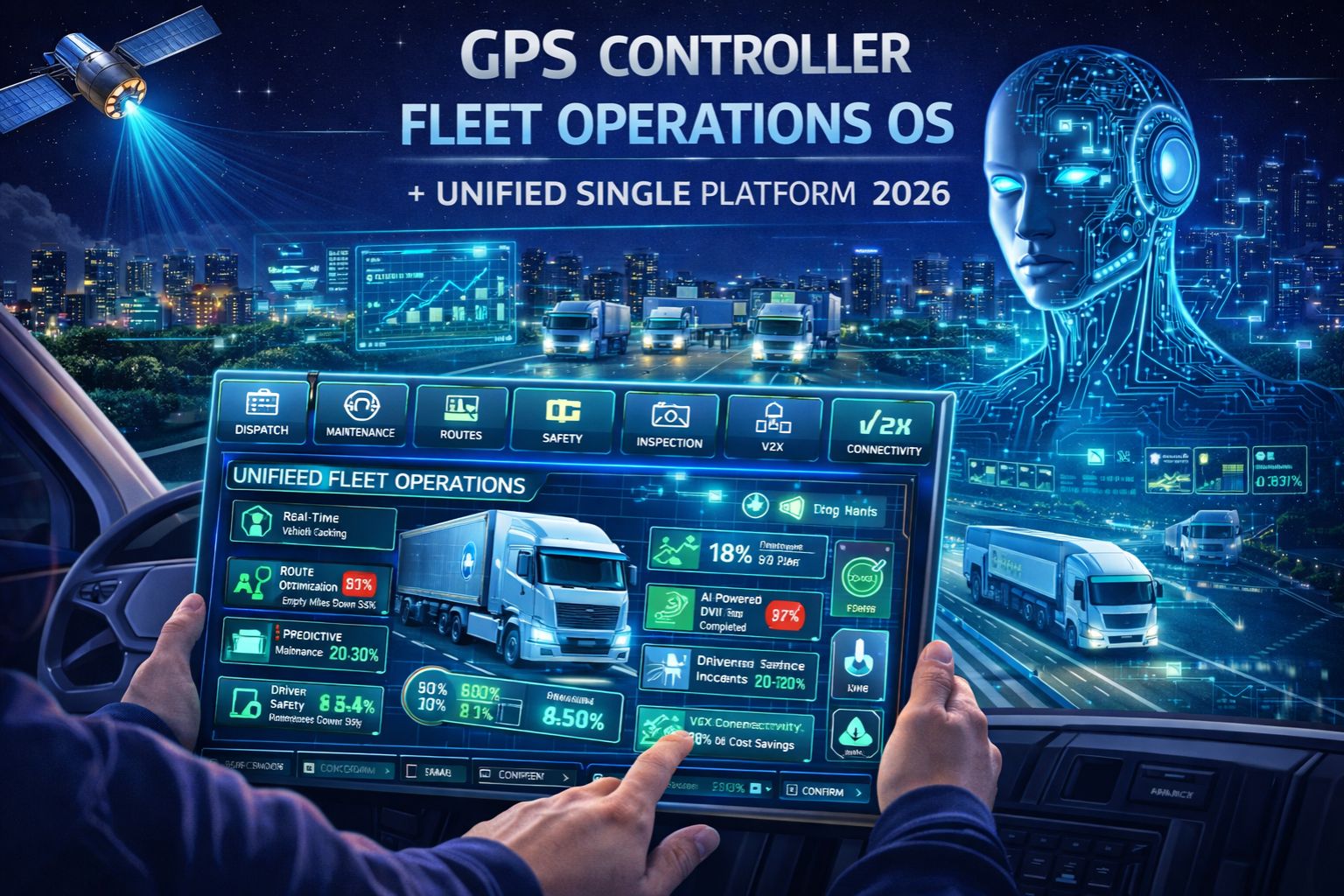
GPS Controller fleet operations OS unified single platform 2026
The promise of a unified fleet operations OS is a single pane of glass for every vehicle, driver, and shipment. But the reality in 2026? It's often a unified point of failure. Think about it: a 12-second GPS signal delay on the platform doesn't just stay a delay. It cascades. You get missed geofence alerts, incorrect idle-time reporting, compliance logs that won't match a roadside inspection. This isn't just a missing feature list. It's the operational brittleness that creeps in when every single workflow is hanging on one data pipeline.
What "Unified Platform" Really Means for Live Fleet Data
In practice, "unified" usually means all your telematics—engine diagnostics, location pings, driver app data—get forced into one vendor's processing queue. I've seen cases where a temporary cellular handoff for just one truck creates a backlog. That backlog then delays geofence exit alerts for the *entire* fleet by 20 seconds, because the platform's event engine processes alerts one after another, not in parallel. So you get this critical gap between what your real-time vehicle tracking dashboard shows and where your assets actually are. A single software promise turns into a systemic risk pretty quickly.
The Scale Problem: When Your Unified OS Hits Its Limits
The breaking point isn't just the number of vehicles. It's the concurrency of events. A platform might handle 500 vehicles reporting every 30 seconds just fine. But then it fails when 50 vehicles all decide to exit geofences, trigger harsh braking, and submit electronic DVIRs at the same moment. The OS starts prioritizing some data streams over others, and location pings often get deprioritized in favor of engine fault codes. The result? Your map shows a truck sitting at a customer site long after it's left, because that location update got queued behind a diagnostic scan. You've got unification, but you've lost the fidelity exactly where it matters most.
The Hidden Cost: Data Silos Inside a "Single" Platform
Here's the most common misunderstanding: a single vendor doesn't automatically mean integrated data. Often, the GPS location module, the compliance reporting engine, and the fuel performance monitoring system are actually separate codebases, just loosely stitched together. That stitching creates internal latency. A driver's clock-in time from the mobile app might timestamp a full 90 seconds later than the vehicle's ignition-on signal, creating wage and hour discrepancies you have to untangle. The platform is unified in branding, but fragmented in its data architecture. So managers end up reconciling conflicting reports instead of acting on clear information.
Decision Help: Reconfigure, Redesign, or Replace
Your decision really hinges on one boundary: the consistency of the delay. If the latency is predictable—say, always 8-12 seconds behind—you might be able to reconfigure workflows. Add buffer times to your geofences, for instance. If the delays are erratic and spike during high event loads, then the platform's core architecture is probably failing. At that point, a redesign using specialized, best-of-breed APIs might be necessary. However, if the platform can't isolate a failure in one module (like GPS ingestion) from crippling another (like compliance logging), then replacement is really the only path forward. This is where evaluating a platform's true decoupling, not what's on its sales brochure, becomes critical for the gps controller of your operations.
FAQ
Question: What is a fleet operations OS?
Answer: It's a software platform that aims to combine GPS tracking, dispatch, compliance, maintenance, and driver management into one integrated system. The promise is to eliminate the data silos you get between different fleet tools.
Question: Why would a unified platform cause GPS delays?
Answer: Because all the different data types end up competing for the same processing resources. A sudden burst of engine diagnostic data can clog the pipeline, causing the system to queue up simpler GPS pings. That makes the real-time location data arrive late to your dashboard.
Question: How does this delay affect driver safety and compliance?
Answer: Delayed geofence or speeding alerts don't help drivers correct their behavior in the moment. For compliance, it's a bigger issue: if ELD logs are generated from lagging location data, it can create violations for driving time versus location that just don't align with a roadside inspector's data.
Question: When should I consider moving away from a single-platform OS?
Answer: When the latency becomes unpredictable and starts impacting core decisions. Or, when the cost of your workarounds—like manual log corrections—exceeds the cost of integrating more robust, specialized systems that communicate via reliable APIs.


Comments
Post a Comment