GPS Controller dead reckoning IMU sensor fusion during GPS outage 2026
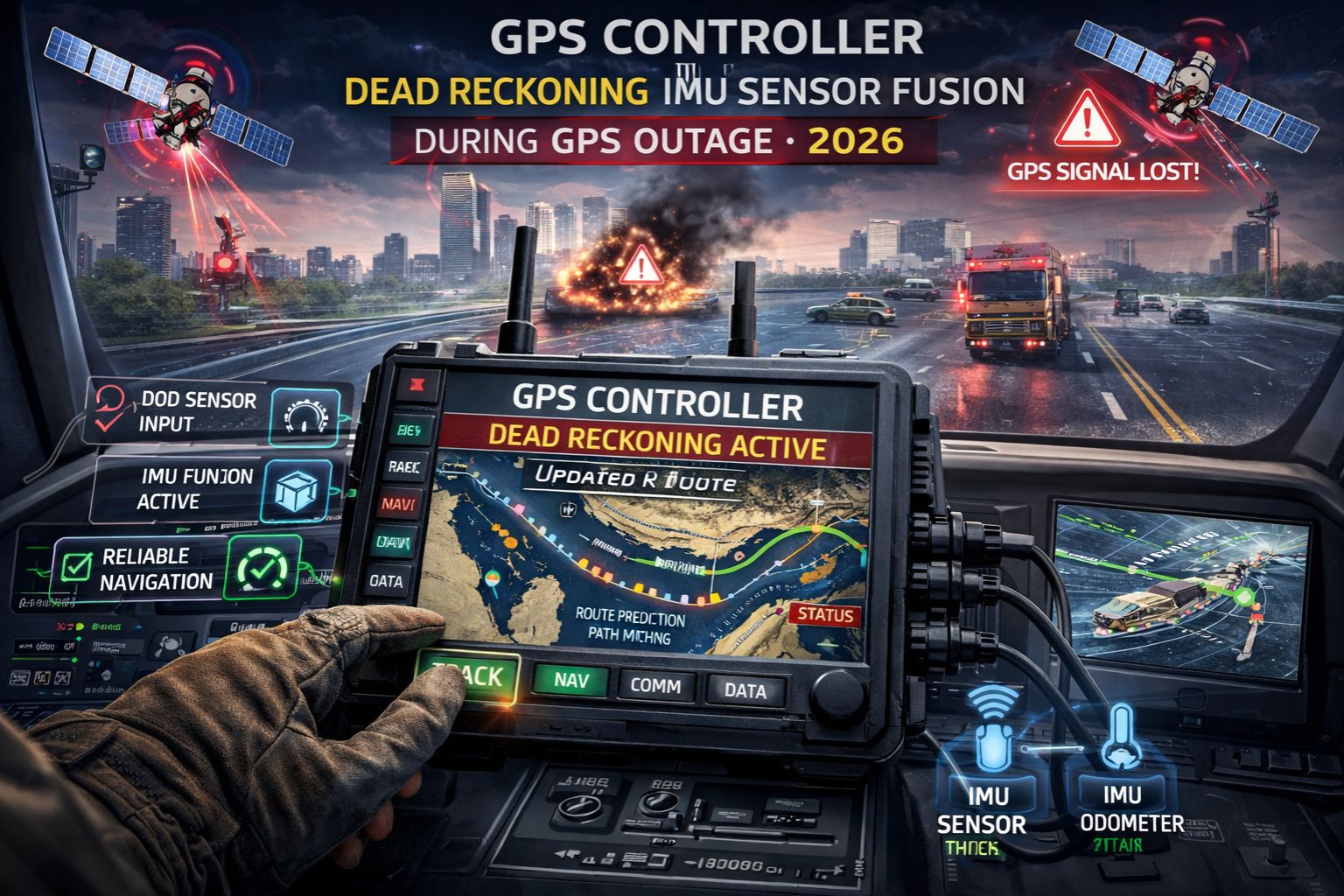
GPS Controller dead reckoning IMU sensor fusion during GPS outage 2026
When GPS drops out in urban canyons or tunnels, your fleet tracking shouldn't just freeze. It should switch to dead reckoning, using data from Inertial Measurement Unit (IMU) sensors—accelerometers, gyroscopes—to guess where the vehicle went. This sensor fusion is the bridge during an outage, sure. But its real accuracy in 2026 comes down to calibration quality and the unavoidable problem of cumulative drift. A tiny error entering a tunnel can mean you're guessing location by a hundred meters at the other end. The real challenge is keeping real-time vehicle tracking believable when the satellites disappear.
What Sensor Fusion Actually Means for Your Fleet Map
Let's be clear about what you see on screen. Sensor fusion isn't magic. It's a math model. It takes the last good GPS fix, then adds every little change in speed and direction the IMU reports to draw a predicted path. In practice, you might watch a truck icon moving smoothly down a road on your map while the actual truck is sitting still under a bridge. The system is "dead reckoning"—figuring position from movement, not a live signal. You've probably seen the "tunnel exit jump," where the icon suddenly snaps back to the real GPS spot, showing it was off by dozens of meters. This whole process is key for IoT asset monitoring where signals are bad.
The 2026 Reality Check: Drift, Calibration, and Scale Limits
At real operational scale, the hidden issue is IMU calibration drift. These tiny sensors are sensitive. Temperature swings, constant vibration, even magnetic noise from the vehicle's own electronics can throw them off. An IMU calibrated in a calm depot will behave differently after a summer afternoon or a freezing morning, adding small biases that build up. For a fleet of hundreds, managing the calibration state of every unit becomes a serious data headache. And there's a hard time limit: most commercial IMU-based dead reckoning is only useful for maybe 2-3 minutes of outage. After that, the margin of error gets so big the data is basically useless for decisions—your tracking system is just guessing.
Common Mistakes That Escalate a Glitch into a Failure
The biggest mistake is assuming "fusion is always on and accurate." A lot of managers see a moving asset icon and trust it completely, not realizing the system is in dead reckoning mode. That leads to bad dispatch calls, wrong geofence alerts (like a truck triggering an "exit" alert while it's still loading), and messed-up compliance logs for driver hours. The risk is giving fused data the same trust as a solid GPS fix. Another critical error is not checking IMU health during regular maintenance. A faulty accelerometer will feed nonsense into the fusion algorithm, producing a smooth, convincing, and totally fake travel path during an outage.
Decision Help: When to Tune, Reconfigure, or Redesign
Here's how to think about it. You tune—adjusting filter settings, updating calibration schedules—when outages are short (under 3 minutes) and the drift is predictable. You reconfigure—maybe adding wheel speed sensor data or a dual-antenna for better heading—when you're constantly operating in bad signal zones like downtown. You have to redesign the whole tracking solution when things like compliance reporting or precise location billing can't afford any gaps, and outages regularly outlast what fusion can handle. The line is crossed when the cost of a missed delivery, a safety issue, or a compliance fine is higher than the cost of a hardware or software upgrade. In 2026, good dead reckoning isn't optional; it's core to resilient telematics. Platforms like gps controller are building more sophisticated fusion engines to try and close this reliability gap.
FAQ
Question: How long can dead reckoning work without GPS?
Answer: For most fleet IMUs, figure 2-3 minutes is the practical limit. After that, cumulative drift makes the position data too unreliable for dispatch or geofencing. Higher-end, carefully calibrated systems might stretch that a bit in ideal conditions.
Question: What causes IMU sensor drift?
Answer: Drift happens because of tiny, unavoidable errors in measuring acceleration and rotation that add up over time. Real-world stuff makes it worse: temperature changes, vehicle vibration, electromagnetic interference from the engine or radios. These constantly introduce small biases.
Question: Can bad sensor fusion affect ELD compliance logs?
Answer: Yes, absolutely. If the system mistakes a vehicle sitting under a bridge for a moving vehicle because of sensor drift, it can log that as driving time incorrectly. That's a direct hours-of-service violation waiting for an audit.
Question: When should we consider upgrading our tracking hardware for better fusion?
Answer: You hit the decision point when the operational costs from routing errors, missed time windows, or compliance risks start to outweigh the upgrade cost. If your fleet is regularly in areas with long, predictable GPS dead zones—think long tunnels or mining sites—then investing in systems with better IMUs and multi-sensor fusion isn't an upgrade, it's a necessary redesign.


Comments
Post a Comment