GPS Controller cybersecurity FIPS encryption telematics protection 2026
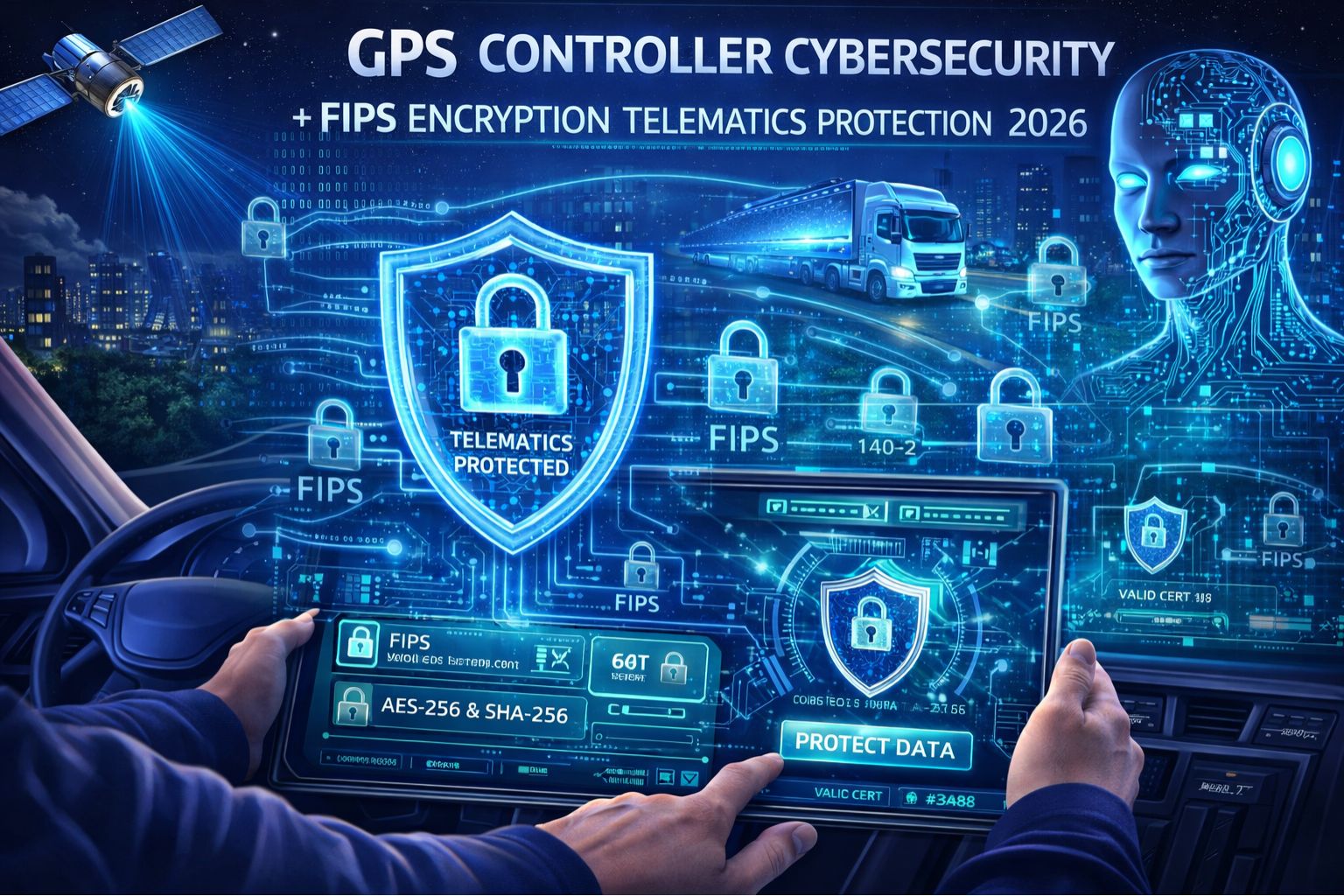
GPS Controller cybersecurity FIPS encryption telematics protection 2026
When your fleet management platform claims "encryption," but your telematics data stream lacks FIPS 140-3 validated modules, you're not really securing data—you're creating a compliance and liability gap that auditors and insurers will absolutely find. Honestly, this isn't just about hackers anymore; it's about proving your data integrity chain meets federal and insurance standards for 2026, where generic AES encryption simply won't qualify as due diligence for location, driver behavior, or cargo sensor data.
What FIPS 140-3 Encryption Actually Means for Live Telematics
FIPS validation means the cryptographic module in your GPS tracking hardware or software gateway has been independently certified to resist specific physical and logical tampering. In practice, we see the gap when a device reboots after a firmware update and fails to re-establish a secure channel. That causes a 15-minute data blackout that your fleet management software logs as "device offline," which completely masks the encryption handshake failure. This isn't just a dropped signal; it's a validated security module failing its power-on self-test, something non-FIPS devices don't even perform.
The Real-World Compliance Failure You Won't See Coming
The risk really escalates during an audit for contracts requiring CMMC or state data privacy laws. An auditor will ask for proof of encryption for PII (like driver ID linked to location) in transit and at rest. A vendor's generic "256-bit encryption" statement won't cut it; they need the actual FIPS certificate number for the specific module. We've seen fleets fail preliminary audits because their telematics provider's data sheet mentioned "FIPS-compliant algorithms," but the actual hardware deployed was using a software-based, non-validated implementation. That creates a material finding, just like that.
The Costly Mistake: Treating FIPS as a Checkbox, Not a System Requirement
The common misunderstanding is thinking FIPS is only for "government fleets." The real mistake is not recognizing that insurance premiums and liability waivers now hinge on validated data security. If a lawsuit alleges manipulated location data, your non-validated encryption won't stand up as evidence of data integrity. And it gets worse: integrating with API integrations for ELDs or safety systems can break the chain of custody if one link uses a validated module and the next uses a generic TLS library, which basically nullifies your entire security claim for the data workflow.
Decision Help: When to Demand FIPS Validation in Your Stack
The decision boundary is pretty clear: if your operation handles any regulated data (driver hours, geofenced locations for sensitive sites, temperature for pharmaceuticals) or you're seeking reduced insurance premiums, you have to mandate FIPS 140-3 validated modules from your telematics provider. The internal fix stops at the procurement contract. You can't just "configure" or "upgrade" existing non-validated hardware to be FIPS compliant; that requires a full hardware and firmware redesign. So the choice is to accept the compliance risk or replace devices with validated ones. A platform like GPS Controller builds this validation into its core data pipeline, treating it as essential infrastructure, not an optional add-on.
FAQ
Question: What is FIPS 140-3 validation for GPS tracking?
Answer: It's an official NIST certification that the cryptographic hardware or software module in a tracking device or gateway meets stringent security standards for generating keys, encrypting data, and resisting tampering. It's required for many government and enterprise contracts now.
Question: Why does my commercial fleet need FIPS encryption in 2026?
Answer: Beyond contracts, insurance carriers and data privacy laws (like state-level consumer laws applying to driver data) are increasingly mandating validated encryption as proof of due diligence. That makes it a baseline for liability protection and even competitive bidding.
Question: Can I add FIPS encryption to my current trackers via a software update?
Answer: No. FIPS 140-3 validation is specific to a hardware and firmware combination. A software update can't make a non-validated hardware module compliant. This typically means you need a device replacement program.
Question: How do I verify my telematics provider uses FIPS-validated modules?
Answer: Demand the specific FIPS Certificate number from the provider and cross-reference it on the NIST CSRC validated modules list. You should also require this specification in your purchasing agreement and in their annual security attestations.


Comments
Post a Comment