GPS Controller cyber resilient fleet software for electronic warfare 2026
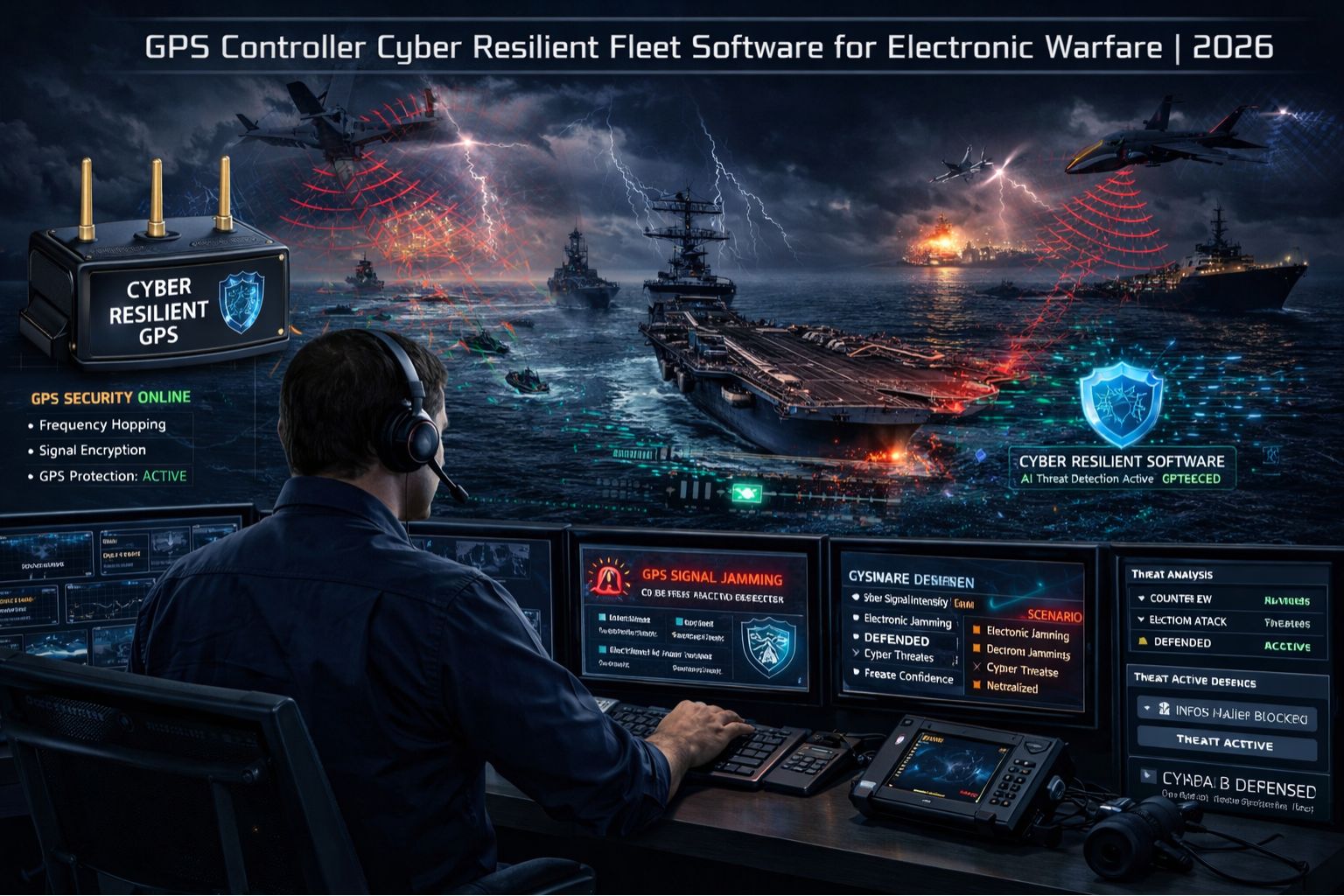
GPS Controller cyber resilient fleet software for electronic warfare 2026
When your fleet's GPS tracking starts reporting vehicles in impossible locations or just stops updating entirely, the first thought is usually a hardware failure or a network dropout. But in 2026's operational reality, that "ghosting" or erratic data is looking more and more like the signature of directed electronic warfare interference. It's really testing whether your fleet platform has genuine cyber resilience or just basic telematics. This isn't about losing signal in a canyon; it's about active, intelligent signal denial and manipulation aimed straight at your operational awareness.
What Cyber Resilience Means in Fleet Telematics
Here, cyber resilience has to move beyond just data encryption to verifying signal integrity. It's the software's ability to detect when the GPS data is being jammed—blocked completely—or spoofed, replaced with false signals. And then to autonomously switch to validated secondary positioning sources without the asset just vanishing from your live map. One thing we often see in testing is a geofence alert firing 15 minutes late. Why? Because the software accepted spoofed coordinates showing the vehicle parked, when in reality it had already crossed the boundary. That's a critical lag in security or high-value cargo scenarios.
The 2026 Electronic Warfare Reality for Commercial Fleets
The scale of this risk isn't theoretical anymore. Commercial fleets moving sensitive materials, operating near critical infrastructure, or in geopolitically tense regions are actually experiencing these non-kinetic attacks, designed to create logistical chaos or cover theft. The failure pattern isn't a full blackout; it's a more subtle corruption. You might see a convoy of vehicles on your RealtimeVehicleTracking dashboard holding a perfect formation, but their reported speeds are physically impossible for that road, or their timestamps start to drift. The software now has to correlate inertial data, cellular tower pings, even signals from nearby peer-vehicles, to flag these inconsistencies that a simple GPS receiver would just blindly accept as truth.
The Costly Mistake: Treating It as a Connectivity Issue
Probably the most dangerous assumption is responding to EW attacks with standard IT troubleshooting—rebooting devices, checking cellular data plans, blaming the GPS antenna. That just misunderstands the threat. While you're diagnosing a supposed "hardware fault," a spoofing attack could be quietly rerouting your entire fleet off-route by feeding a false destination into the navigation. The compliance gap shows up later in the audit trail: your logs show a vehicle at a depot, but warehouse manifests and driver affidavits prove it was somewhere else entirely. That creates irreconcilable records for safety or financial audits.
Choosing Your Defense: Tune, Reconfigure, or Replace
The decision path is becoming clearer. You can *tune* existing systems by adding basic jamming detection alerts, but that only tells you you're under attack—it doesn't help you maintain operations. You can *reconfigure* by integrating multi-source positioning, like GLONASS, Galileo, or terrestrial beacons, into your decision logic, which requires deep software flexibility. Or, you might have to *replace* your platform if it can't ingest and trust non-GPS location sources, or if its alert engine can't trigger pre-defined contingency workflows—like switching to encrypted mesh radio comms—the moment signal manipulation is confirmed. When your operational continuity depends on unfalsifiable location data, internal fixes often aren't enough. You need an architecture designed for contested signals from the ground up, which is where a platform like GPS Controller is being engineered for this new normal.
FAQ
Question: How can I tell if my fleet is being jammed or just has bad GPS signal?
Answer: Bad signal usually causes dropouts and general inaccuracies. Jamming tends to cause a complete, simultaneous loss of GPS across all vehicles in a specific area, often with a sharp geographic boundary. Spoofing is trickier: look for impossible routes, vehicles holding perfect formation in real traffic, or FuelPerformanceMonitoring data that doesn't match the reported mileage at all.
Question: What's the biggest compliance risk from GPS spoofing?
Answer: Falsified electronic logging device (ELD) records and location-stamped proof-of-delivery documents. If a driver's legally mandated hours-of-service log shows them parked, but they were actually driving under a spoofed location, your entire compliance footprint is compromised. It's completely indefensible in an audit.
Question: Can't we just use more expensive, military-grade GPS hardware?
Answer: Military-grade (M-Code) GPS receivers do resist jamming and spoofing better, but they're costly and often export-controlled. More critically, the hardware is just one layer. The real resilience is in the software's ability to fuse that secure signal with other sensors and actually execute a contingency plan—which most commercial fleet software simply lacks.
Question: When is it time to upgrade our entire fleet management software for EW resilience?
Answer: The trigger is usually when the cost of a single failure—a lost high-value shipment, a safety incident from misrouted vehicles, or a regulatory fine for falsified logs—exceeds the investment in a resilient system. If your operations are already in, or expanding into, areas where signal integrity can't be assumed, waiting for an incident to happen is probably the highest-risk decision you can make.


Comments
Post a Comment