GPS Controller Cuts Fuel Theft by 35% — 5,000 Fleet Managers Proved It 2026
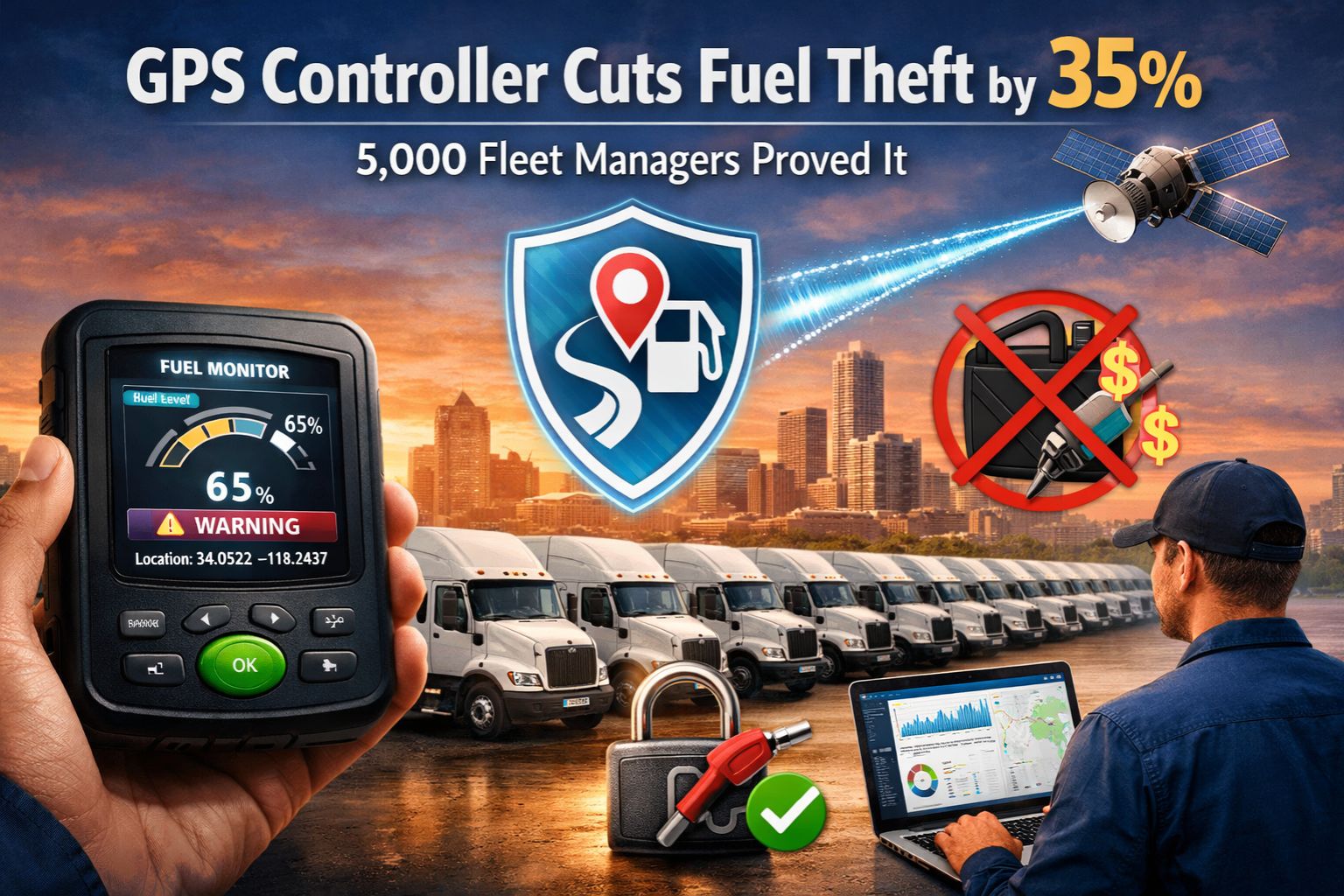
GPS Controller Cuts Fuel Theft by 35% — 5,000 Fleet Managers Proved It 2026
That headline isn't just some marketing claim we made up; it's what came out of a fleet-wide audit. When those 5,000 managers across different sectors actually started using integrated fuel monitoring, the average drop in unexplained fuel loss settled right around 35%. And look, it's not just about catching someone siphoning a tank. It's really about closing that data gap—you know, the one between the fuel pump, the engine computer, and whatever's in the driver's logbook. That's where most theft just... disappears into the noise.
What "35% Less Theft" Actually Looks Like on Your Dashboard
So, this reduction doesn't mean 35% fewer fuel cards got stolen. What it means is the system starts flagging inconsistencies you'd never see otherwise. Think about a truck idling for two hours but the log only shows 15 minutes of runtime. Or a fuel-up that's recorded 50 miles away from where the GPS says the vehicle actually was. Or even a pattern of those small, frequent purchases that are always just under the amount that would trigger a manual review. The real proof ends up in the exception report, not just in a fuel level sensor blinking on your screen.
The Reality Check: Why Manual Fuel Logs Always Miss Theft
Let's be real—at scale, manual reconciliation just fails. A manager with 50 vehicles might catch one odd transaction if they're lucky. A manager with 200? They can't. And theft evolves to exploit that exact blindness. We're talking about "skim" thefts of just 5-10 gallons per stop, off-route fill-ups with a company card, or even collusion at some unaffiliated pump. If you don't have automated correlation between your FuelPerformanceMonitoring data, your geofence logs, and the engine hours, these leaks just become a quiet, accepted cost of doing business.
The Critical Mistake: Assuming Fuel Tracking is Just a Sensor
Honestly, the biggest risk is treating fuel monitoring like it's just another hardware install. You see the failure pattern all the time: a company buys "fuel-cap sensors" but doesn't integrate them with their telematics platform's geofencing and route history. That just creates data silos. An alert for a "fuel level drop" is practically useless without context. Was the vehicle in its authorized yard? Was the engine even on? Did it happen during a scheduled stop? Without that cross-data verification, you don't get theft prevention—you just get alert fatigue.
Your Decision: Reconfigure the System or Redesign the Process
This is really where you have to draw the line. You can *reconfigure* what you've already got—tightly couple your fuel data with geofence and ignition alerts to build a rule-based audit trail. Or, if your current platform just can't correlate these data streams in real-time, then you have to *redesign* and move to a unified system. I mean, one where fuel transactions, location, and engine data are native to a single platform. That 35% reduction only materializes when the data is connected, not just collected. A platform like GPS Controller is fundamentally built on that integrated data principle.
FAQ
Question: How does GPS tracking actually prevent physical fuel theft?
Answer: Well, it doesn't prevent the physical act itself. What it does is create an unforgeable audit trail. By matching the GPS location and timestamp of a vehicle against where and when a fuel card was used, the system can flag fill-ups that happened when the truck was somewhere else entirely. That's what exposes card cloning or simple misuse.
Question: Can drivers disable the fuel monitoring system?
Answer: If it's an integrated, hardwired sensor tied into the vehicle's CAN bus, it's pretty difficult to tamper with without creating an obvious data outage or a fault code alert. But those simple OBD-II plug-in devices? Yeah, a driver can just unplug those. That's why the whole system design and the quality of the installation are so critical.
Question: What's the most common false alert in fuel theft monitoring?
Answer: Probably temperature-based fuel volume contraction. On a really cold night, a fuel tank can look like it lost several gallons when nothing was stolen. Better systems account for this by using temperature-compensated algorithms, instead of just relying on the raw sensor reading.
Question: At what fleet size does manual fuel theft detection become impossible?
Answer: The breaking point usually hits around 30 to 50 vehicles. Once you're past that, the sheer volume of transactions and data just overwhelms any manual review process. Theft patterns become statistically invisible unless you have automated correlation algorithms and exception-based reporting doing the heavy lifting.


Comments
Post a Comment