GPS Controller BLE cargo left behind alert for service van 2026
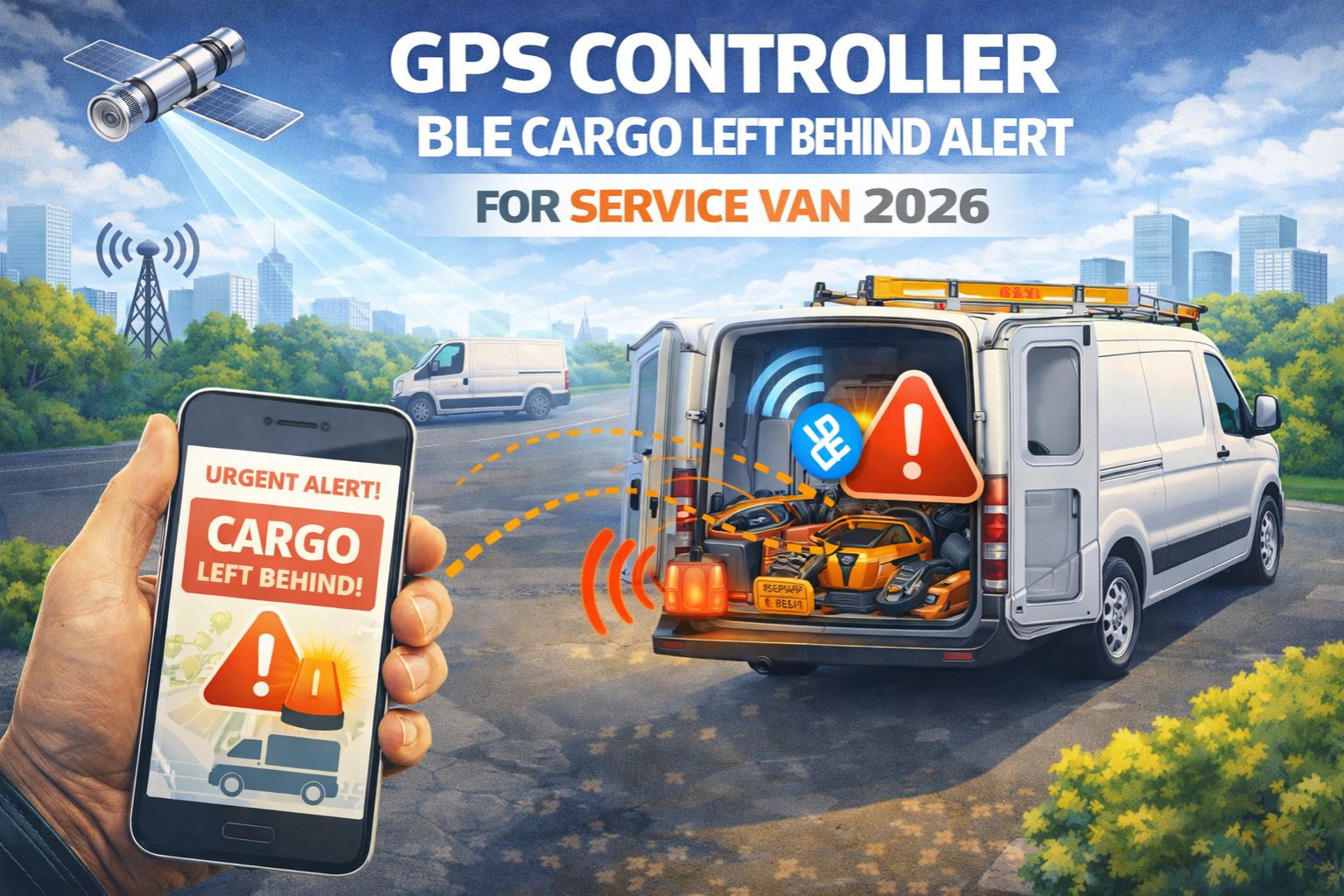
GPS Controller BLE cargo left behind alert for service van 2026
When a service van pulls away from a job site, the most expensive loss isn't fuel—it's the specialized tool or critical part left on the curb. Honestly, a GPS Controller BLE cargo left behind alert is looking like a 2026 operational standard. It moves beyond just tracking the vehicle to actually monitoring what's inside. This isn't about inventory counts; it's about stopping that cascading failure where a technician shows up to the next job without the right gear. That's what triggers the customer penalties and the whole wasted dispatch cycle.
What BLE Cargo Monitoring Really Means for Service Fleets
Clarity here is key. The system uses these small, battery-efficient BLE tags on things like toolboxes or parts kits. They talk to a gateway device in the van. The "left behind" alert doesn't trigger when the door closes. It triggers when the ignition turns on *and* the BLE signal from a tagged asset drops outside the set range—usually 30-50 feet. In practice, we've seen alerts fire as a van rounds the corner, which still gives the driver a shot to circle back before the asset is truly gone. It's a nuance that basic geofencing just misses.
The Real Cost When a Critical Part Gets Left
The reality check isn't just the replacement cost of, say, a $2,000 diagnostic scanner. It's the compounding operational failure that follows. Picture a technician on a scheduled HVAC repair arriving without the required refrigerant gauge set. The job gets rescheduled, probably incurring a same-day cancellation fee. Now a second truck gets dispatched, doubling the labor and fuel for one invoice. Meanwhile, the original van's route for the next three calls is completely thrown off, forcing manual route optimization under time pressure. That's where you get dispatch gridlock.
The Mistake: Assuming "Driver Responsibility" is a System
The primary risk is a cultural one—believing that training and checklists are enough. At the scale of 15+ stops a day, with technicians juggling customer interactions, paperwork, and calls, cognitive load practically guarantees a mistake. Here's the thing: the wrong assumption is that the alert is just for the driver. In 2026 fleets, it's really a real-time signal to the dispatcher. A dispatcher seeing a "Cargo Left Behind" alert can call the driver immediately, who might still be in the neighborhood. Without that automated signal, the loss often isn't found until end-of-day inventory, when recovery is impossible.
Decision Help: Tag Your Criticals or Redesign Your Process
Your decision line is pretty clear: either tune your existing process by tagging just the high-value, high-risk items, or redesign your whole asset accountability framework. The tune-up path can work if you only have a handful of mission-critical items per van—think specialized calibration tools. You'd set the BLE system to monitor only those. The redesign path becomes necessary when loss rates are high across common items. That means tagging everything and baking the alerts right into your fleet management software workflow, creating a digital check-out/in system. The real boundary is internal capacity: if your team can't manage the alert response protocol, the system just creates noise, not safety. At that point, a platform like GPS Controller that brings vehicle and asset tracking together starts to look like the necessary infrastructure.
FAQ
Question: How does a BLE left behind alert differ from a geofence alert?
Answer: A geofence alert is about the vehicle crossing a virtual line. A BLE cargo alert is asset-centric. It triggers when the connection between a specific tagged item and the in-vehicle gateway is severed *and* the vehicle moves. So it knows the asset was forgotten, not just temporarily set down nearby.
Question: What's the typical range before an alert goes off?
Answer: Most systems are set for a 30-50 foot threshold. It's short enough to avoid false alarms if an asset is just outside the van at a job site, but long enough that the alert fires while the van is still close enough for a practical U-turn, not miles down the road.
Question: Can weather or buildings block the BLE signal and cause false alerts?
Answer: They can, especially in dense urban areas or around metal structures. Good systems use signal strength averaging and ignition-on triggers to cut down on false positives. Look, the real failure pattern isn't the occasional false alert—it's disabling the whole system because of them, which leaves you with zero protection.
Answer: The compliance risk is two-fold. First, for service contracts that require certified tools on-site, a missing tool can void the agreement. Second, in regulated industries like medical gas or telecom, leaving a part behind can be a reportable inventory discrepancy. The alert creates an instant audit trail that proves you were notified and could act. That's often the standard for due diligence.


Comments
Post a Comment