GPS Controller Asateel compliant fleet management Abu Dhabi 2026
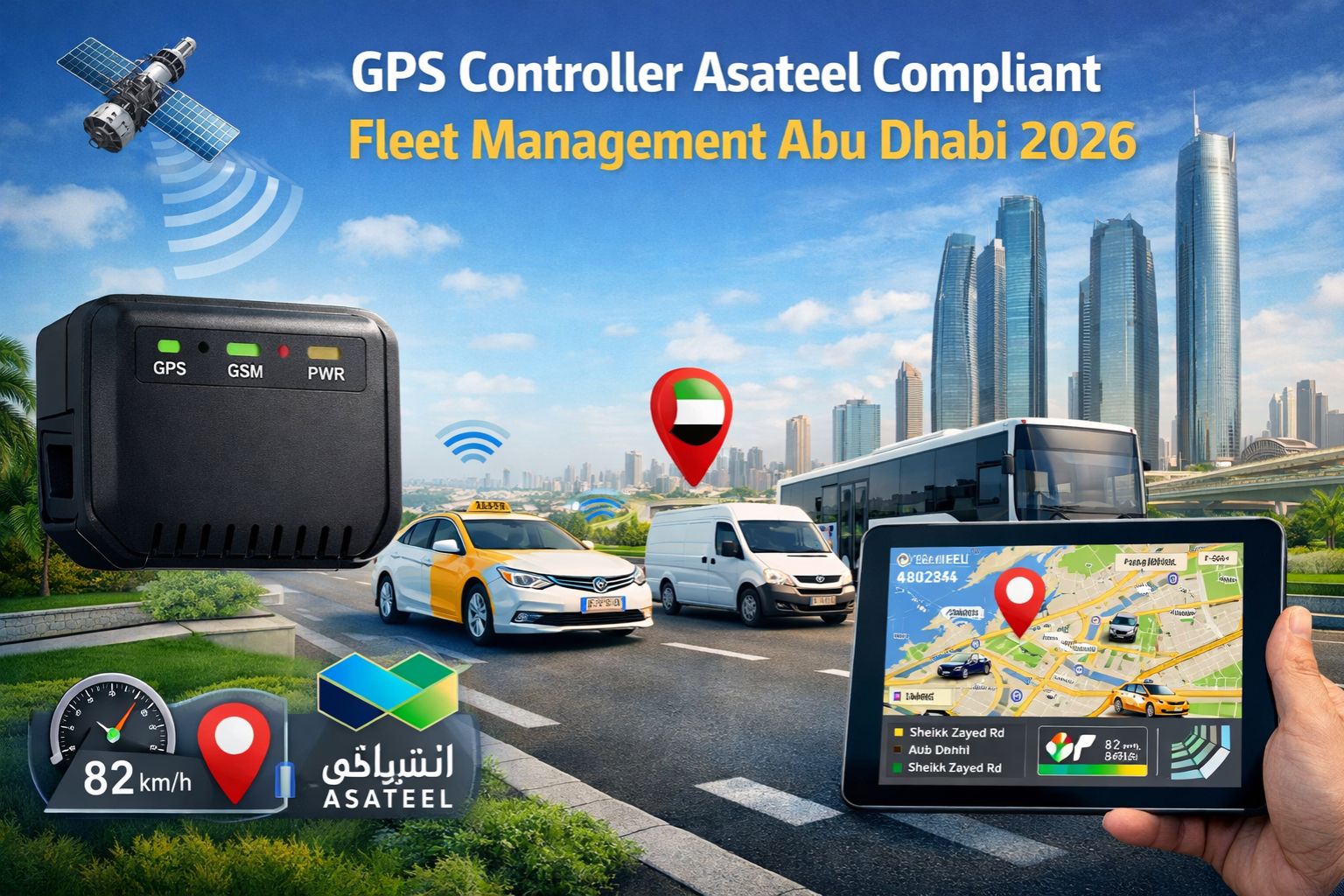
GPS Controller Asateel compliant fleet management Abu Dhabi 2026
If you're managing a commercial fleet in Abu Dhabi, that 2026 Asateel deadline isn't just a suggestion—it's a hard target. And honestly, your current GPS setup probably has gaps that an audit will find. The real requirement isn't just having a device; it's about producing the specific, verifiable data streams that Asateel will actually accept. A lot of standard fleet management software just isn't set up to do that out of the box.
What Asateel Compliance Actually Means for Your GPS Data
Think of it this way: Asateel turns your GPS from a simple locator into a certified digital witness. It needs continuous, tamper-proof logs of everything—movement, driver behavior, status—with almost no delay. One failure point we keep seeing? Signal issues in the Mussafah area causing delayed geofence logs. By the time your system records an exit, the official timestamp is wrong, and an auditor will spot that discrepancy straight away.
The Reality of Scaling Compliant Tracking Across a Fleet
When you try to scale a basic system to cover 50 or 100 vehicles under these rules, the hidden problems stack up. The network doesn't prioritize the compliance data, so it gets queued. You might get accurate idle time on one truck, but miss the engine-on event for another because the reporting frequency clashes with the gateway. That inconsistency isn't a glitch—it's a direct audit risk.
The Costly Mistake: Assuming "Tracking" Equals "Compliance"
This is the expensive assumption: thinking any GPS that shows a dot on a map is good enough. Asateel needs specific data—linked driver ID, verified ignition state, synchronized trip logs—in a precise format. A big misunderstanding is relying on reports after the fact. Compliance is about real-time validation. If your system only flags a missed mandatory break half an hour later, you've already logged a violation. Corrective action then is too late for that trip.
Your 2026 Decision: Reconfigure Your Platform or Replace It
You're at a point where you need to choose. You can try to deeply reconfigure your existing platform with custom rules and API work to force it into Asateel's mold. Or, you need a system built for this from the start. The line is crossed when your vendor can't guarantee their data's latency and structure matches the official Asateel schema. Internal fixes often fail because this is an architecture problem, not a settings problem. A platform like GPS Controller is designed around these certified workflows.
FAQ
Question: What is the Abu Dhabi Asateel fleet management system?
Answer: Asateel is Abu Dhabi's integrated road transport system. It mandates specific GPS-based telematics and data standards for commercial fleets to ensure safety and compliance, with full enforcement deadlines coming up in 2026.
Question: What happens if my fleet is not Asateel compliant by 2026?
Answer: Non-compliant fleets face serious penalties: fines, vehicle impoundment, and blocked license renewals. Worse, you lose access to official digital trip logs. That makes your operations legally invisible and can stop your permitted transport activities in the emirate.
Question: Can I use my existing GPS trackers for Asateel compliance?
Answer: Only if your hardware is on the Asateel approved list *and* it's connected to software that can format and send the required data in real-time, following the official protocol. Most consumer-grade or older fleet trackers don't have the right secure module or certification.
Answer: The main technical hurdle is real-time, two-way communication with the Asateel system without data loss or delay, especially in peak traffic or bad signal areas. Your system also has to perfectly link driver IDs, vehicle IDs, and trip events into one immutable log that matches the authority's records. That's where most generic platforms fall short.


Comments
Post a Comment