GPS Controller anti spoofing detection for Gulf shipping fleet 2026
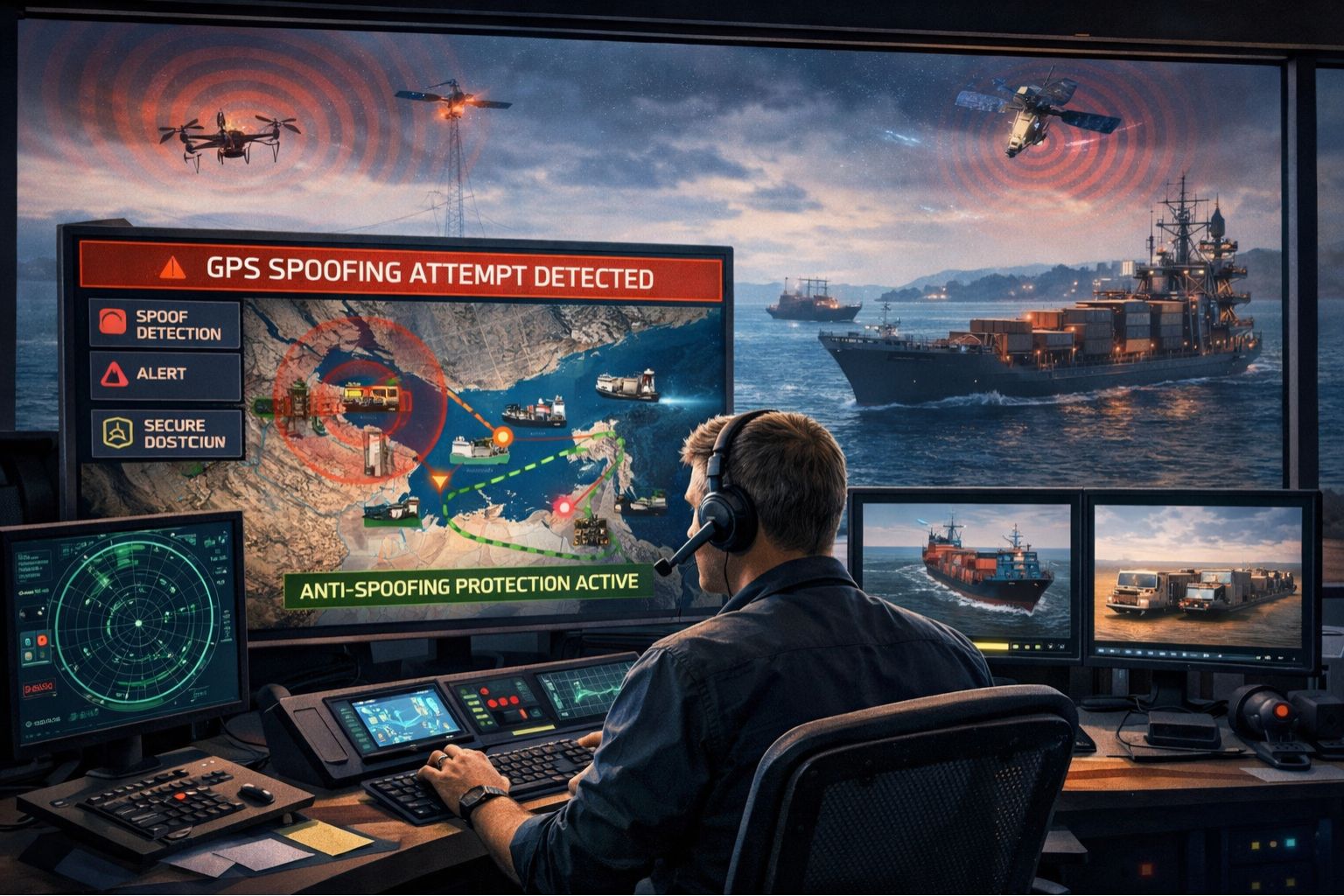
GPS Controller anti spoofing detection for Gulf shipping fleet 2026
Look, for a Gulf shipping fleet manager in 2026, GPS Controller anti spoofing detection isn't some optional tech upgrade—it's the only thing standing between a vessel on its proper course and one being quietly, deliberately steered somewhere it shouldn't be. The scary part is that your standard commercial GPS will show a perfect, strong signal even while it's being fed completely false data. And your usual tracking dashboard won't flag a thing until the ship is already miles off course.
What Anti-Spoofing Detection Actually Means for a Ship's Bridge
Practically speaking, this detection means your bridge systems and IoTAssetMonitoring platform stop just accepting location data. They start actively questioning it, checking the signal's cryptographic integrity and cross-referencing it with other trusted sources. A lot of people think a "lost signal" alert is enough, but that's the problem—good spoofing doesn't cause a loss. It gives you a convincing, wrong signal. The real trick is in the cross-verification, like checking if the reported speed matches the fuel burn. Those are the discrepancies a simple map won't show you.
The Real-World Consequence When Spoofing Goes Unchecked
The failure here is subtle, and that's what makes it dangerous. Your screen might show a ship holding perfectly in a safe anchorage, while in reality, it's drifted into a busy lane or a territorial dispute zone. We've seen cases where delayed or falsified AIS data, which comes from the spoofed GPS, led to compliance violations for entering areas the crew never meant to go near. The bottom line is this: once spoofing starts, every system that depends on that GPS—navigation, logging, reporting—is living in a false reality. Automated corrections become impossible.
The Critical Mistake in Gulf Fleet Security Planning
The biggest, most dangerous assumption is treating GPS as an infallible data source. I see operators investing in more tracking points and faster data, thinking more data means more security. But if the core signal is corrupted, you're just visualizing a sophisticated lie more efficiently. This mistake really hurts when an incident happens. The forensic report will show your tracking system worked "perfectly" by faithfully reporting the spoofed data, leaving you with no technical defense if someone claims you intentionally violated a zone.
Your 2026 Decision: Patch, Upgrade, or Redesign
So you're at a point where you have to decide. You can try to patch existing systems with software updates that promise anomaly detection. Or you can upgrade the hardware to receivers with anti-spoofing built in. The line is crossed when your vessel's safety depends on a single point of truth that can be faked. That's when you need a redesign of your whole positioning approach, integrating multi-source verification. This is where a platform with foundational integrity checks, like gps controller, stops being just a tracking tool and becomes a necessary part of your navigation core.
FAQ
Question: What is GPS spoofing in simple terms?
Answer: Basically, it's when a bad actor broadcasts fake GPS signals that overpower the real ones. Your receiver gets tricked into reporting a wrong location, and it doesn't even know it's lost the real signal.
Question: Why is the Gulf a high-risk area for this in 2026?
Answer: A few reasons: the geopolitical tensions are high, the cargo routes are valuable, and frankly, the region's become a testing ground for this kind of electronic warfare against commercial ships.
Question: Can't we just rely on the ship's inertial navigation system?
Answer: Inertial systems drift. They need periodic GPS correction to stay accurate. If the GPS signal feeding it is fake, you're not just getting a wrong fix—you're corrupting the inertial system's calibration and making the whole error worse.
Question: What's the final sign we need a dedicated anti-spoofing solution?
Answer: It's when you run the numbers. If the cost of one major incident—fines, ransom, lost cargo—is more than the cost of a system that cryptographically verifies every single position fix before any other system uses it, then the decision is made for you.


Comments
Post a Comment