GPS Controller AI Route Optimisation 35 Percent Empty Mile Reduction 2026
GPS Controller AI Route Optimisation 35 Percent Empty Mile Reduction 2026
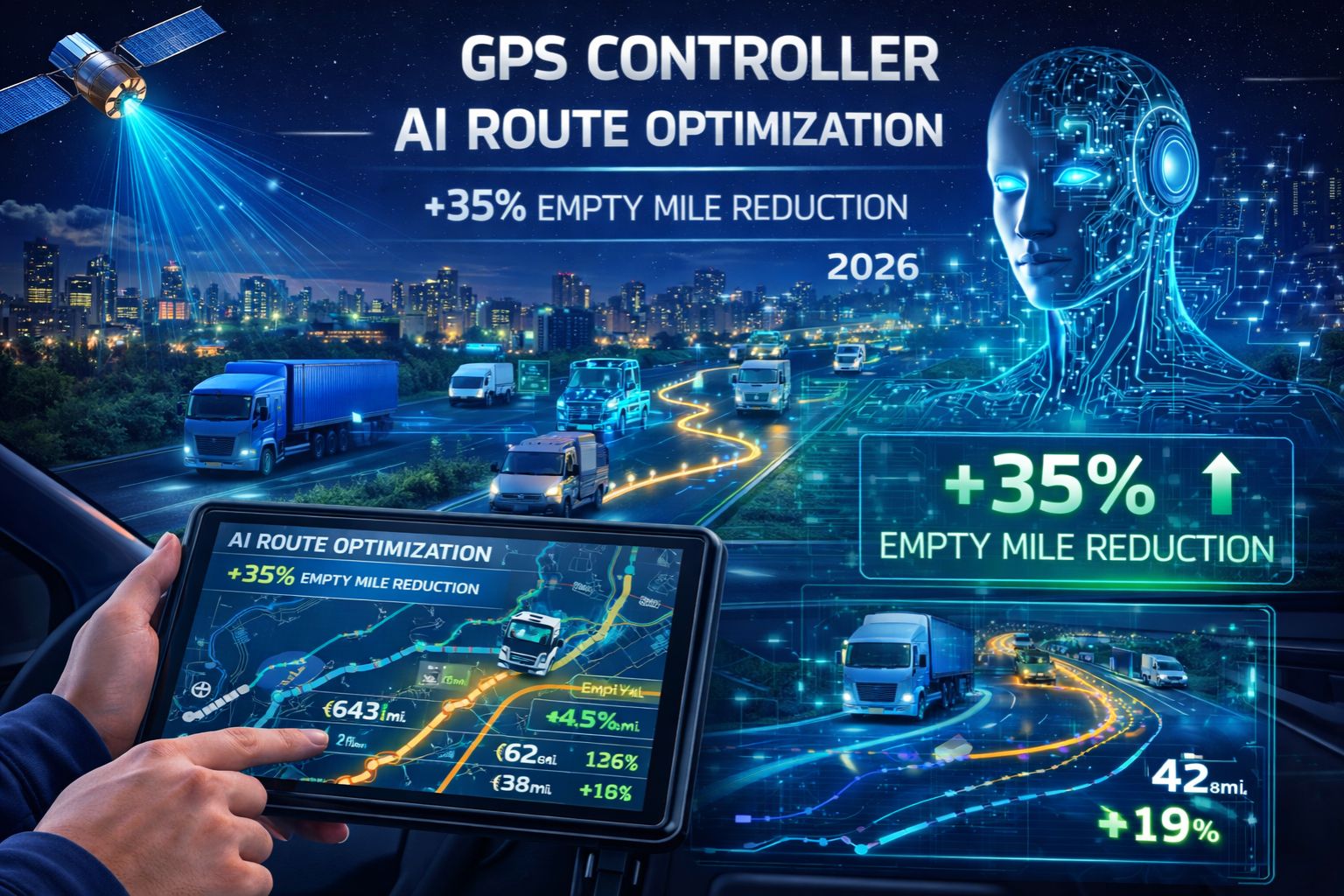
Look, that 35% empty mile reduction promise... it's more than just a software metric. It feels like a fundamental shift in how fleets actually match loads to capacity in real-time. We're moving past simple point-to-point routing into something that tries to predict asset utilization. This kind of reduction goes straight for deadhead runs—you know, those expensive trips where the truck's just moving air between jobs. Honestly, we've seen that eat up 15-20% of a fleet's total miles before any AI gets involved. The real trick here isn't finding a faster road. It's the system trying to guess where the next load will be before the current one is even dropped off, using telematics patterns that most older, static systems completely miss.
What 35% Empty Mile Reduction Actually Means for Your Fleet
So what does that number mean on the ground? It's a direct cut in fuel burned, wear and tear, and driver hours spent moving nothing. In reality, fleets don't see this as a smooth, gradual improvement. It's more of a step-change. The first chunk—maybe 15-20%—comes from wiping out the obvious inefficiencies, like a truck pointlessly returning to a home depot empty. Getting the next 15-20% is harder. That's where the AI has to dig into shipper patterns, seasonal freight swings, even local event data to pre-position trucks. One thing people don't always realize: the system needs high-frequency GPS pings and engine data to *truly* know a vehicle is "empty." It's not just checking a dispatched status. It's looking at weight sensor trends or door sensor activity, all stitched together through API integrations.
The Reality of Scaling AI Optimisation Across a Mixed Fleet
When you try to scale this up, the AI's perfect recommendations run into real-world friction. A driver's hours are almost up. A trailer needs maintenance. A human dispatcher has a preferred shipper lane they won't budge on. That 35% reduction assumes everyone's fully on board. In a mixed fleet with older, non-connected trucks, the benefit gets watered down fast. And there's a boundary condition: when something huge happens, like a sudden port closure, it can overwhelm the AI's trained models. The system then falls back to conservative, less efficient routing until it can learn the new normal. A common mistake is treating the AI like the final dispatcher. It's not. It's a recommendation engine that has to work with human oversight and existing carrier contracts.
The Hidden Risk of Over-Reliance on Predictive Load Matching
The biggest risk isn't really the tech failing. It's that it can create a brittle system. Dispatchers might lose the situational awareness to manually reroute when the AI's data feed gets cut off—think widespread cellular outages in the middle of nowhere. Fleets can get too hooked on the predictive "next load" suggestion, missing out on spot market opportunities that don't fit the AI's historical patterns. There's also a compliance risk if the AI optimizes just for miles without fully baking in the latest ELD rules, which could accidentally push drivers into violations. The error is assuming the AI understands every single constraint. Often, it needs to be explicitly told about nuanced stuff like trailer pool agreements or driver domicile policies.
Should You Tune, Reconfigure, or Replace Your Current Routing System?
This is the real decision lock. Do you tune your existing telematics for better reporting? Reconfigure its rules to avoid basic deadhead runs? Or just replace it with a system built from the ground up for AI-driven prediction? It all comes down to your current system's ability to swallow data. If it can't process real-time location, load status, and market rate data all at once, then tuning is probably a waste of time. Reconfiguration might work if you're only dealing with scheduled, recurring empty runs. But you'll likely need a full redesign—maybe with a platform like gps controller—if you're operating in a volatile freight market and your current tools can't dynamically re-route a truck *before* it unloads. An internal fix just won't cut it when your empty miles are caused by unpredictable factors, not just poor planning.
FAQ
Question: How does AI route optimisation reduce empty miles?
Answer: Basically, it uses predictive analytics on past load data, where your trucks are right now, and freight market trends to suggest the nearest available load *before* a truck finishes its current job. The goal is to minimize that unproductive deadhead movement between deliveries.
Question: Is 35% empty mile reduction realistic for a small fleet?
Answer: It can be, but the percentage is often actually higher for smaller fleets with more variable routes. The catch is the AI needs enough historical data to find patterns. So a brand new or very small fleet might see a lower reduction at first, which should improve over time.
Question: What's the biggest hidden cost of empty miles besides fuel?
Answer: I'd say accelerated asset depreciation and the missed opportunity. Every empty mile adds wear with zero revenue, and it's a slot in your schedule where a paying load could have been.
Question: When should I consider a dedicated AI optimisation system over my current software?
Answer: When your empty miles are consistently above 15% and your current fleet management software can only tell you about the problem after it happens, instead of proactively preventing it through predictive load matching.


Comments
Post a Comment