GPS Controller AI predictive maintenance 20 to 30 percent cost reduction fleet 2026
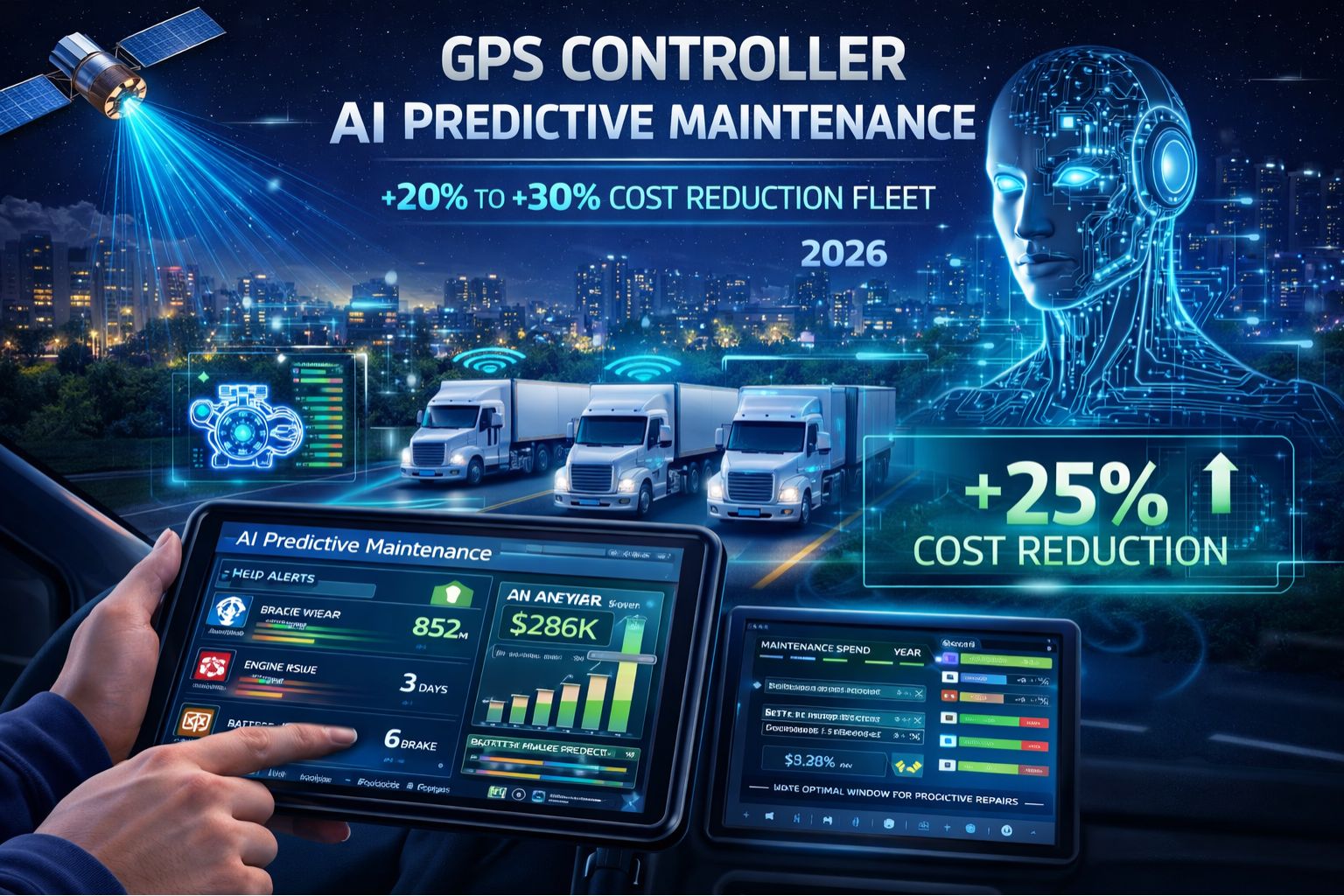
GPS Controller AI predictive maintenance 20 to 30 percent cost reduction fleet 2026
So you see the headline about AI predictive maintenance cutting fleet costs 20-30% by 2026. The promise isn't just fewer breakdowns—it's that direct line to slashing total maintenance spend. But here's the thing: this isn't about generic "check engine" alerts. It's about the AI connecting dots a human can't, like correlating subtle engine vibration patterns from the GPS tracking device with old failure logs to predict a fuel injector failure three weeks out. That lets you schedule the repair during planned downtime, not on a roadside at 2 AM. The staggering cost difference between those two scenarios? That's where the real savings actually live.
What AI Predictive Maintenance Actually Means for Your Fleet
We need to be clear here. AI predictive maintenance in fleet tracking means the system learns the unique "fingerprint" of each vehicle's normal operation—the rhythm of engine load, the cycles of coolant temp, the specific dips in battery voltage. It flags the deviations a human manager would almost certainly miss. I've seen it happen: fleets miss the early signal of a failing alternator because the voltage drop was so gradual, and you'd only notice it if you cross-referenced it with increased engine runtime data. The AI spots that weird correlation instantly. That turns a potential tow and a chaotic emergency repair into a simple, scheduled part swap.
The Reality Check: Data Gaps That Invalidate the Prediction
Here's the catch, though. At real operational scale, that 30% savings promise just falls apart if your data stream has blind spots. If a vehicle's OBD-II dongle has a loose connection, or if it only transmits data in big batches instead of real-time, the AI model is working with stale, incomplete information. That leads to false positives, or worse, it completely misses a looming failure. One non-obvious detail that kills accuracy is CAN bus data latency. If the system isn't getting high-frequency sensor data—like oil pressure readings at 1Hz—its predictions are basically educated guesses. You might get an alert for "impending brake wear" based purely on mileage, but you'll miss the actual rotor warping that was signaled by subtle vibration patterns the system never even saw.
The Critical Mistake: Treating AI as a Set-and-Forget System
This is the biggest risk, honestly. Assuming the AI will just run itself. The costliest misunderstanding is believing the algorithm's initial accuracy will hold forever without any tuning. But fleets change. You add new routes, phase out old vehicle models, bring in new ones. An AI model trained on a fleet of 2019 diesel trucks will start giving you increasingly weird—and expensive—maintenance recommendations when you apply it to your new 2025 electric vans. The failure modes and telemetry signatures are just fundamentally different. That path leads straight to unnecessary part replacements and eats away at the very savings you were trying to capture.
Your Decision Help: Tune, Reconfigure, or Replace the Foundation
So you're at a choice point. You can try to tune the existing AI model, feeding it new data from your current operations. You can reconfigure your entire data pipeline from the ground up, making sure you're getting real-time, clean telemetry from every single asset. Or, sometimes, you just have to replace the foundational tracking and analytics platform if it can't provide the granular, reliable data the AI needs to work. You know you've hit the boundary where internal fixes fail when your current fleet management software can't integrate high-frequency IoT sensor data or lacks the processing layer to properly feed the AI engine. At that point, incremental tweaks won't get you to the 20-30% cost reduction. You need a platform-level decision. That's the space where solutions like GPS Controller are built, specifically for this kind of integration depth.
FAQ
Question: What kind of fleet data does AI need for accurate predictive maintenance?
Answer: It needs high-frequency, real-time telemetry—way beyond just basic GPS. Think engine diagnostics (trouble codes, RPM, load), vehicle health stats (battery voltage, coolant temp), and operational data like idle time or harsh braking. If the data comes in batches or is delayed, you create prediction gaps that ruin the whole point.
Question: How does AI predictive maintenance actually reduce costs by 30%?
Answer: Mainly by shifting repairs from emergency, high-cost roadside events to planned, lower-cost shop maintenance. It also helps extend asset life by stopping small problems from causing big, cascading failures (like a minor coolant leak leading to a full engine overhear). Plus, it can optimize your parts inventory by predicting what's going to fail and when.
Question: What's the biggest hidden cost of a failed AI maintenance system?
Answer: Lost trust. And alert fatigue. When your dispatchers get hit with repeated false alarms for something like "imminent transmission failure," they start ignoring *all* the system alerts. Then a real, accurately predicted failure gets missed. The unplanned downtime and emergency repair bill from that one event can easily exceed the cost of the original system.
Question: When should a fleet manager consider replacing their entire telematics platform for AI maintenance?
Answer: When the current platform can't provide consistent, real-time data streams from all the vehicle sensors, or if it lacks an open API to plug in advanced AI analytics. If you're constantly battling data silos and latency issues, the foundation is wrong. No amount of AI layered on top will deliver the savings promised for 2026.


Comments
Post a Comment