GPS Controller AI powered DVIR digital vehicle inspection report 2026
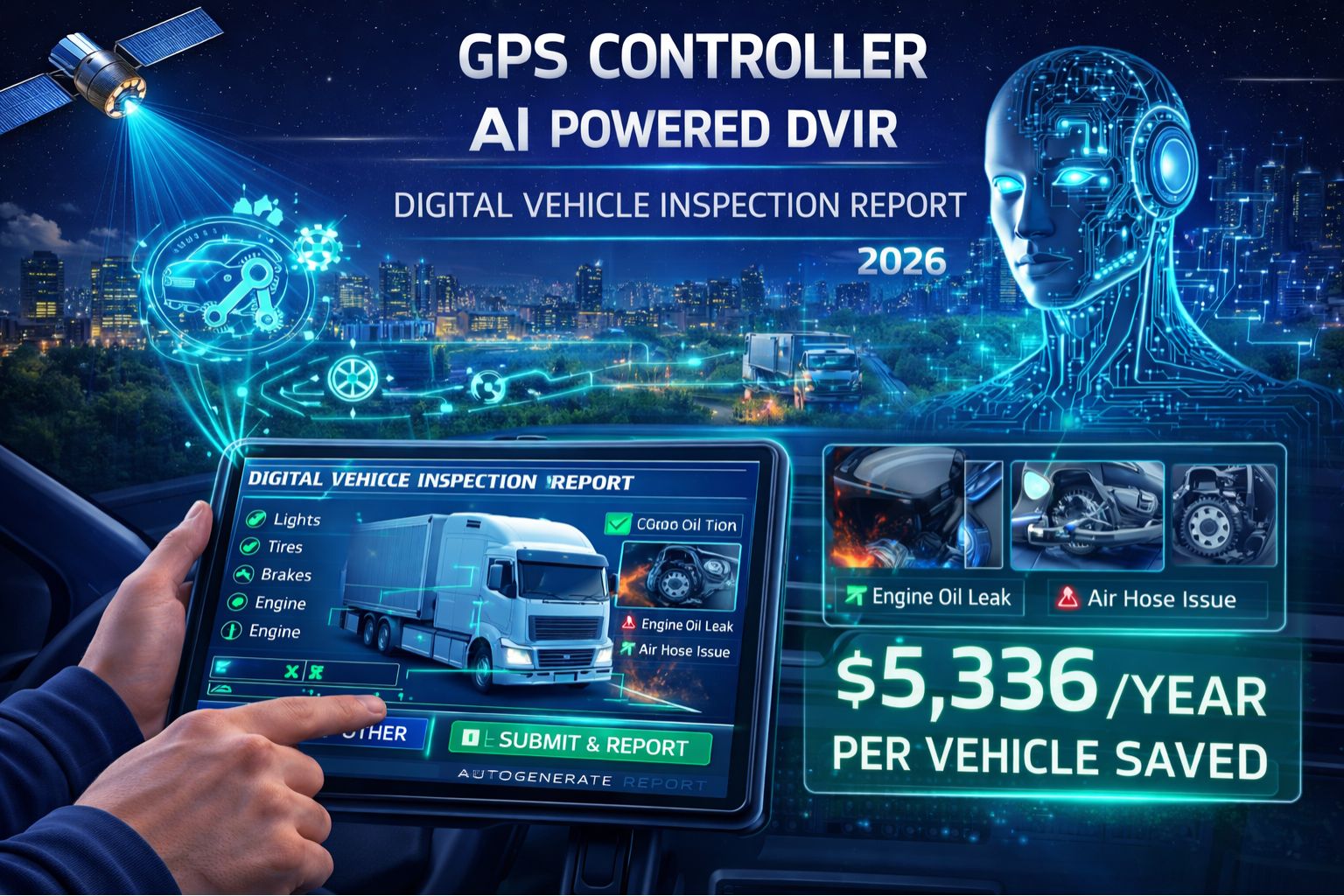
GPS Controller AI powered DVIR digital vehicle inspection report 2026
Look, the 2026 AI-powered DVIR isn't just another digital checklist. It's more like a real-time compliance engine—it actually flags critical stuff, like brake wear or a light failure, the second a driver hits submit. And it ties that inspection data directly into your fleet management software so you can do something about it immediately.
What AI DVIR Actually Means for Your Drivers and Dispatchers
For drivers, it means the tablet or app guides the inspection using image recognition. So it can tag a "low tire tread" alert straight from a photo, instead of depending on handwritten notes that always seem to vanish. For dispatchers, the AI then cross-references that defect with the vehicle's recent fuel performance monitoring data. It might suggest if bad mileage is tied to that tire issue, building a unified fault history that manual reports could never pull off.
The Scale Problem Manual DVIRs Create in 2026 Operations
The real failure at scale is in the gaps. Think about it: a mechanic signs off on fixing an ABS light, but the old manual DVIR system has no way to automatically check that fix against the truck's live data stream. So you end up with a signed compliance report in the office and the same fault code still active on the road. That's a liability chasm between your paperwork and your actual fleet safety—and auditors will find it.
Common Misstep: Treating AI DVIR as Just a Digital Form
Here's the critical mistake: deploying this as a simple form-replacement tool without tying its decision logic into your maintenance workflow. Sure, the AI might correctly flag a "suspension anomaly" from a driver's video. But if that alert just gets emailed to some generic inbox instead of triggering an immediate work order in your shop system, you've just added cost without solving the speed problem. The risk really escalates when shops, used to paper trails, start ignoring the digital alerts. That creates dual systems, and that's a guaranteed path to failure.
When to Tune, Reconfigure, or Replace Your Inspection Workflow
You tune your existing digital inspection app if it captures photos and basic data but lacks any real analysis. You reconfigure your whole workflow if your mechanics and drivers are bypassing the digital system because it's somehow slower than paper. And you have to replace the process entirely if your current method can't give you an audit-proof, time-stamped chain of evidence—from finding the defect to verifying the repair. That's the boundary where patchwork fixes fall apart, and a system like GPS Controller stops being just an upgrade and becomes a compliance necessity.
FAQ
Question: What does AI actually do in a DVIR that a regular digital form doesn't?
Answer: It analyzes the photos and videos drivers submit in real-time to spot and categorize defects—think measuring a crack length on a windshield or judging rust severity on brakes. It auto-fills the report with specific, actionable codes instead of vague handwritten notes, and it immediately checks if it's a recurring issue against that vehicle's history.
Question: Can an AI DVIR system create false alerts and slow down my drivers?
Answer: Yeah, it can, if it's poorly calibrated. Earlier systems might flag a normal shadow as a fluid leak or mistake dirt for damage. The 2026 systems need initial training on your specific fleet's equipment and common conditions to cut down on false positives. But if you have a persistently high false-alert rate, that's usually a sign the AI's training data doesn't match your actual operating environment.
Question: How does this affect DOT compliance and safety audits?
Answer: It pretty much transforms them. An AI-powered DVIR creates an unchangeable, time-stamped log with visual proof of pre- and post-trip conditions. That closes the loophole where a driver's verbal "all good" on a paper log later conflicts with a defect you find. It gives auditors a clear, digital chain of custody for vehicle condition that's a lot harder to dispute than paper records.
Question: At what fleet size does moving to an AI-powered system like GPS Controller make financial sense?
Answer: The line isn't really about vehicle count. It's more about your risk and complexity. If you operate under strict safety rules (like hazmat), face high repair costs from missed minor defects, or spend more than, say, 15 admin hours a week just managing DVIR paperwork and disputes, then the ROI on automated defect logging and compliance reporting becomes immediate. It makes sense pretty much regardless of fleet size at that point.


Comments
Post a Comment