GPS Controller AI powered dispatch optimisation for logistics 2026
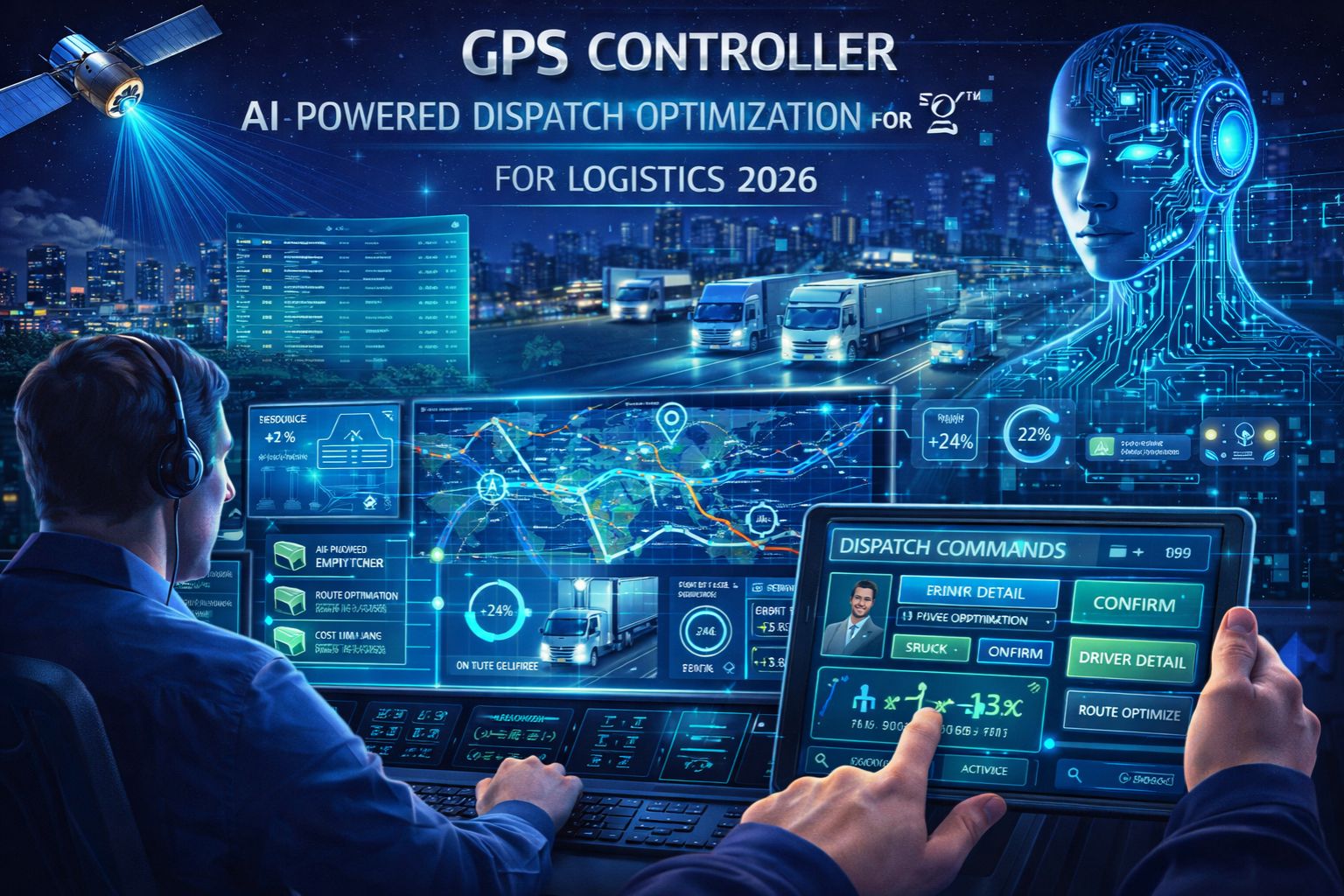
GPS Controller AI powered dispatch optimisation for logistics 2026
So, in 2026 logistics, AI-powered dispatch... well, it's not really about finding a faster route anymore. It's about stopping that cascading failure that starts when just one truck's GPS-reported ETA drifts by, say, 12 minutes. That's all it takes to throw off dock scheduling, driver hours, the entire day's load balance. And honestly, this whole optimization thing lives or dies on the quality—and the latency—of the telemetry feeding it.
What AI Dispatch Optimization Actually Means for Fleet Managers
For a manager staring at a board of 50 trucks, here's what it means: the system has to dynamically reassign a pickup from a truck stuck in unexpected traffic to another one idling within a 3-mile radius. And it has to do it *before* the customer service line rings. The critical signal isn't just location anymore. It's real-time engine data, traffic pattern ingestion, predictive dwell times at specific warehouses—stuff a human dispatcher just can't compute at scale. And if that real-time vehicle tracking data has even a small latency, these AI decisions become... well, they become historical suggestions, not live commands.
The Reality Check: When "Optimal" Routes Create Real-World Chaos
We've all seen it. The AI proposes a "perfect" route that saves 8 miles, but then it directs a 53-foot trailer down a residential street with a low bridge it completely missed. But the real failure happens at scale. Like when the system optimizes for fuel savings across the whole fleet, but doesn't account for one specific driver's hours-of-service window. Next thing you know, you've got a compliance violation that grounds the truck. The AI is only as good as the boundary conditions programmed into it. And most failures? They stem from the AI not understanding local site constraints, or those last-minute loading delays that drivers report.
The Hidden Risk: Data Lag Turning AI into an Expensive Guess Engine
This is the most costly mistake: assuming your GPS and telematics data stream is instant. It's not. AI models running on data that's 90 seconds old are optimizing for a reality that just... doesn't exist anymore. This lag creates what I call a "digital ghost fleet"—the AI is dispatching vehicles based on where they *were*, not where they *are*. That leads straight to missed windows, double-booking, and that primary complaint you always hear: "The system told me to go there, but the load was already gone." The root cause is usually network latency, or device reporting intervals set too low to feed a hungry AI algorithm.
Decision Help: Tune, Reconfigure, or Replace Your Data Foundation
So, your decision boundary is pretty clear. You can *tune* things: tighten GPS polling intervals, validate geofence alert speeds. You can *reconfigure*: integrate more data sources, like live feeds from the warehouse management system, right into the AI model. But sometimes, you just have to *replace* the underlying data pipeline. That's when the latency is inherent to the device network or the cellular coverage itself, and the AI's recommendations are consistently out of sync. This is the point where the choice between a basic tracking platform and a proper integrated telematics command center—like what a modern gps controller platform provides—becomes non-negotiable. If you want reliable AI dispatch, that is.
FAQ
Question: How does AI dispatch actually work in a GPS tracking system?
Answer: It works by ingesting real-time location, traffic, vehicle health, and schedule data to continuously recalculate the most efficient assignments and routes. It's trying to balance cost, time, and resources across the whole fleet, and it does it in milliseconds.
Question: What's the biggest risk of using AI for logistics dispatch?
Answer: The biggest risk? "Garbage in, gospel out." If the AI is fed delayed or inaccurate GPS data, it'll still confidently generate these optimized plans that are already obsolete. Then you get missed deliveries and wasted fuel.
Question: Can AI dispatch handle unexpected events like a breakdown or road closure?
Answer: Only if the event is quickly captured as data. A breakdown needs to be reported via the driver app or an automated fault code; a closure has to be in the traffic feed. The AI can't optimize around unknowns it isn't even aware of.
Question: When should a logistics company upgrade its system for AI dispatch?
Answer: It's time for an urgent upgrade when dispatchers are routinely overriding the system because the data is bad. Or when those promised efficiencies—like fuel reduction—just aren't materializing because the AI's instructions don't work in the real world.


Comments
Post a Comment