GPS Controller AI driver behaviour improvement 3500 to 6200 annual saving per vehicle 2026
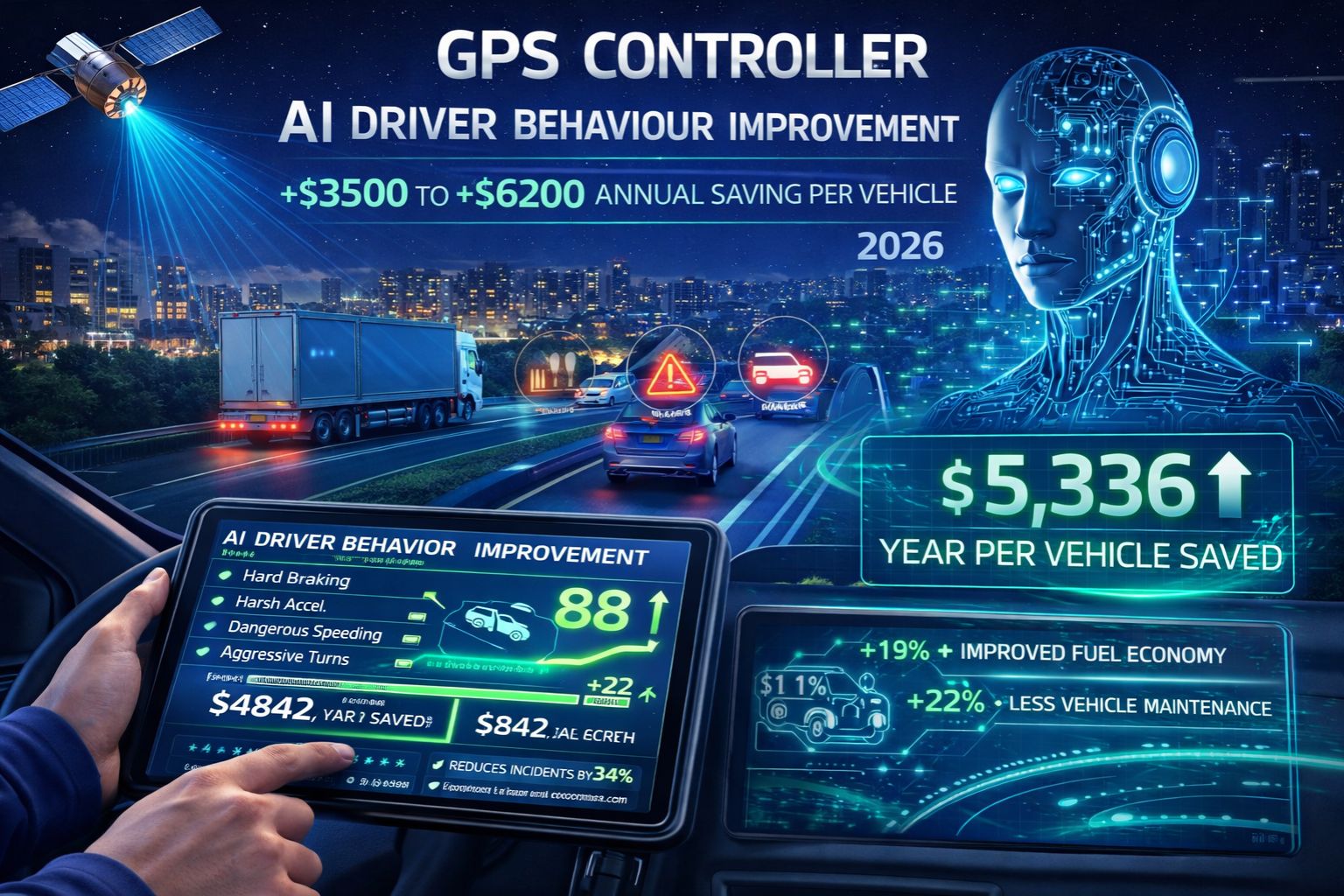
GPS Controller AI driver behaviour improvement 3500 to 6200 annual saving per vehicle 2026
That promise of $3500–$6200 in yearly savings per vehicle from AI driver behavior improvement—it's not just a generic software claim. It's actually a direct calculation. It comes from cutting hard costs like fuel waste, accident frequency, and premature maintenance; the stuff telematics flags but can't stop as it's happening. It's the shift from reporting what *did* happen to preventing the cost from ever adding up.
What AI Driver Behavior Improvement Actually Means for Fleet Costs
In practice, this AI layer is analyzing hundreds of data points every second. It's not just looking at a harsh braking event, but the whole sequence—throttle position, lateral G-force, road grade—that predicts it's about to happen. Then it delivers real-time, in-cab audio coaching. The savings come from interrupting those expensive habits before they turn into a line item on a report. It's a fundamental shift from the passive reporting you get with a standard fleet management software dashboard.
The Reality Check: Where $6200 in Savings Comes From Per Truck
At scale, the math gets tangible. A single case of prolonged idling might waste $20 in fuel. But an AI system that automatically alerts the driver the moment they pass a threshold, and logs that intervention, stops that pattern across hundreds of vehicles, day after day. Honestly, the biggest savings often come from the non-obvious stuff. Think reducing tire wear from aggressive cornering by 15%, or cutting transmission repair frequency by catching and coaching against improper gear selection and engine lugging.
The Critical Mistake: Assuming All Telematics Data is Equal
The most common failure is treating AI behavior scoring like a simple event counter. A basic system flags "harsh braking." The AI contextualizes it—was it on a wet decline with a partial load? The risk and cost implication are completely different. Without that context, managers waste time "coaching" for unavoidable events. Meanwhile, the real, expensive behaviors—like consistent low-RPM high-torque operation that slowly destroys drivetrains—just get lost in the noise.
Decision Help: Tune, Integrate, or Replace Your Tracking System
Your decision really comes down to data latency. If your current system only gives you driver scores hours later, you're stuck tuning processes retroactively. If your platform offers real-time APIs, you might be able to integrate AI coaching modules. But if you're on a closed, reporting-only system, getting to that $6200 per vehicle savings likely means replacing it. You'd need a platform with embedded AI, like gps controller, that actually closes the loop between detection and intervention.
FAQ
Question: How does AI driver coaching actually work in the cab?
Answer: It uses a small in-cab speaker or display connected to the telematics unit. When the AI model detects the start of a high-cost behavior—say, an aggressive acceleration pattern—it gives a brief, immediate audio cue. Something like "Smooth Acceleration." It corrects the driver right then, creating instant feedback.
Question: Is the $6200 savings per vehicle realistic for smaller fleets?
Answer: Yes, but the sources shift a bit. For smaller fleets, the largest savings often come from reduced insurance premiums (thanks to proven risk reduction) and from avoiding the massive, irregular cost of a single at-fault accident. That one bill can easily exceed the annual projected savings from fuel alone.
Question: What's the biggest hidden cost AI behavior improvement catches?
Answer: Progressive mechanical wear. Drivers might not feel the incremental damage from things like "ride-through" gear shifts or over-revving on a cold start. But the AI links these specific behaviors to expensive repair forecasts. That allows for coaching *before* the warranty expires and the full cost lands on the fleet.
Question: When is it too late to fix driver behavior with standard tracking?
Answer: When you're only reviewing reports. If your process is a weekly scorecard review, your potential savings are pretty much capped. The highest ROI requires real-time intervention. That's only possible with an AI system integrated directly into the driver's workflow—and that capability is what defines the next generation of fleet telematics.


Comments
Post a Comment