GNSS Spoofing Causes Delivery Fleet Route Failures and Compliance Gaps
GNSS Spoofing Causes Delivery Fleet Route Failures and Compliance Gaps
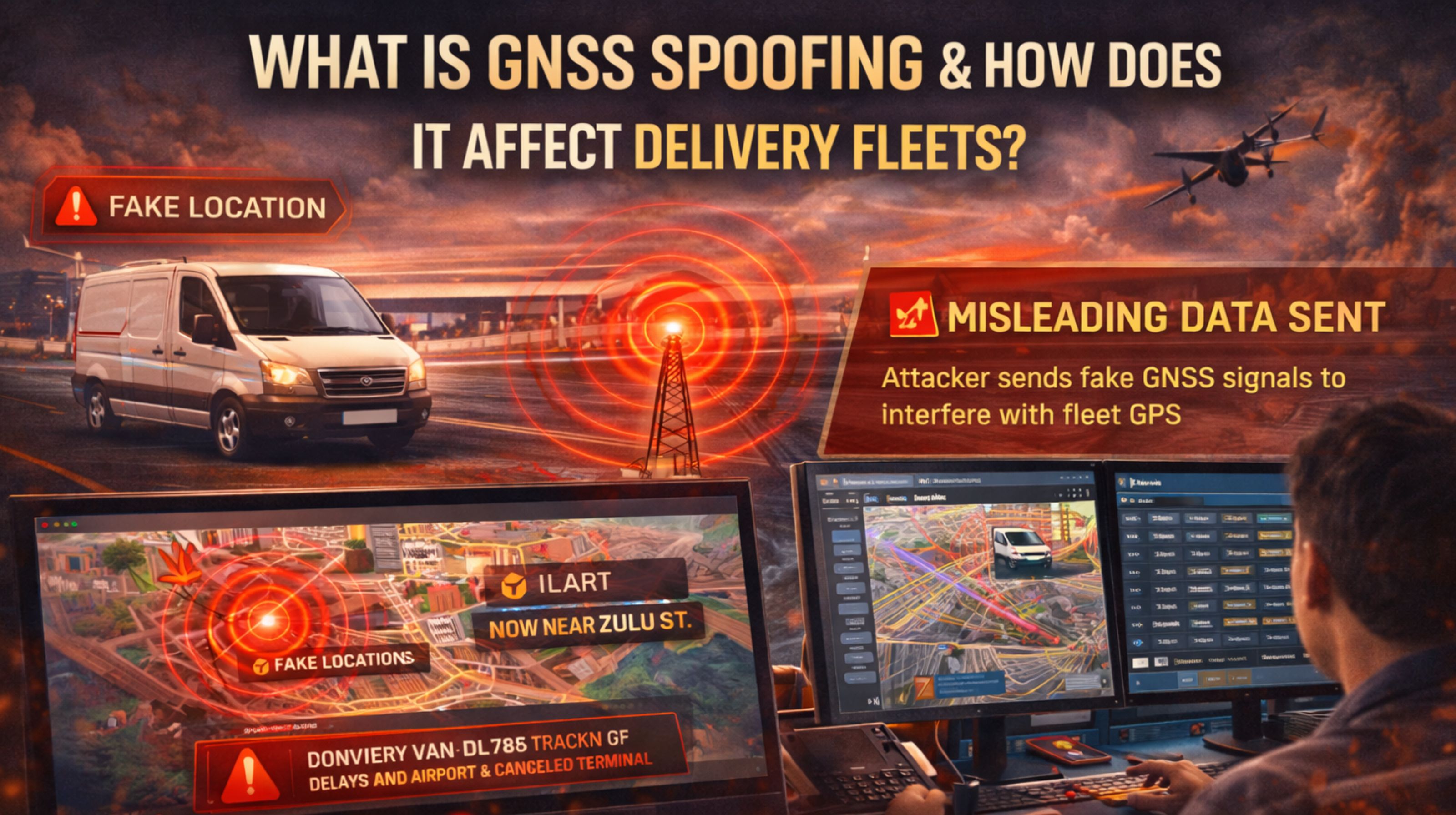
So, GNSS spoofing. It's basically sending fake GPS signals to a receiver, tricking it about where it is, how fast it's going, or even what time it is. For a fleet manager, this isn't some abstract tech threat. It's seeing a truck parked at the warehouse on your screen while the driver is calling in, lost, twenty miles away. The first thing that goes is your faith in your real-time vehicle tracking. And once that's gone, everything else just falls apart.
Clarity: How Spoofing Disrupts Live Fleet Tracking
In the middle of a delivery day, spoofing creates ghosts. You've probably seen it—a vehicle icon suddenly jumps across the map, or just... drifts, while the driver reports a totally different location. It screws up everything: geofence alerts for the depot don't fire, ETAs are nonsense, and you might see a vehicle idling when it's actually on the road, which throws off all your performance numbers. What's tricky is that a lot of fleet hardware won't even flag this as weird. It just passes the bad data along like it's real.
Reality Check: Spoofing Under Real Delivery Scale and Load
Now, think about scale. One spoofing incident in a busy city can mess with the data for a bunch of your vehicles at once. Your dispatch screen lights up with conflicting alerts—some trucks are late, some are weirdly early. Your routing software starts getting fed garbage, suggesting impossible turns. The whole workflow, which depends on knowing where things actually are for dynamic routing and customer updates, just collapses. Deliveries get missed, and drivers get furious because the instructions they're getting are for a truck that doesn't exist.
Mistake: Wrong Assumptions That Escalate Spoofing Risk
The big mistake is writing it off as just a "bad GPS signal." Teams can burn hours checking network settings or swapping out hardware, when the real problem is someone deliberately interfering. That delay makes everything worse. The other failure is relying only on the basic GPS feed. If you're not cross-checking with other sensors or telematics data, the fleet has no way to know it's being fooled. You often only find out when an audit happens, or a customer calls to complain.
Decision Help: When to Tune, Redesign, or Replace Tracking
Honestly, you usually need to redesign how you verify location, not just tweak a few settings. If you're seeing weird, grouped-together errors that make no sense—like trucks showing up in the middle of a lake or inside a secure compound—then reconfiguring isn't enough. The line is when you can't trust the data for your core operations. Things like verifying a delivery, or getting reliable geofencing alerts for your most important clients. That's when you need a system built to detect spoofing, which usually means hardware that uses multiple satellite systems (GPS, Galileo, etc.) and blends that with other sensor data. It might mean an upgrade. A proper gps controller platform should give you the tools to spot these problems.
FAQ
q How can I tell if my fleet is being spoofed and not just losing signal?
a Look for data that's physically impossible. A sudden huge jump in location. A steady drift in one direction. A truck reporting it's in the middle of a body of water. Spoofing can sometimes look deceptively smooth—a "too perfect" movement—whereas a lost signal usually just leaves a stationary dot or a blank spot.
q What is the biggest compliance risk from GNSS spoofing for deliveries?
a It makes your records a lie. Your ELD logs for driver hours, your geotagged proof-of-delivery, your route history—all of it becomes fraudulent. If the DOT audits you, or a client disputes a service time, you have an un-auditable trail. That can put your entire operating authority in jeopardy.
q Can spoofing affect an entire fleet depot at once?
a Absolutely. If someone sets up a powerful enough transmitter near your yard, it can drown out the real signals for every vehicle and tracker on the lot. Suddenly, it looks like your whole fleet has teleported somewhere else. It paralyzes dispatch and any yard management system that depends on accurate IoT asset monitoring.
q Should I replace all my GPS devices to prevent spoofing?
a Not all at once, no. First, check what you have. Do your current units support multiple satellite systems (GPS, GLONASS, etc.) and do they have anti-spoofing features in their firmware? A smarter redesign might focus on your highest-risk or highest-value vehicles first. Whether you replace everything comes down to how critical flawless, tamper-proof location data is for your day-to-day ops and compliance.


Comments
Post a Comment