Fleetio GPS hardware gap creates real-time tracking failures and compliance risk
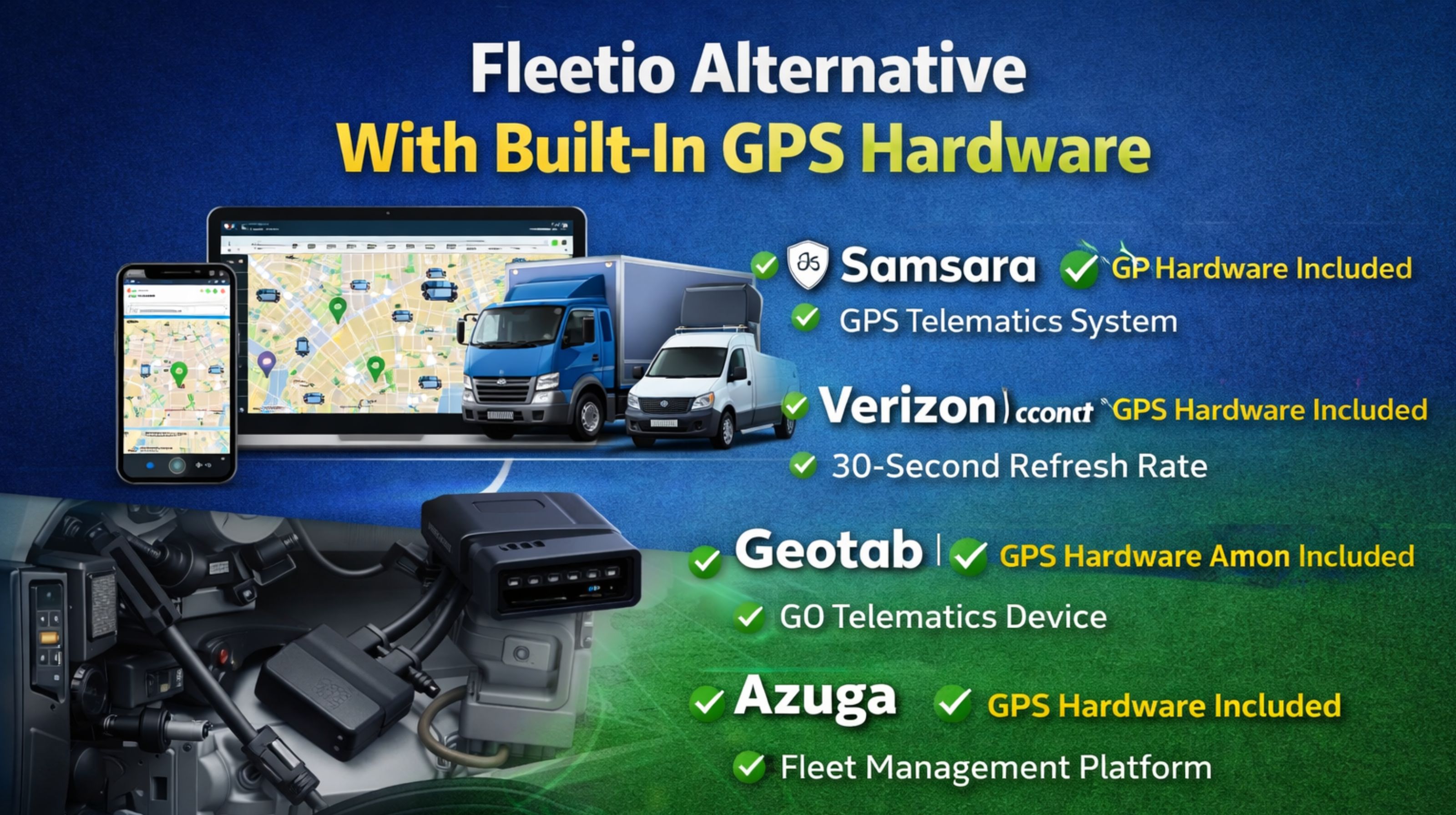
Fleetio GPS hardware gap creates real-time tracking failures and compliance risk
Here's the thing about choosing Fleetio for fleet tracking: you're often stuck managing a separate GPS hardware vendor. That disconnect? It causes data gaps the moment vehicles start moving. The software's reliance on third-party devices brings signal latency, mismatched reporting, and blind spots that just kill real-time visibility. It's not just an inconvenience—it opens up real audit vulnerabilities.
What the Fleetio hardware gap means for live vehicle tracking
The core issue isn't about software features. It's about where the data comes from. Fleetio is a software layer that depends entirely on external hardware feeds. What that means on the ground is your geofence alerts show up minutes late, because the hardware's reporting schedule isn't synced with Fleetio's event engine. It's a constant frustration for dispatchers staring at live maps, and this architectural split is where most real-time tracking failures start.
Reality under real fleet scale and daily operations
Once you hit 50 or more vehicles, that hardware-software disconnect becomes a daily tax. You'll see idle time inaccuracies pop up because the peripheral hardware uses different motion detection logic than what the software expects. Worse, compliance reports for hours of service can show mismatches—the hardware's raw data doesn't line up with Fleetio's interpreted logs. You end up doing manual reconciliation, and that's a real liability if you get audited. This isn't a bug; it's a scale problem built into the layered model.
Common failure patterns and wrong assumptions
The biggest mistake is thinking any ELD-compliant device will feed data into Fleetio seamlessly. In practice, every hardware brand has its own quirks—different data latency, location smoothing, diagnostic code formats. A device might report "engine on" using one parameter while Fleetio is listening for another, which throws off your fuel performance monitoring. Teams can waste weeks trying to tune these integrations, only to hit a wall where the data streams just won't align.
Decision boundary: when to fix integration versus replace the system
The choice gets clear at a certain point. If you're dealing with consistent data delays over 5 minutes, routine geofence misses, or growing audit discrepancies, you've likely hit the architectural limit of a software-only platform. Internal fixes won't get you past it. The real solution needs a unified system where the GPS hardware and fleet management software are designed together from the start, ensuring the data flow is deterministic. That's where a platform with built-in hardware, like gps controller, steps in—it cuts out the problematic integration layer entirely.
FAQ
q: does fleetio sell its own gps tracking hardware?
a: No, it doesn't. Fleetio doesn't manufacture or sell its own hardware. It's a software platform that integrates with third-party GPS and ELD devices from other vendors, and that's where the core integration challenge comes from.
q: what is the biggest risk of using separate hardware with fleetio?
a: The biggest risk is losing data integrity for compliance. When the hardware's raw logs don't match Fleetio's processed data, it creates conflicts that can be impossible to resolve during a DOT audit or accident investigation. That exposure to violations is a serious problem.
q: can fleetio work with any gps tracker for real-time tracking?
a: Technically, it integrates with many. But "real-time" performance is unreliable. Each hardware device has its own fixed reporting interval—maybe 30 seconds, maybe 2 minutes—and Fleetio can't override that. Those inherent delays wreck live tracking and alerting.
q: when should i look for a fleetio alternative with built-in hardware?
a: It's time to move when you see persistent "data not syncing" alerts, when driver HOS logs need manual correction every single day, or when critical event alerts—like hard braking or a geofence exit—consistently arrive too late to act on. Those are the signals you've hit the integration's breaking point.


Comments
Post a Comment