Fleet Tracking Failure During GPS Signal Loss or Jamming
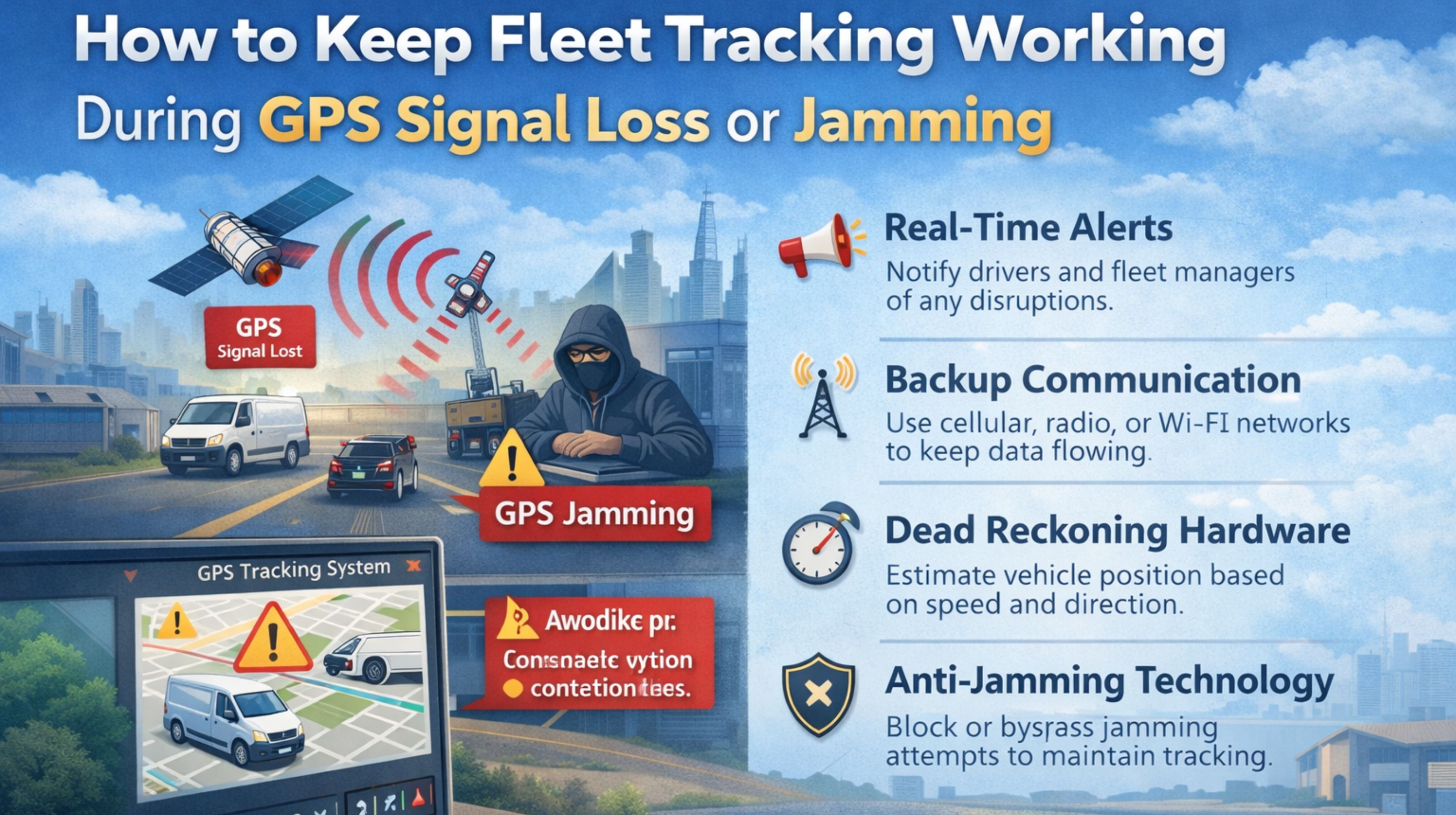
Fleet Tracking Failure During GPS Signal Loss or Jamming
When GPS signals drop, your real-time map goes dark. But honestly, the real failure is the hidden operational risk—things like delayed geofence alerts, missed route compliance, and silent vehicle idling that your system just can't report.
What GPS Signal Loss Really Means for Live Fleet Control
In live operations, signal loss isn't just a blank spot on a map. It's a complete loss of situational awareness. You stop getting speed, heading, and ignition status, which breaks the whole chain of data you need for real-time vehicle tracking and automated reports. What you'll usually see in practice is a delayed "stale location" alert that pops up minutes after a vehicle has already strayed off its planned route.
The Reality of Operating at Scale When GPS Fails
Under real fleet load, the problem just gets worse. A single vehicle losing signal is one thing, but when multiple units in an urban canyon or near a known jamming source go dark at the same time, dispatch loses all coordination. Here's a non-obvious detail a lot of people miss: most tracking devices have a limited internal buffer for storing location pings during an outage. Once it's full, new data overwrites the old, creating permanent gaps in the trip history that any auditor is going to flag.
Common Mistakes That Escalate a Simple Signal Gap
The biggest misunderstanding is assuming cellular data equals GPS tracking. If the GPS receiver itself is jammed or blocked, the device might still show as "online" via cellular, but its location data is stale or just wildly wrong. Teams often waste hours troubleshooting the cellular modem when the real problem is a compromised GPS antenna or active RF interference. That's a boundary condition where the usual simple reboots stop working altogether.
Decision Help: When to Tune, Redesign, or Replace Your Tracking Setup
The right choice really depends on how often it fails. For occasional urban canyon drops, tuning report intervals and maybe adding dead reckoning sensors could be enough. The clear line where internal fixes aren't cutting it is when signal loss keeps happening during critical compliance events or creates consistent audit mismatches. At that point, you need a redesign that brings in multi-source validation—think GLONASS, cellular triangulation, and inertial data. That's the exact scenario where consulting a gps controller platform's device specs becomes critical, so you can avoid getting locked into limited hardware from a single vendor.
FAQ
q How long can a GPS tracker store data without a signal?
a It depends on the device's internal memory, but most consumer-grade fleet units store 12-24 hours of high-frequency pings before they start overwriting. That creates irreversible data loss for your compliance reports.
q Can jamming cause permanent damage to tracking hardware?
a Not usually, no. But persistent, high-power jamming can mask other hardware failures. It leads to a misdiagnosis where you might replace a faulty antenna over and over, instead of actually addressing the signal security gap.
q At what fleet size does GPS downtime become a critical path failure?
a It's when more than 5% of your active fleet is unreachable during core dispatch windows. That's when your workflow's dependency on live ETAs breaks down, forcing manual intervention that doesn't scale at all.
q Should we switch to cellular-only tracking if GPS is unreliable?
a Rarely a good idea. Cellular location accuracy is often in the 100-1000 meter range, which isn't enough for geofencing or checking route adherence. The better move is a hardware upgrade to a dual-system device that can fail over gracefully. That's a core capability you should look for in any gps controller solution.


Comments
Post a Comment