fleet GPS software with anti spoofing detection alert Middle East 2026
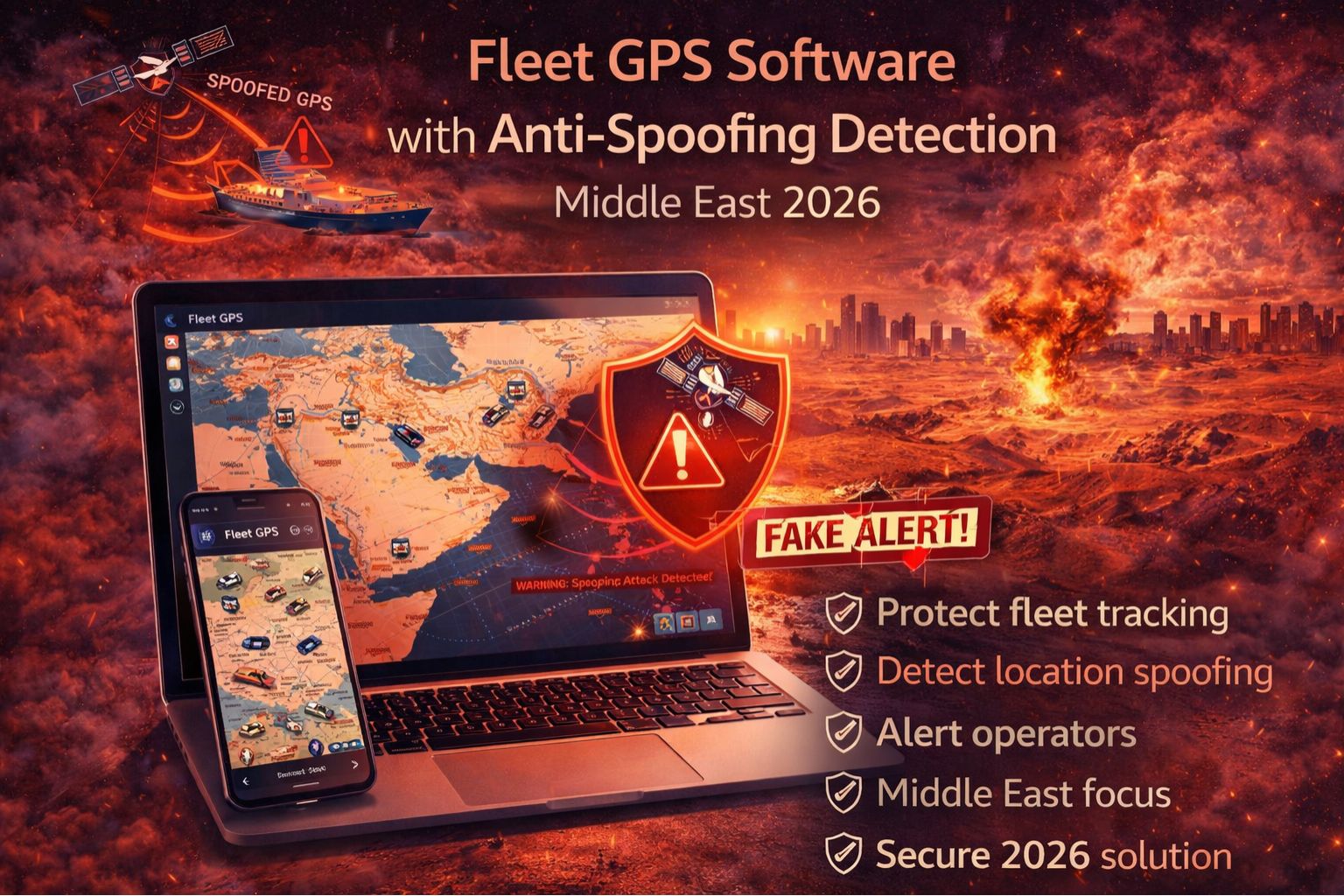
fleet GPS software with anti spoofing detection alert Middle East 2026
So your fleet GPS software in the Middle East misses a spoofing attack. What you get then are phantom routes—trucks reporting from a secure depot while, in reality, they're already hijacked on some remote highway. The 2026 threat isn't just losing the signal. It's about a fabricated signal being injected, designed to slip past basic geofencing. It turns your real-time vehicle tracking dashboard into a stage for a very believable lie.
What Anti-Spoofing Detection Actually Means for Your Fleet
In practice, an anti-spoofing alert isn't just a "bad signal" pop-up. Think of it more as a multi-sensor contradiction flag. It's when the inertial measurement unit (IMU) is screaming about violent acceleration, but the GNSS signal shows a perfectly smooth, legal-speed route through downtown. We saw this play out in the UAE. Spoofed signals created flawless compliance logs for trucks that were actually just sitting still, being unloaded illegally. That's a detail you'd only catch by cross-referencing things like fuel burn and engine data—it's not obvious at all.
The 2026 Reality: Spoofing Isn't Just Location Anymore
Here's where it really escalates: time manipulation. The modern spoofing attacks we're seeing in the region now don't just fake a location. They roll back timestamps to create false "on-time" delivery proofs, or they mess with the sequence of geofence entries and exits. Do that at scale, and you corrupt the entire audit trail for customs and bonded goods. A security breach suddenly becomes a full-blown compliance catastrophe. The software alert fails right at the boundary where the spoofing mimics legitimate multi-satellite constellation data—something basic single-source GPS filters just can't argue with.
Common Mistakes That Make Spoofing Invisible
The most dangerous assumption? Thinking encrypted military-grade GPS signals (like M-Code) make commercial fleets immune to spoofing. Reality check: most fleet hardware runs on civilian L1/L5 bands. Spoofers just broadcast a more powerful false signal that drowns out the real one. Another misunderstanding is relying only on jamming detection. A jammed truck goes offline and sets off alarms, sure. But a spoofed truck? It reports everything as perfectly normal. That's why you have to integrate telematics data—like catching a sudden, unexplained drop in fuel level against reported idle time. That's critical.
When to Tune, Reconfigure, or Replace Your System
The decision path is pretty clear, honestly. You can tune the thresholds for signal integrity metrics if the spoofing you face is rare and not very sophisticated. You have to reconfigure your software to fuse in data from cellular triangulation and wheel-speed sensors when you're moving high-value assets through known spoofing corridors, like the approaches to major ports. And you need to redesign the whole monitoring workflow—pushing alerts to a dedicated security console, not just burying them on the dispatch map—if spoofing could completely invalidate your contractual or regulatory logs. The line for full replacement? That's when your current gps controller platform can't even ingest and analyze raw RF signal data (things like carrier-to-noise density, doppler shift) to spot the manipulation before it corrupts the reported location.
FAQ
Question: How does GPS spoofing detection work in fleet software?
Answer: It works by analyzing the signal itself—its strength, the angle it arrives at, clock drift—and then cross-checking the GPS location against other sensors. Think IMU data, or pings from cellular towers. The goal is to flag movements that are physically impossible, or data that contradicts itself.
Question: Why is the Middle East a high-risk region for GPS spoofing in 2026?
Answer: A few reasons. You've got high-value cargo moving through, complex geopolitics, and miles of remote infrastructure. That combination creates both the motive and the opportunity for spoofing attacks, whether the goal is theft, smuggling, or just slipping past regional trade compliance monitors.
Question: Can anti-spoofing alerts prevent my fleet from being hijacked?
Answer: No, an alert can't physically prevent a hijacking. What it does is critically important, though: it shortens the detection gap. It raises an alarm within minutes of the location data being messed with, instead of hours or days later when the truck is long gone and unrecoverable.
Question: What's the first sign my current fleet tracking might be vulnerable to spoofing?
Answer: The first red flag is seeing unexplained, perfect routing compliance in areas that are historically known for signal issues. Or, when drivers are reporting obvious location errors that your software dashboard doesn't show at all. That's a sign the primary detection layer has already failed.


Comments
Post a Comment