ELD Compliant GPS Fleet Tracker Failure and HOS Violation Risk
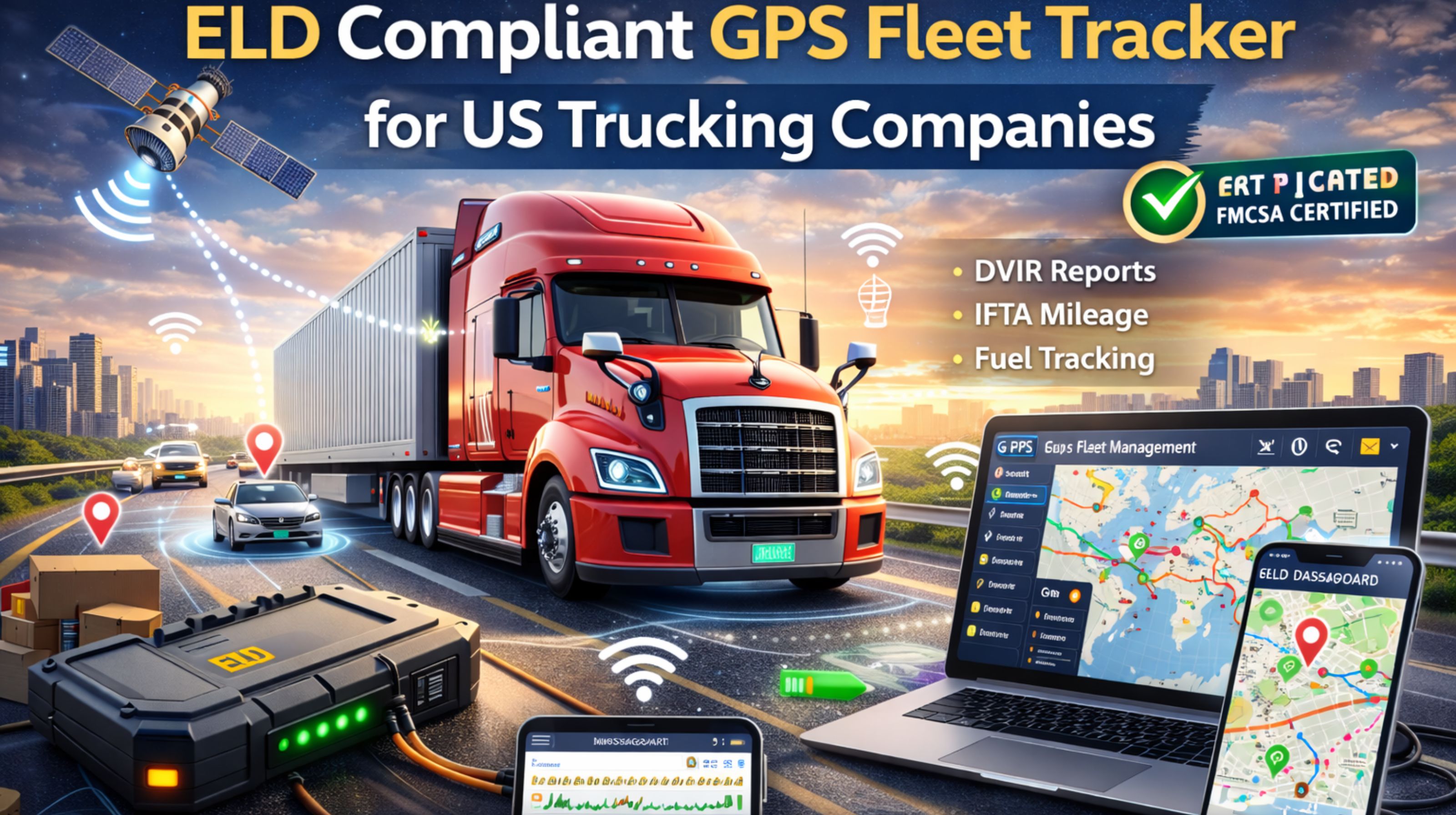
ELD Compliant GPS Fleet Tracker Failure and HOS Violation Risk
When an ELD compliant GPS fleet tracker fails, it's not just a lost signal—it's a direct path to Hours of Service violations and DOT audit flags. The first sign is often a mismatch between the engine data the driver sees and the log being sent to the back office, which creates an immediate compliance gap. And the thing is, that gap is invisible until the audit notice shows up.
What ELD Compliance Failure Means for Live Fleet Tracking
Compliance failure means your GPS tracker's certified ELD function has decoupled from its real-time location and engine reporting. In practice, you might see the device report "on duty, driving" while the vehicle is parked, or it might fail to capture a yard move, creating unassigned driving time. This drift between the certified log and the actual telemetry is the core risk, because it undermines the very legal shield the ELD is supposed to provide.
Reality Check Under Real Trucking Scale and Load
At scale, with hundreds of trucks, these failures aren't isolated. A common real-world observation is signal jitter in dense urban canyons or during cross-country hauls through cellular dead zones, which causes the ELD to log "unidentified driving" events. The system's attempt to reconcile later often just fails, leaving a trail of unverified logs. What a lot of people miss is that the ELD's heartbeat to the FMCSA portal can fail independently of your fleet tracking software showing a live location. So you end up with two conflicting truths.
Mistakes and Wrong Assumptions That Escalate Risk
The most common misunderstanding is treating all GPS trackers as equal for ELD purposes. A standard asset tracker that's been reconfigured for engine data usually lacks the rigorous certification and failsafe mechanisms, which leads to silent data corruption. Companies often make it worse by trying to patch the issue with firmware updates or carrier swaps, not realizing the compliance break is in the device's core logging integrity, not its network connection.
Decision Help: Tune, Replace, or Redesign Your Tracking Stack
The decision boundary is pretty clear: if failures are network-related, like in poor coverage areas, you can tune things with dual-SIM devices or network aggregators. But if the failure is in the ELD log integrity itself—think mismatched engine hours or corrupted certification files—then internal fixes just won't cut it. A full device replacement with a certified ELD is mandatory. This is really where evaluating a dedicated gps controller platform built for compliance, not just location, becomes critical to stop the violation cycle.
FAQ
q What causes an ELD compliant tracker to lose its certification status?
a A device loses its certified status if its software is tampered with, if it uses an uncertified peripheral, or if it fails the FMCSA's required self-tests. This often happens silently, usually after a firmware update from a non-compliant source.
q How does ELD failure create an audit risk if the truck's GPS still works?
a The GPS may show location, but the ELD module is the part responsible for recording engine data to prove driving time. A disconnect means the legally mandated log is wrong or missing, while your fleet map looks fine—and that discrepancy is a major red flag for auditors.
q At what fleet size do ELD sync issues become unmanageable?
a Beyond 50-75 power units, manual reconciliation of failed logs or unassigned driving events basically becomes a full-time job. The scale constraint really hits when your dispatch workflow depends on accurate HOS availability, and the data is just unreliable.
q When should you replace an ELD device instead of troubleshooting it?
a Replace when log errors are recurrent and tied to the device's core logging function, not just cellular coverage. If a certified diagnostic shows internal memory or sensor failure, continued use risks systematic violations. A robust gps controller system is designed to flag these hardware failures before they cause a compliance breach.


Comments
Post a Comment