Dashcam GPS Tracker Failure Under ₹3000 in India Fleet Operations
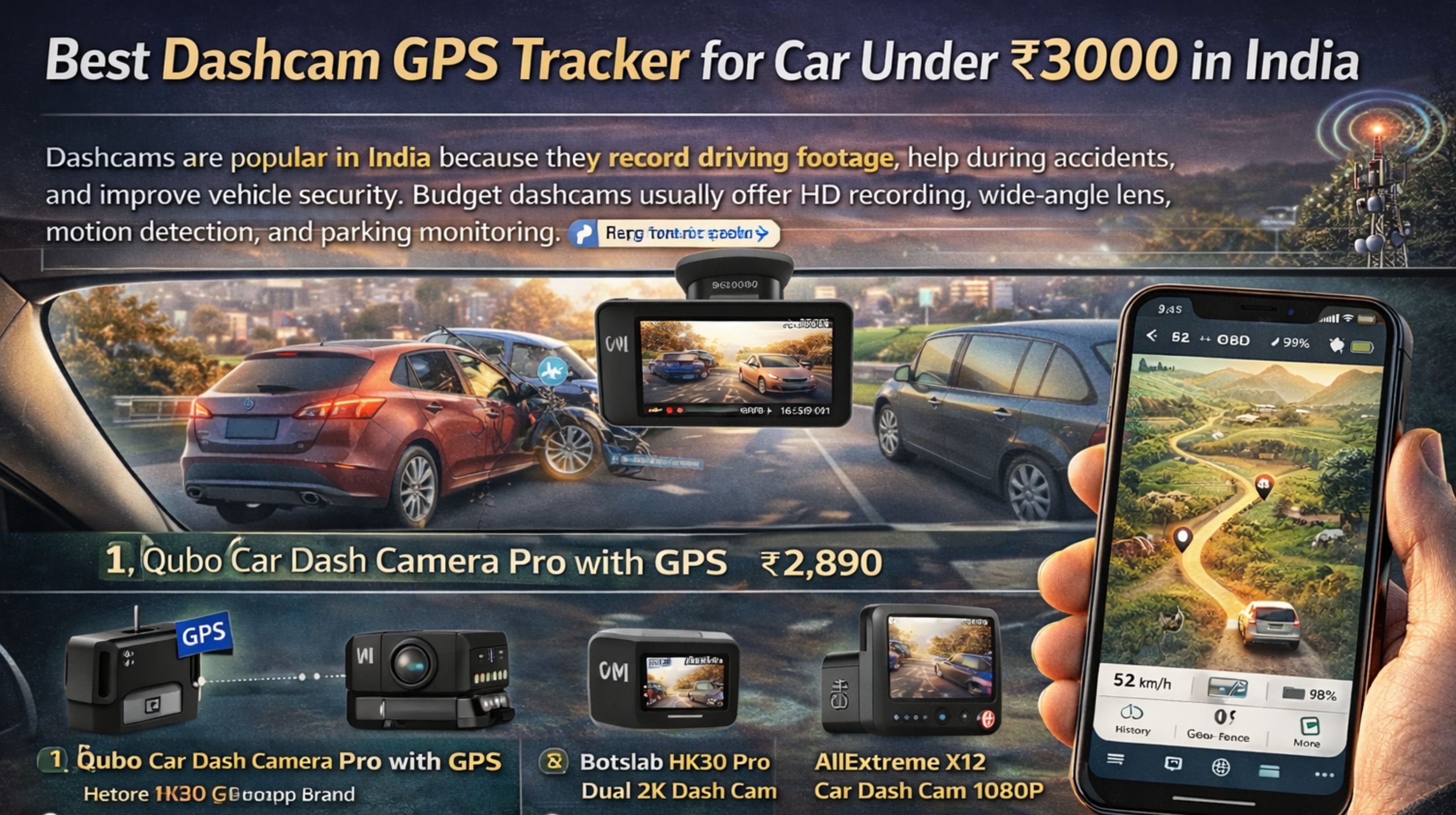
Dashcam GPS Tracker Failure Under ₹3000 in India Fleet Operations
You know it's happening when that geofence alert finally pings... but the vehicle left the site twenty minutes ago. That's the first real sign, and suddenly you've got a visibility gap that no amount of manual log-checking can close.
What Dashcam GPS Tracker Failure Means for Your Fleet
It's not just a corrupted video file. It's the entire digital logchain breaking down. The location data and the event footage get out of sync, and then you're stuck. Trying to reconstruct an incident becomes guesswork, and you're wide open for mismatches when the compliance audit comes around.
Reality Check Under Indian Fleet Scale and Conditions
When you're running at scale, the weak spot shows up. These devices often can't handle uploading 4G video data while polling for GPS, especially with our roads and vehicle vibration. The event packets get corrupted, and your fleet management software just gets incomplete alerts. The real problem? It completely masks what your actual idle times are.
Mistakes and Risks with Budget Tracker Assumptions
The big misunderstanding is that "dual-channel" means it's doing two things reliably at once. The reality with low-cost chipsets? They're often sharing a single modem. So of course, that's when you lose the GPS signal—right at the moment an incident triggers the video recording. For insurance evidence, that flaw isn't just annoying; it's critical.
Decision Help: Fix, Reconfigure, or Replace the Tracker
Here's the line. If you're seeing constant signal jitter in urban areas, or alerts that are delayed by more than, say, 90 seconds, internal tuning isn't going to cut it. You need to replace the units. Get hardware with independent modems, because no software patch in the world can fix this kind of architectural limit for proper real-time vehicle tracking.
FAQ
q What is the main problem with cheap dashcam GPS trackers?
a It boils down to a hardware compromise. They use a shared module for cellular and GPS, which leads to data collisions. The location packets drop exactly when you're recording a critical video event, leaving you with timelines you can't verify.
q Can a software update fix delayed geofence alerts from these devices?
a Honestly, no. The delays come from the hardware queue overloading. Software might let you adjust reporting intervals, but that just makes the data less fresh and actually makes your compliance reporting gaps worse.
q How does fleet size worsen these tracker failures?
a When you scale up, the network handoff failures multiply. Your central server ends up flooded with corrupted data packets, which causes a system-wide lag. Your geofencing alerts slow to a crawl, and dispatch response just falls apart.
q When should a fleet manager replace instead of troubleshoot?
a Replace when you start seeing evidence gaps in your audit reports, or when the alert latency goes beyond what your operations can tolerate. This is a hardware problem at its core. At that point, investing in a proper gps controller platform isn't an upgrade; it's the necessary foundation for data integrity.


Comments
Post a Comment