Choosing a GPS Tracker for Multiple Countries Risks Signal Loss and Compliance Failures
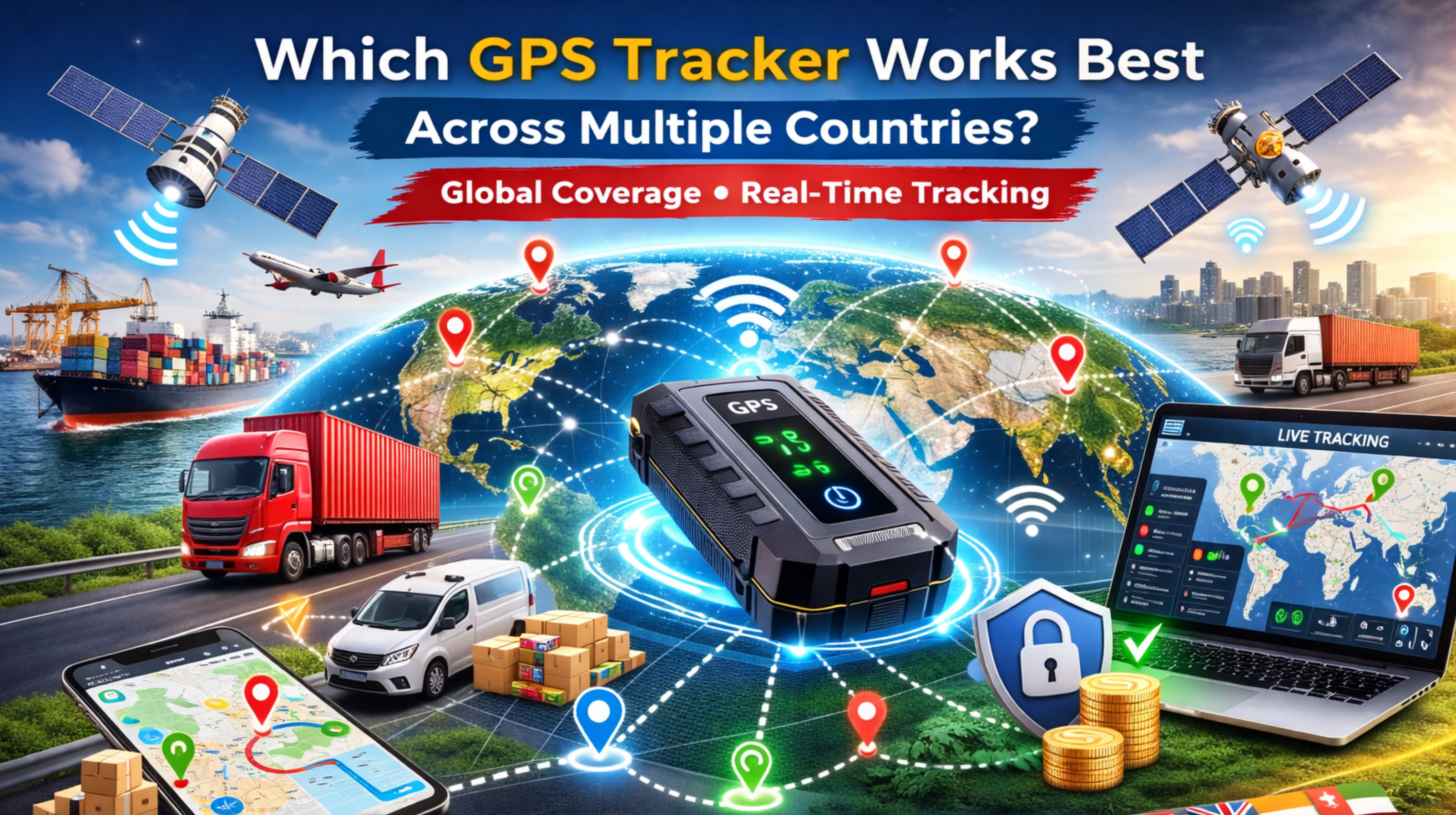
Choosing a GPS Tracker for Multiple Countries Risks Signal Loss and Compliance Failures
Picking a GPS tracker for an international fleet? It's less about finding the "best" one and more about dodging the specific failures that happen when a unit crosses a border. That's when critical functions drop, leaving vehicles untracked and suddenly out of compliance.
What "Works Across Countries" Really Means for Fleet Tracking
In live operations, it means a device has to keep a data connection and accurate location reporting going—without anyone touching it—as drivers switch between cellular networks and regulatory zones. You see this "border blackout" a lot in the real world, where trackers just go silent for hours during a network handoff. That silence can easily mask an unauthorized stop or a route deviation.
The Reality of Multi-Country Tracking at Vehicle Scale
At real fleet scale, the main thing that breaks is cellular roaming. Most standard trackers use a single SIM card tied to one carrier's roaming deals, which can just... fail in certain regions. Or they'll rack up massive, unpredictable data costs. At scale, you end up with a patchwork of vehicles that are working or not working based purely on local cell coverage, which cripples any kind of unified reporting. This inconsistency feeds right into your fleet management software dashboards, making the data look spotty and unreliable.
Common Mistakes That Lead to International Tracking Failure
The biggest wrong assumption is thinking a "global" device runs on one, magic network. The reality is, reliable multi-country operation needs either a multi-IMSI SIM that can hop between local carriers, or hardware built to handle regional frequency bands. Another easy-to-miss detail is the GNSS chipset. Some don't support all the satellite systems—like GPS, GLONASS, BeiDou, Galileo—which can cause serious location drift in places like Eastern Europe or East Asia.
Decision Help: Reconfigure Your Current Hardware or Redesign the Solution
You're basically choosing between reconfiguring your existing hardware with a global IoT SIM provider, or redesigning the whole solution with purpose-built, multi-network hardware. The line where internal fixes stop working is when your vehicles are routinely going into countries outside your main cellular provider's roaming footprint. At that point, trying to patch in a local SIM to a standard tracker often creates more real-time vehicle tracking gaps than it fixes. That's when you need a full architecture review, probably with a gps controller platform, to lock down compliance and signal integrity.
FAQ
q: Do I need a different GPS tracker for each country?
a: Not exactly, but you do need a tracker with a cellular module and SIM solution built for multi-operator access. One that depends on a single carrier's roaming map won't cut it.
q: Why does my tracker stop working when my truck enters another country?
a: It's usually a cellular network registration failure. The device's SIM can't authenticate on the local network, often because of restrictive roaming profiles or just a lack of a carrier agreement in that specific region.
q: How does multi-country tracking affect driver hours compliance?
a: Signal loss at the border can create gaps in the electronic logging device (ELD) or tachograph data. That leads to mismatches in an audit and potential violations if you can't verify the driver's activity.
q: When should I replace my current trackers for international routes?
a: Replace them when you get consistent data blackouts in specific countries, when you're hit with crazy roaming charges, or when your compliance reporting demands an unbroken location history your current setup can't give you. That's the time for a gps controller evaluation.


Comments
Post a Comment