AI Traffic Prediction in Fleet GPS Software Fails Under Real-World Signal Gaps
AI Traffic Prediction in Fleet GPS Software Fails Under Real-World Signal Gaps
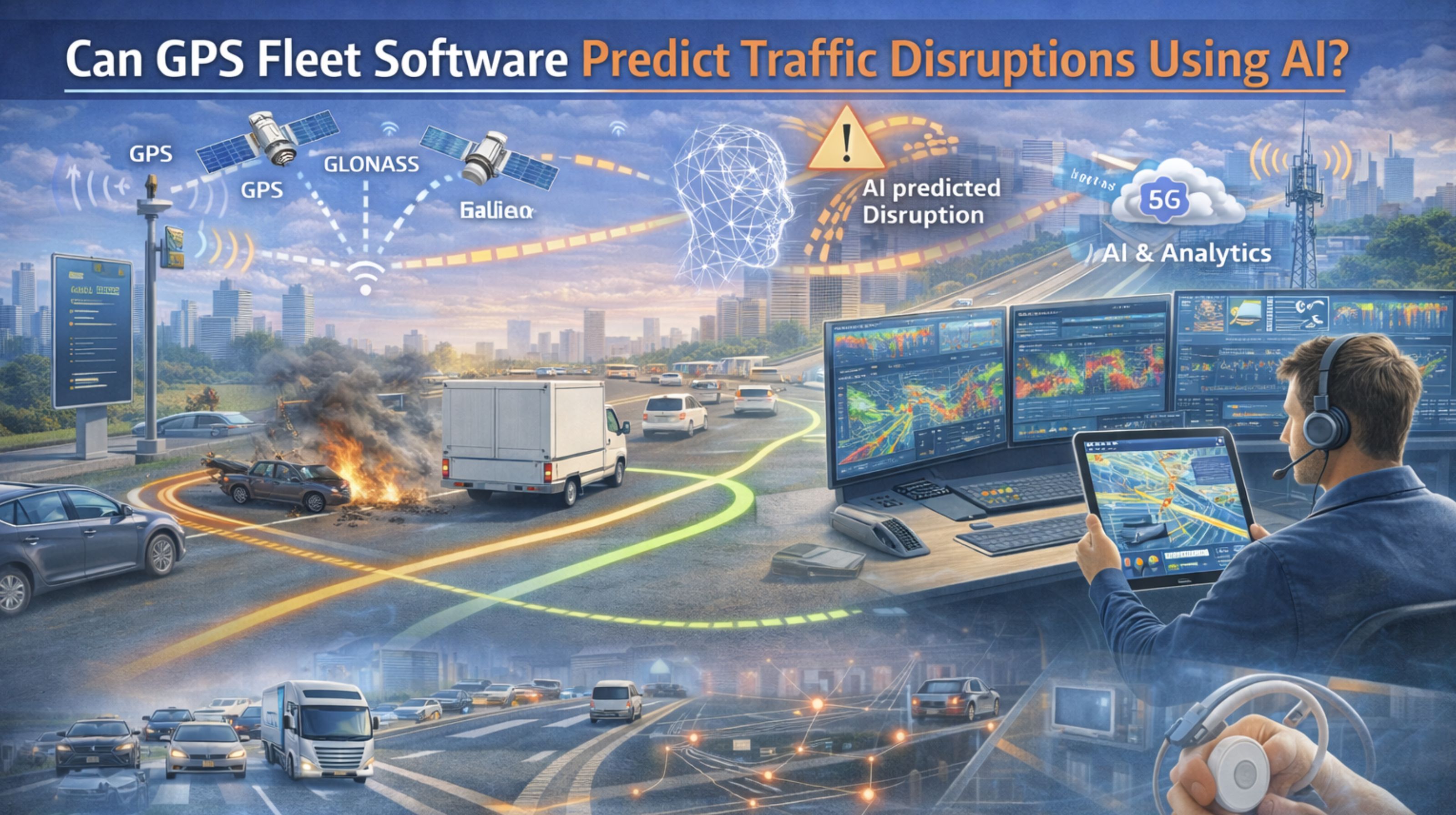
When your fleet management software promises AI-powered traffic disruption forecasts, the failure point isn't the algorithm—it's the real-time location data feed it depends on. I think a common misunderstanding is that AI fixes poor GPS signal integrity, but in practice, it actually amplifies the errors. That leads to cascading route failures.
What AI Traffic Prediction Actually Means for Fleet Control
In live fleet tracking, this feature tries to correlate historical GPS pings, live traffic APIs, and vehicle movement patterns to forecast slowdowns. The reality, though, is that a single vehicle's delayed geofence alert—from a cellular dead zone, say—can corrupt the model's input. It ends up predicting phantom congestion. This isn't really about smart routing; it's about data hygiene at scale, and that's often the part that gets missed.
The Reality Check: AI Models Fail Under Fleet Scale and Load
Under real vehicle scale, the AI needs consistent, high-frequency data from every asset. What we've seen is that in mixed fleets, older telematics devices with slower reporting intervals create "ghost vehicles" in the model. These are units that appear stationary in traffic when they're actually moving, which skews predictions for the entire network. The non-obvious detail? It's the network latency between the IoT device, the cloud platform, and the AI engine. That alone can add a 90-second decision lag, which is a lifetime for routing.
Common Mistakes and Hidden Compliance Risks
A major risk is assuming AI overrides the need for calibrated hardware. Teams will invest in prediction software while running outdated GPS tracking devices that can't provide the 10-second ping intervals the AI needs. This creates an audit mismatch: the software logs a predicted delay, but the actual vehicle GPS breadcrumb trail shows a different cause, like an unauthorized stop. Suddenly you have a compliance gap in driver hour reporting, and that's a serious problem.
Decision Help: When to Tune, Redesign, or Replace the System
The clear boundary is data latency. If your current telematics infrastructure can't deliver >95% of vehicle locations within 15 seconds under normal conditions, no AI traffic add-on will work. Full stop. The choice is to replace the data collection layer first. A gps controller platform focused on data integrity might be a prerequisite before layering on predictive analytics. The AI is only as good as the real-time feed powering it.
FAQ
q How accurate is AI traffic prediction in fleet software?
a Accuracy is secondary to data freshness; predictions are often based on location data that is minutes old, rendering them useless for dynamic rerouting.
q Can this AI prevent delivery delays?
a It can't prevent delays caused by its own input errors. False congestion alerts lead to unnecessary reroutes that actually increase miles driven and idle time.
q What fleet size needs AI traffic prediction?
a Scale reveals the flaws. For fleets under 10 vehicles, manual dispatch may be faster. Over 50 vehicles, the AI's dependency on perfect data from every unit becomes its biggest point of failure.
q Should I upgrade software or hardware for better predictions?
a Hardware first. If your existing devices and network can't support high-frequency, low-latency tracking, upgrading to a modern gps controller foundation is the mandatory first step before any AI features add value.


Comments
Post a Comment