5G Fleet Tracking Accuracy Risks from Signal Handoff and Device Gaps
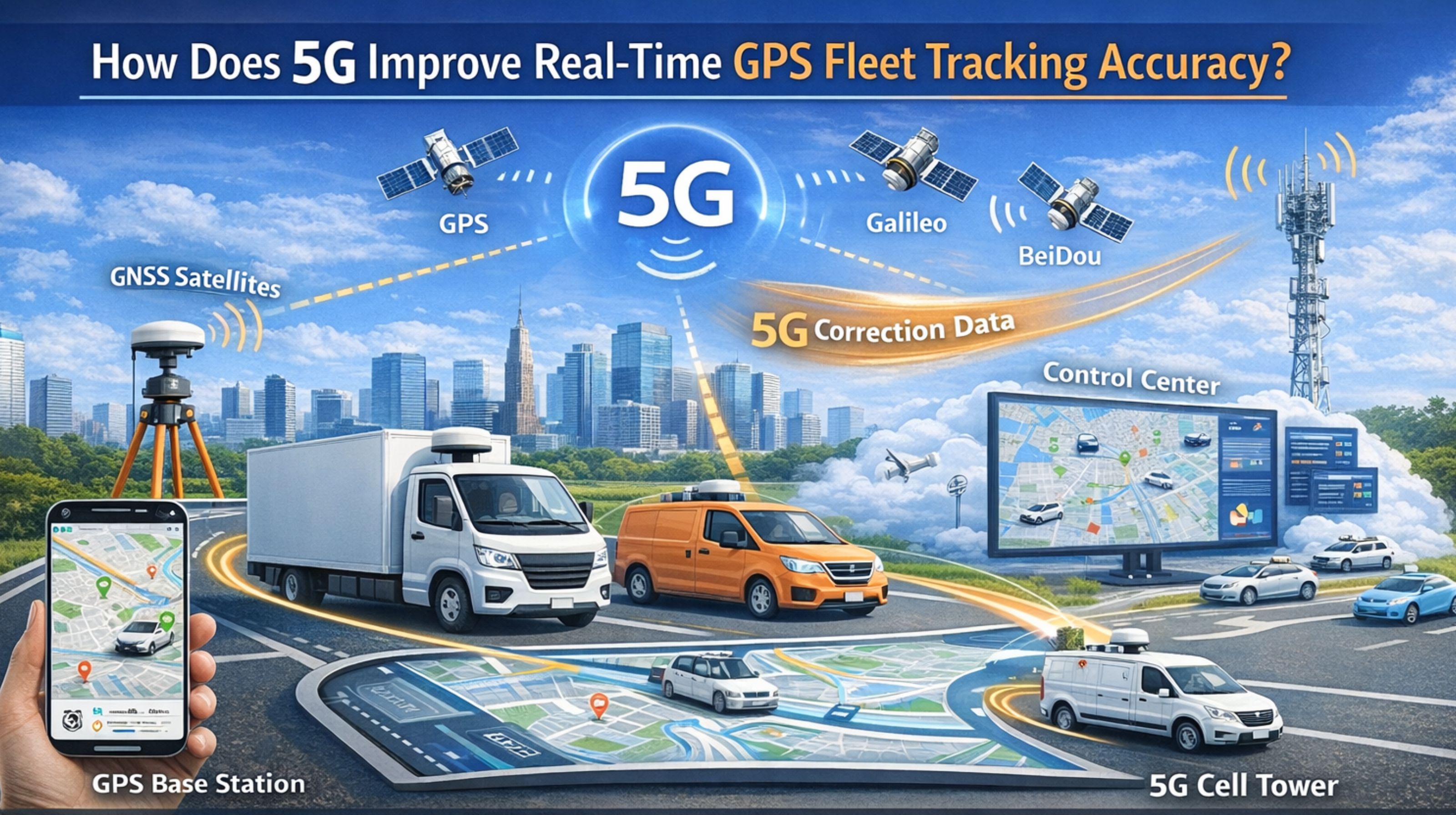
5G Fleet Tracking Accuracy Risks from Signal Handoff and Device Gaps
The promise of 5G for real-time fleet tracking is lower latency, sure. But the real operational risk is accuracy loss during cellular tower handoffs, especially in dense urban corridors. That's where a device might report a stale position for a bit while it's negotiating the new 5G connection.
What 5G Accuracy Means for Live Fleet Visibility
In practice, 5G's improvement means location pings can *theoretically* arrive every 5-10 seconds instead of every minute or two. But that depends entirely on the device's modem stability and network slicing priority—not just the advertised speed they lead with.
The Reality of 5G Under Real Fleet Scale and Movement
Fleet managers see the gap clearly when, say, 20 trucks leave a depot: devices on older hardware or different carrier plans just don't synchronize updates. You end up with a fragmented real-time map where some vehicles appear to jump locations, which complicates dispatch and route optimization efforts instantly.
Common 5G Tracking Mistakes and Assumption Risks
The biggest misunderstanding is assuming all 5G is equal. Thing is, the non-standalone (NSA) 5G that most fleets use still relies on 4G LTE cores for control signals. That introduces the same old latency spikes during congestion that managers were hoping to eliminate, and it directly messes with geofencing alerts.
Decision Help: When to Upgrade Hardware Versus Redesign Workflow
The boundary really comes down to device compatibility. If your current trackers lack 5G standalone (SA) modem capability and your workflows absolutely depend on sub-30-second accuracy—for compliance proofs, for instance—then internal fixes won't cut it. A full hardware refresh is necessary. That's the exact scenario where consulting a gps controller platform's device specs becomes critical before you try to scale.
FAQ
q Does 5G make GPS location itself more accurate?
a No. 5G improves data transmission speed and latency, but the actual GPS satellite fix accuracy comes from the device's GNSS chipset. Faster data just gets an accurate—or inaccurate—fix to your screen quicker.
q What is the biggest hidden risk with 5G fleet tracking?
a Signal handoff failure in transition zones. A device can show strong signal but actually be stuck between towers, reporting its last known location for minutes. That creates false "real-time" data that seriously misleads operations.
q How many vehicles trigger 5G scale problems?
a Problems emerge not at a specific vehicle count, but at data concentration. When 50+ devices in one yard all request high-frequency updates at the same time, carrier network prioritization can throttle some, which completely desynchronizes the fleet view.
q When is it a device problem versus a carrier problem?
a If location jumps or delays are inconsistent across identical devices on the same vehicle, it's likely a carrier coverage issue. If all the new 5G devices on a carrier show the same lag, but older 4G devices do not, then it's probably a device firmware or compatibility gap. That's when you need a gps controller review.


Comments
Post a Comment