3PL logistics GPS visibility platform for multiple warehouses
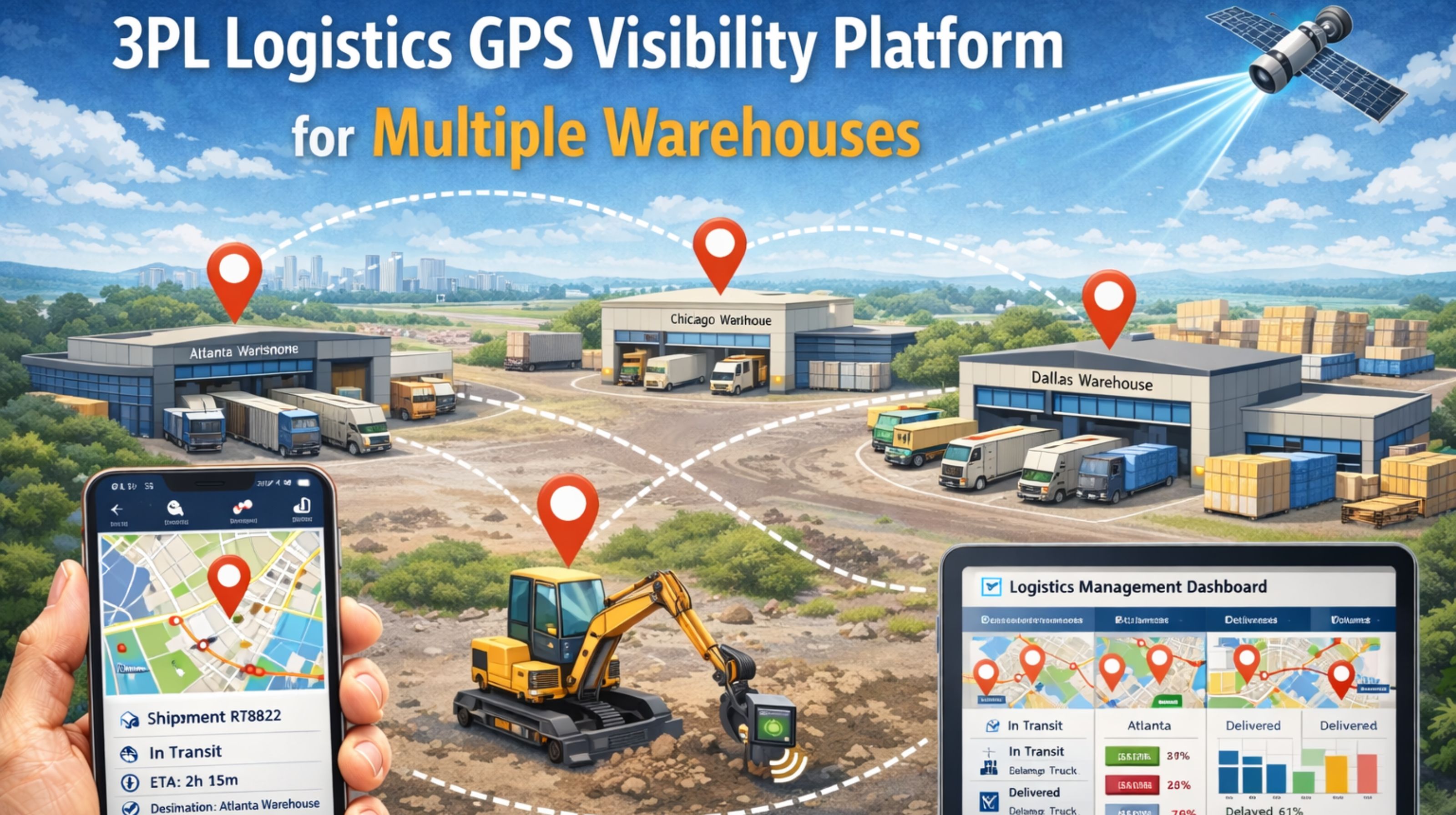
3PL logistics GPS visibility platform for multiple warehouses
When your 3PL logistics GPS visibility platform is supposed to connect multiple warehouses, the failure isn't just a missing dot on a map. It's worse—it's a pallet that physically arrived at Dock 3 but the system still shows it in transit. That one gap starts a chain reaction: inventory counts go wrong, cross-dock transfers get delayed, and then the client billing disputes start, eroding trust. Honestly, this gap between the GPS ping and the warehouse management system (WMS) update is the exact point where what's actually happening and what the digital record says permanently split apart.
What multi-warehouse GPS visibility really means for 3PLs
For a 3PL, true GPS visibility across multiple warehouses has to mean more than a truck's location. It means seeing its precise status in relation to each facility's unique rhythm—the receiving schedule, the yard capacity, the labor allocation—all in real time. The critical signal is that geofence transition from "in-transit" to "arrived at Warehouse B." That signal has to trigger an immediate update in the fleet management software and the WMS to actually allocate dock doors and staff. When this handshake fails, you get the classic scenario: trucks idling in the yard while your system shows them miles away. It wastes driver hours and inevitably delays the next scheduled pickup.
The reality check: where platforms fail under operational scale
At scale, the failure point usually isn't the GPS signal itself. It's data synchronization latency. Think about it: a platform might show a vehicle's correct GPS coordinate at the warehouse gate, but the alert to notify the warehouse manager gets delayed by, say, 12 minutes because of API queuing between systems. In that window, everything goes sideways. The driver gets assigned to a dock that's already occupied, or the shipment gets misrouted to the wrong staging area. This kind of lag compounds across multiple facilities. A minor delay snowballs into a full systemic breakdown in cross-facility load balancing, which then wrecks the route optimization for the next leg of deliveries.
The critical mistake: assuming visibility equals integration
This is the most common and costly mistake: assuming that because a GPS visibility platform shows all your warehouses on one map, it's actually integrated with each facility's unique operational workflows. But Warehouse A might use a narrow 10-minute appointment window, while Warehouse B operates on a pure first-come, first-served basis. A platform that doesn't account for these local rules will give you a technically accurate location that's completely useless operationally. So managers end up overriding the system based on phone calls, which just reintroduces all the manual errors you bought the tech to avoid. This misunderstanding gets serious when it leads to compliance failures—when the audit logs for chain-of-custody don't match the timestamps from the GPS platform.
Decision help: when to tune, reconfigure, or replace the platform
Your decision really hinges on pinpointing where the visibility breaks down. If the delays are consistent but under, say, 5 minutes, you might just need to *tune* things like API call intervals and geofence sizes. If the location data is accurate but just doesn't trigger the right workflows at specific warehouses, then you have to *reconfigure* the platform's alert rules per facility—it's a pain, but it's doable. However, if the system simply cannot maintain synchronized status across warehouses during peak load, causing persistent inventory drift and billing errors, you've likely hit an architectural limit. That's the boundary. At that point, internal fixes are just bandaids. You need to *replace* the platform with one that's actually built for high-volume, multi-node telemetry synchronization from the ground up. That's a core design principle, not a feature you can add later.
FAQ
Question: Why does my GPS show the truck at the warehouse but the WMS doesn't?
Answer: Nine times out of ten, this is a data handoff failure. The GPS event (like a geofence entry) gets captured, but the middleware or API that's supposed to push that status to your Warehouse Management System is lagging. Or it failed an authentication check. That creates a visibility gap that someone has to fill with a phone call or a spreadsheet, defeating the whole purpose.
Question: How does GPS visibility affect inventory accuracy for a 3PL?
Answer: GPS visibility is supposed to be the trigger for the inventory status change. If a shipment's "arrival" isn't logged in real-time, the inventory stays listed as "in-transit" in the system. That directly leads to wrong stock levels, which messes up pick/pack operations and client reporting. It can even violate SLA agreements that are tied to inventory accuracy metrics.
Question: Can signal delay cause compliance issues across multiple warehouses?
Answer: Absolutely. For regulated goods like food or pharmaceuticals, you often need precise timestamps for every location change. A platform with inconsistent latency between warehouses creates mismatched audit trails. Your digital logs won't match the physical logistics records, which opens up clear compliance gaps during an audit from a client or a regulator.
Answer: You've outgrown a simple tracking tool. You know you've crossed the boundary when you're spending more time reconciling data between systems than actually acting on it. Or when location visibility no longer reliably predicts what you need—like warehouse labor or dock space. That's the signal. That's when you need a platform designed as a central nervous system for multi-warehouse ops, where a true gps controller function ensures events sync across all nodes at the same time.


Comments
Post a Comment