Why Your Construction Equipment Idling Reports Are Lying to You
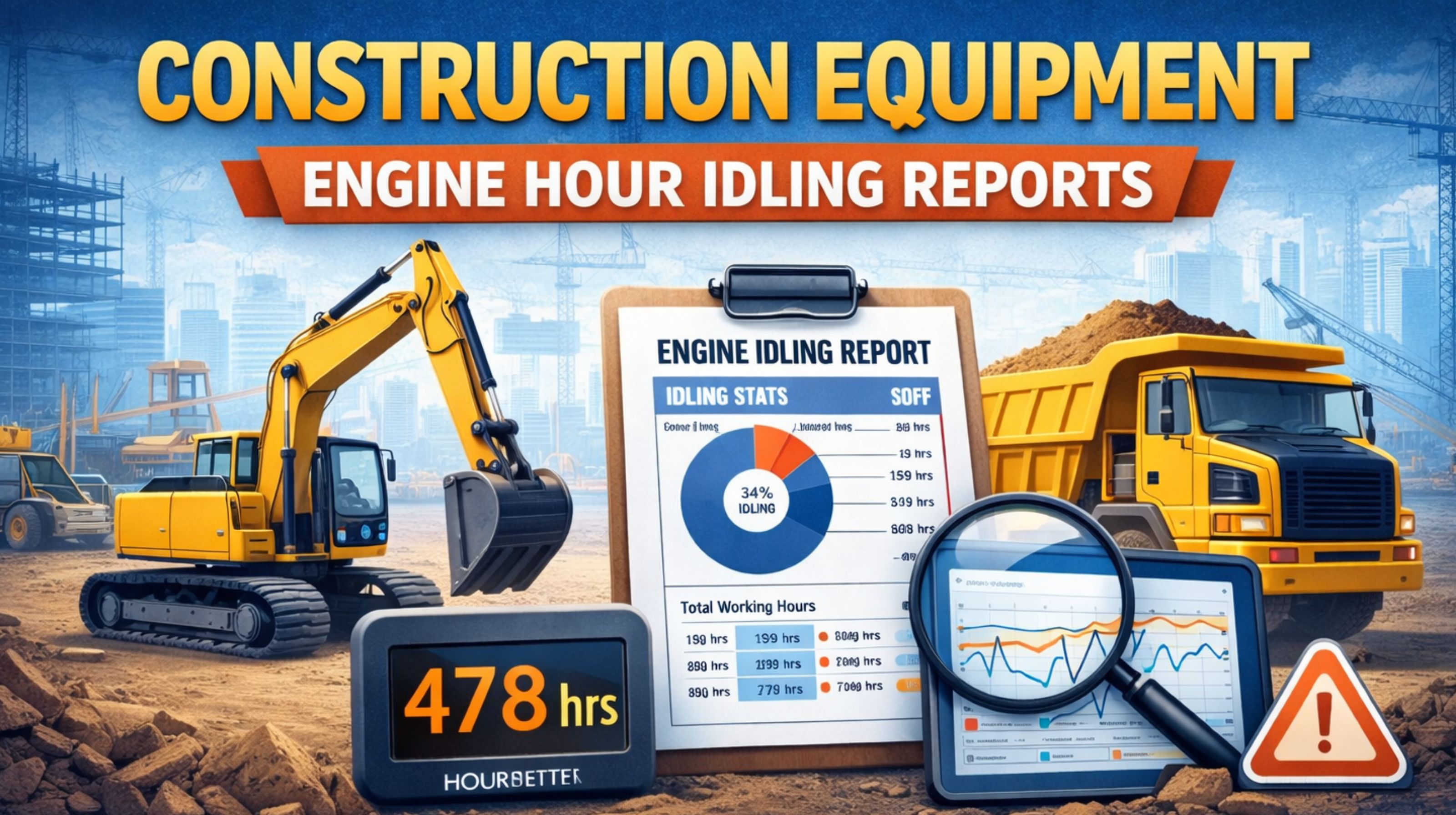
Why Your Construction Equipment Idling Reports Are Lying to You
If you're managing a fleet of dozers and excavators, those engine hour and idling reports are supposed to give you a clear picture. The promise is utilization and fuel waste, all laid out. But here's the thing—inaccurate data from these reports is a real problem. It leads to maintenance schedules that are off, billing that's wrong, and fuel just burning away. It quietly eats into your project margins, and you might not even see it happening.
What Engine Hour and Idling Data Actually Means On-Site
So, in construction telematics, engine hour data usually comes from the J1939 CAN bus. It's measuring time the engine runs above a certain RPM. Idling gets logged when it's below a set point, maybe 800-1000 RPM. That data gets sent to your fleet management software. That's the basis of your reports. But the detail everyone misses? "Engine on" doesn't mean "productive work." And not all idling is waste—sometimes you need it to warm up hydraulics when it's cold out.
The Real-World Gaps in Your Current Idling Reports
On a real job site, the numbers don't always add up. You'll see discrepancies. One we see a lot is "false idle." An excavator is digging, but it's working at a low, high-torque RPM. The system logs it as idling. Then there's "missed idle." Equipment is parked, engine running for heat or to power a tool. GPS shows no movement, so that time just blends into general downtime. The worst gap is the data blackout. Deep in a quarry or underground, cellular signal drops. Your hourly logs go blind, and you only see what happened once the machine comes back up.
The Costly Mistakes from Misreading This Data
The biggest risk? Scheduling preventive maintenance based on total engine hours. If those hours are full of idling, you're doing over-maintenance. That's unnecessary parts and labor costs. Another trap is assuming high idling means operator negligence. Could be poor site logistics—waiting on a material delivery. And billing clients based on raw engine hours? That gets messy when hours are inflated because a loader was idling overnight for security lights. That's a good way to start a dispute.
How to Get Actionable Truth from Your Equipment Hours
To make a reliable call, you've got to layer your data. Correlate engine data with other streams. Cross-reference idling events with geofence alerts—see if it's happening off-site. Pull in fuel consumption data from the CAN bus. That attaches a real dollar cost to each idling hour, which changes the conversation from behavior to budget. For true utilization, you need to define a "productive hour" threshold. Look at RPM and hydraulic pressure for your specific gear. That usually means tuning alert parameters in your platform, or working with a provider like gps controller to set the right baselines.
FAQ
What is considered "idling" for heavy construction equipment?
Typically, your telematics system defines it as engine running below a set RPM—say 800-1000—while speed is zero. But this can wrongly flag low-RPM, high-load work, which is a known issue.
How accurate are engine hour meters from GPS trackers?
They're very accurate when hooked to the equipment's CAN bus, reading engine data directly. Basic trackers using an ignition wire are less reliable. They can't always tell if the key is on or the engine is actually running.
Can I use engine hour reports for preventive maintenance scheduling?
You can, but you should split total engine hours from "working" or "load" hours. If you base maintenance on hours full of idling, you'll service too early. It gets costly.
Why does my report show idling when the equipment was working?
That's the "false idle" we mentioned. Common with cranes or excavators working under high load at low RPMs. System sees low RPM and no movement, calls it idle. To review it, you need more data, like hydraulic pressure.
How do I reduce unnecessary idling on my construction fleet?
Start by spotting patterns. Use custom reports to see which units and operators idle most. Then, set clear site rules, use alerts for excessive idling, and tackle root causes—like waiting for materials.
What's the financial impact of equipment idling?
It burns fuel—0.5 to over a gallon of diesel per hour—without moving. Direct waste. It also causes incomplete combustion, which means more engine wear, more frequent oil changes, and higher costs for emissions-related maintenance.
Do I need a special tracker for construction equipment?
Yes. You need a rugged, hardwired device with a J1939 CAN bus interface. That's how you get accurate engine diagnostics, hours, and fuel data. A simple battery-powered asset tracker won't cut it. Check a dedicated devices page for options.
We have spotty cellular coverage on our job sites. Will I lose data?
Yes, that's a major boundary. When signal drops, the device stores the data—engine hours, location—internally. It sends the logs once it reconnects. But you'll see delayed reporting, and you can't get real-time idling alerts during the blackout.


Comments
Post a Comment