Why Your Cold Chain Temperature Alerts Are Failing and How to Fix It
Why Your Cold Chain Temperature Alerts Are Failing and How to Fix It
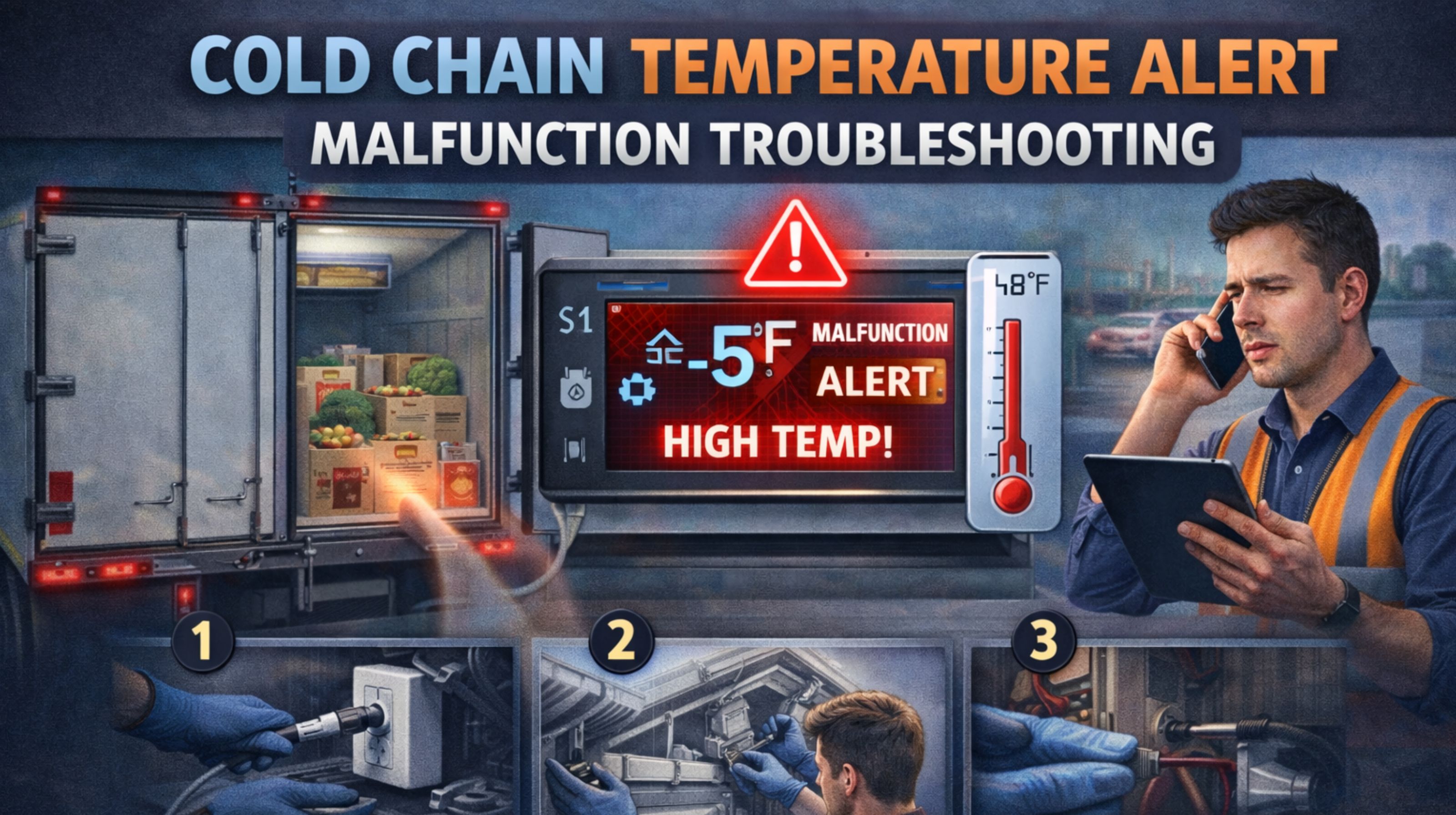
When a temperature alert for a refrigerated trailer fails to trigger, it's not just a software glitch—it's a direct threat to product integrity and regulatory compliance. Fleet managers often discover the malfunction only after a load is rejected, facing massive financial loss and damaged client trust. The root cause is rarely a single point of failure but a cascade of overlooked hardware, connectivity, and configuration issues that silently undermine your monitoring system.
What a Temperature Alert Malfunction Really Means for Your Fleet
In operational terms, a malfunction means your system is blind to thermal events that can spoil pharmaceuticals, frozen foods, or fresh produce. This isn't merely a missed notification; it's a breakdown in the real-time oversight that your IoT asset monitoring platform is supposed to provide. The consequence is reactive damage control instead of proactive intervention, turning a preventable temperature excursion into a total loss incident and a compliance violation.
Real-World Failure Patterns in Refrigerated Transport
On the road, failures manifest in specific, repeatable ways. A common real-world observation is the "delayed ping" scenario: a sensor records a temperature spike, but the cellular gateway in the trailer fails to transmit the data packet immediately due to poor signal in a rural area or a parking garage. By the time the data syncs, the thermal event is over, and no alert is generated because the system only processes historical data, not real-time thresholds. Another pattern is sensor drift, where probes slowly lose calibration over months, reading 2°C while the actual trailer air is at 6°C, silently breaching the safe zone without triggering any alarm.
The Costly Mistakes Teams Make When Alerts Go Silent
The most dangerous assumption is that "no alerts means all is well." This misunderstanding leads teams to skip daily manual checks of the temperature log, creating a false sense of security. A common operational detail people miss is power cycling: the sensor and gateway may be online, but if the trailer's auxiliary power unit (APU) or battery is disconnected for maintenance and reconnected, the gateway might boot but fail to re-establish a proper data session with the cloud platform, sitting in a silent, offline state. Teams also wrongly blame the software first, wasting hours on dashboard settings while the actual fault is a physically damaged sensor probe or a compromised cable seal.
Systematic Steps to Diagnose and Restore Your Alerts
Start by verifying the data source: pull the raw temperature log for the suspect unit and timeline from your custom reports to see if the sensor was even recording data. If data exists but no alert fired, audit the alert rule's threshold, delay settings, and notification channel status. If no data exists, move to hardware: check the device's last reported location and status, then instruct the driver or technician to verify physical power and cellular signal LEDs on the gateway. The boundary where tracking stops working is often at the hardware-software handshake; a deeper diagnostic requires a platform that can remotely run commands or view detailed device diagnostics, a level of fleet visibility that gps controller provides through its integrated device management.
FAQ
Why did I not get an alert even though the temperature log shows an excursion?
This is typically an alert rule configuration issue. Check if the rule uses "instant" triggering versus an average over a set duration. If the spike was brief, it may not have met the rule's duration threshold. Also, verify the notification email or SMS list hasn't been inadvertently modified or that messages aren't being routed to spam.
How often should I physically calibrate my temperature sensors?
For high-stakes cold chains like pharmaceuticals, annual calibration is a minimum. For food transport, calibrate at least every 12-18 months, or immediately if you notice consistent offsets in log data compared to a handheld thermometer. Environmental stress from vibration and moisture accelerates drift.
Can a weak GPS signal cause a temperature alert to fail?
No, temperature alerts rely on cellular data connectivity, not GPS. However, the gateway device often uses the same cellular modem for both location and data. A complete loss of cellular service will prevent any data—location or temperature—from transmitting, causing a silent failure.
What's the first thing I should check when multiple trailers stop reporting alerts?
Check for a widespread cellular network outage in your carrier's region. Next, review your telematics platform status page for any known service disruptions. If those are clear, the issue may be a failed over-the-air (OTA) configuration update that incorrectly modified alert rules across your fleet, requiring a rollback.


Comments
Post a Comment