Why Secondary Towing Detection Fails Without Ignition On
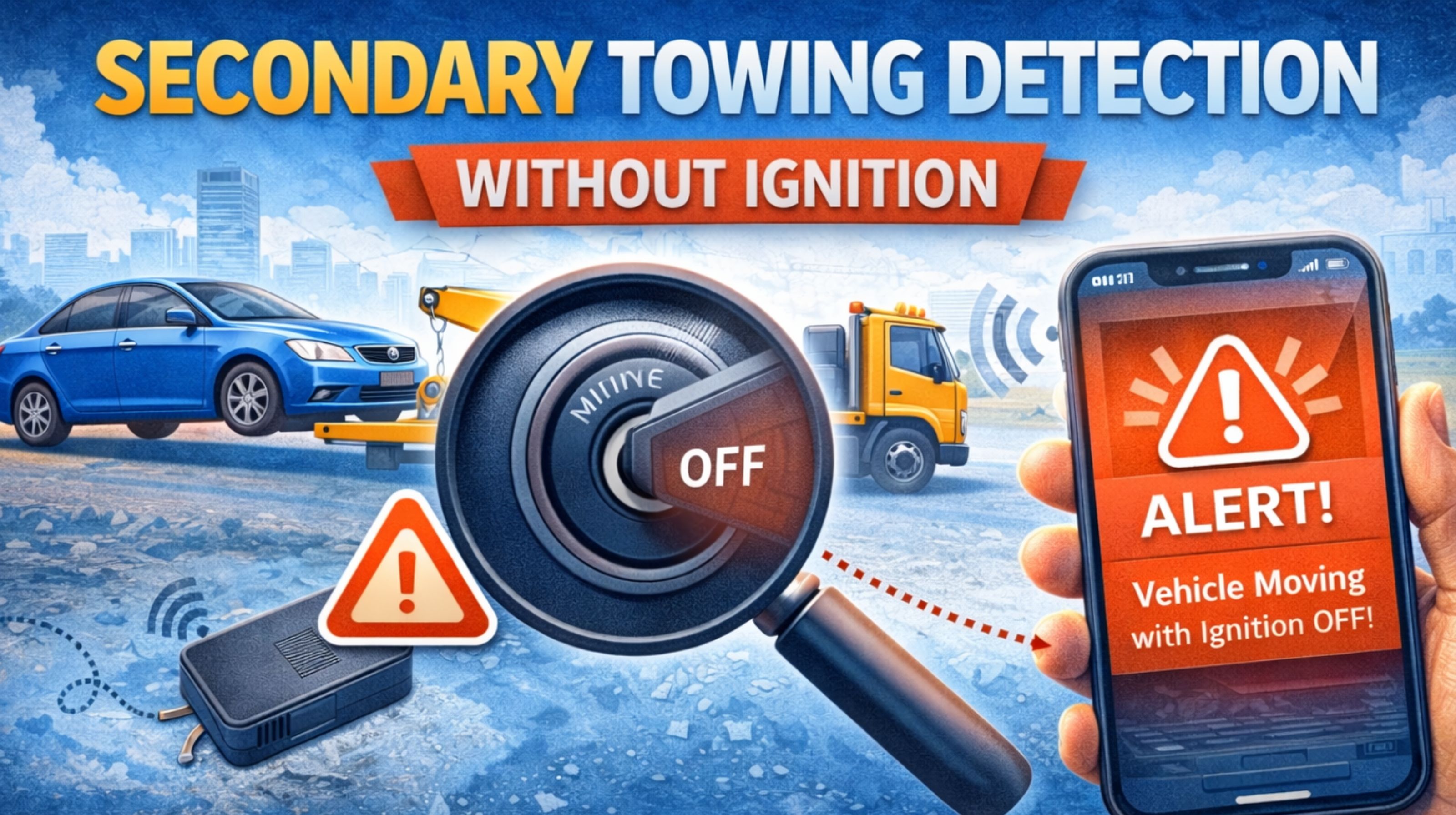
Why Secondary Towing Detection Fails Without Ignition On
Every fleet manager counts on towing alerts for theft prevention. But there's a critical gap most of us discover the hard way: when the vehicle's ignition is off. That's when your high-value assets are sitting ducks, vulnerable to a tow that your tracking system might sleep right through. It creates a dangerous false sense of security.
What Secondary Towing Detection Means for Your Fleet
In practical terms, secondary towing detection is a system's ability to catch unauthorized movement when the primary ignition circuit is dead. It's not the same as your standard motion alert, which usually needs the ignition on or the engine running to even wake up. For trailers, parked trucks, or expensive equipment left on a site, this feature isn't just nice to have—it's the final barrier between your asset and a thief with a tow hitch.
How Real Tracking Devices Handle Ignition-Off Movement
On actual vehicles, what happens depends entirely on your hardware and how it's powered. A hardwired GPS tracker tapped into the vehicle battery can use its accelerometer or watch for GPS drift to sense movement, firing off an alert even in a low-power "sleep" state. But here's the catch: a lot of battery-powered units, or ones that aren't configured right, go into a deep sleep to save juice. That creates massive data gaps. You've probably seen the "replay gap" yourself—opening the map in the morning only to see your asset magically teleported to a new location, with no record of how it got there.
The Major Risk of Assuming Your System Covers This
The biggest mistake you can make is assuming all GPS trackers give you real-time towing alerts, ignition or no ignition. Truth is, many entry-level systems only monitor movement when the ignition is live. That's the default for tracking a personal car. For a fleet, that's a critical failure pattern. A trailer can get hooked up and driven off overnight, and you won't get a ping until the device's next scheduled check-in, which could be hours—or days—later. This is the exact boundary where basic tracking falls apart, and where you need a specialized IoT asset monitoring setup.
Choosing the Right Setup for Ignition-Off Security
To get this right, your team needs to dig into the specs of your current hardware and actually audit the alert settings. You're looking for devices with a built-in motion sensor (an accelerometer) and you have to verify that "towing detection" or "movement while idle" alerts are turned on in the software—they often aren't by default. One operational headache is tuning the motion sensor sensitivity. Set it too low, and a slow roll-away won't trigger it. Set it too high, and a strong gust of wind or a truck rumbling past will blow up your phone with false alarms. For true 24/7 fleet security, you usually need to pair the right hardware with a platform that lets you fine-tune these details, which is the kind of gap that solutions from gps controller are built to close.
FAQ
What is secondary towing detection?
It's a GPS tracking feature designed to alert you when an asset is moved without its ignition being turned on, crucial for theft prevention of trailers and parked vehicles.
Will my standard GPS tracker alert me if my trailer is stolen?
Not necessarily. Many standard trackers only report location at set intervals when idle. Without a specific, enabled towing detection feature, you may not get a real-time alert.
What causes false towing alerts?
Common causes include an overly sensitive motion sensor triggered by strong wind, vibrations from nearby traffic, or even someone bumping into the asset. Proper sensitivity calibration in your fleet management software is key.
How can I test if my towing detection works?
Safely simulate a tow by having a team member move the vehicle a short distance with the ignition off. Monitor your dashboard and email/SMS to see if an alert triggers in real-time.
Do I need a different device for ignition-off tracking?
You need a device with a built-in accelerometer (motion sensor) and a reliable power source, like a hardwired connection to the vehicle battery or a robust solar setup for assets.
Can battery-powered trackers provide real-time towing alerts?
It's challenging. To preserve battery, these devices often sleep deeply between reports, missing movement. Some advanced models use "wake-on-motion" technology, but battery life is always a trade-off.
What's the difference between a geofence alert and a towing alert?
A geofence alert triggers when an asset enters or exits a predefined virtual boundary. A towing alert triggers specifically on motion while the ignition is off, regardless of location.
When should a fleet manager seek a specialized solution?
If you manage high-value or easily stolen assets like trailers, generators, or landscaping equipment, and your current system lacks reliable, configurable ignition-off alerts, it's time to evaluate dedicated asset tracking devices and professional platform support to close this security gap.


Comments
Post a Comment