Wearable GPS tracker signal failure in Indian urban density
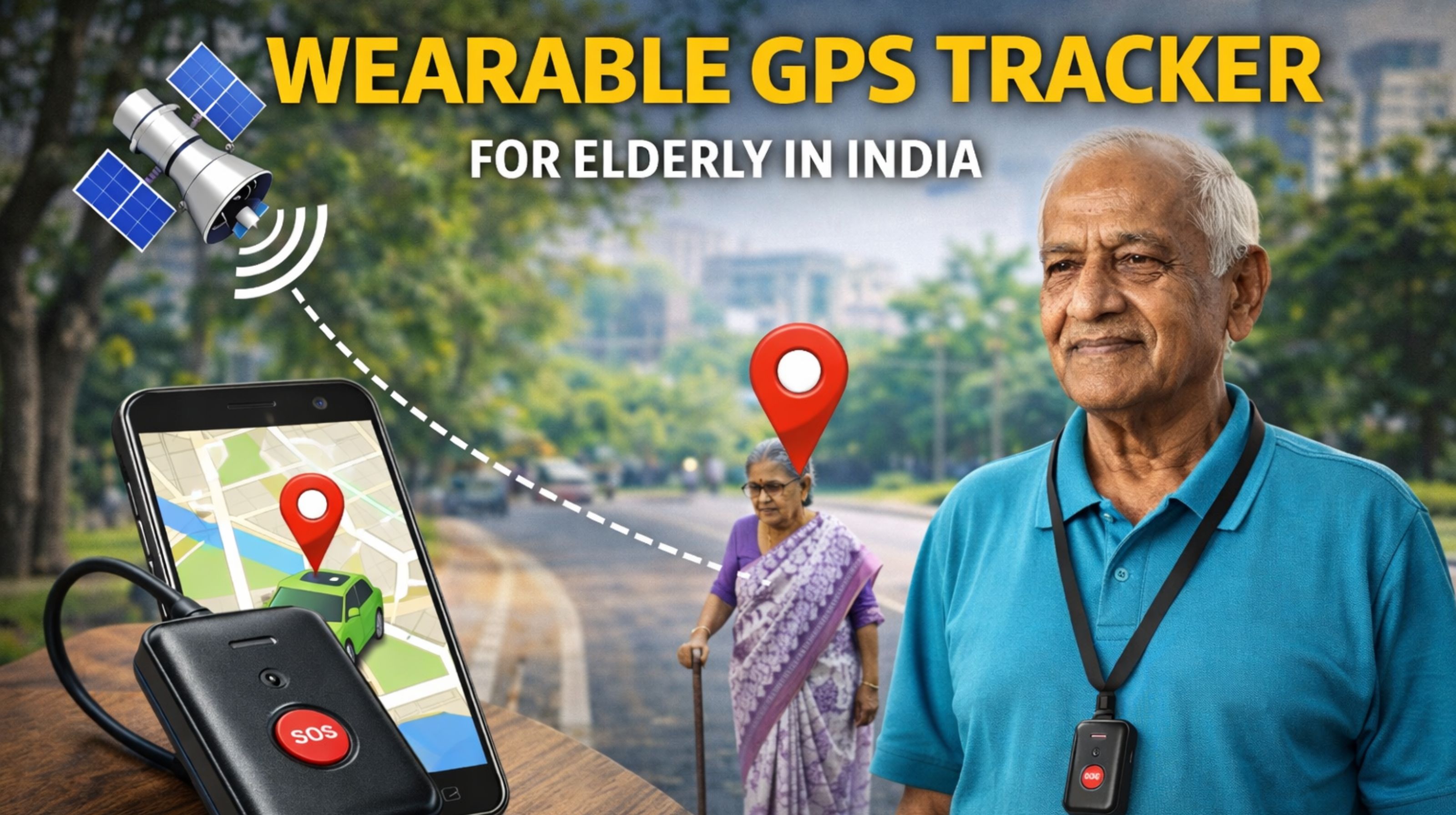
Wearable GPS tracker signal failure in Indian urban density
If you're a family in Mumbai or Delhi using an elderly GPS tracker, you've probably run into this: the device itself seems to have a location, but the alert that someone left a safe zone arrives 20 minutes later. The problem isn't that the device is offline. It's that the location ping has to fight through urban canyons and network congestion to finally reach your real-time tracking platform. By then, an "instant" alert is pretty much useless when you really need it.
What GPS lag means for elderly safety monitoring
The real failure here is about time, not just place. Sure, the tracker gets a GPS fix. But getting that fix transmitted over India's crowded 4G bands—or the slower 2G it falls back on—adds a delay. In practice, that means an elderly person could be half a kilometer away by the time the family gets the "exit" alert. That gap completely undermines the safety promise and creates a dangerous false sense of security.
The reality of battery and network load in daily use
From what I've seen, the biggest battery drain isn't from constant tracking. It's from the retry cycles when a transmission fails. A device set to report every 10 minutes might try 6 times over two minutes if the first packet drops. That kind of activity can kill a small battery in days, not weeks. So families are stuck choosing between safety (more frequent updates) and practicality (not having to charge it every other day)—a compromise that really shouldn't exist.
Common mistakes that escalate monitoring failures
The most damaging assumption is thinking "GPS works everywhere." In Indian cities, GPS signals are weak in narrow lanes and indoors. The device then falls back on inaccurate cell tower triangulation, showing a location several blocks off. Families often blame the app, not realizing the basic IoT asset monitoring limitation: a tracker can't report a location it can't physically get a lock on.
Decision boundary: when to replace the device ecosystem
You know the fix isn't working when the delays become predictable and the alerts unreliable. If you've optimized all the settings, confirmed cellular coverage, and you're still consistently seeing 15+ minute lags in city centers, the problem is likely the device's own radio sensitivity and processing power. At that point, the decision is to replace the hardware with units actually designed for dense, signal-hostile environments. No software update can fix a weak modem. When you hit this wall, consulting a specialist in robust GPS tracking devices becomes a technical necessity, not just a sales conversation.
FAQ
q What is the best GPS tracker for elderly in India?
a The "best" really depends. For urban density, look for devices with multi-constellation GNSS (like GPS, GLONASS, NavIC) and 4G CAT-M1 connectivity for better signal penetration. Don't just go for the cheapest unit with basic GPS.
q Do GPS trackers work indoors in Indian apartments?
a Most really struggle. Concrete construction blocks GPS signals. Some devices have WiFi sniffing or Bluetooth beacon fallback for a rough indoor location, but that means setting up a beacon network at home, which is another step.
q Why does my parent's tracker battery die so fast?
a It's usually because of frequent location checks (like every 5 minutes) and poor signal. The device uses a lot more power searching for a signal and retrying failed data sends. Try setting a longer update interval, like 15-30 minutes, when they're likely at home to save battery.
q How accurate are GPS trackers in crowded Indian cities?
a In open areas, maybe 5-10 meters. In dense urban areas with high-rises, accuracy can drop to 50-100 meters because signals bounce off buildings. That's a physical limit, not necessarily the device's fault.
q Can I use a vehicle tracker for elderly monitoring?
a I wouldn't recommend it. Vehicle trackers need constant external power, aren't wearable, and their geofence and alert systems are built for managing fleet assets, not for personal safety with features like an SOS button.
a Trying to use a fleet management platform for a person creates mismatches. The alert rules, reports, and compliance features are designed for commercial vehicles, not family elder care, which can lead to confusion and missed critical alerts.
q What happens during a network outage?
a Most devices store the location data locally and send the backlog when the connection comes back. This can cause a burst of delayed alerts that's overwhelming and confusing for the caregiver. Some better models can switch between networks (like from Jio to Airtel) to try and stay online.
q When should we consider a different monitoring solution?
a When the location lag is consistent and it's becoming a safety issue, and after you've double-checked the carrier coverage. If the main need is an immediate SOS response, a hybrid system—like a cellular tracker combined with a local RF or Bluetooth panic button—might be necessary. That's a decision point where a platform's ability to integrate different data streams really matters.


Comments
Post a Comment