Vehicle Controller Not Sending Ignition Status – The Live Fleet Data Failure
Vehicle Controller Not Sending Ignition Status – The Live Fleet Data Failure
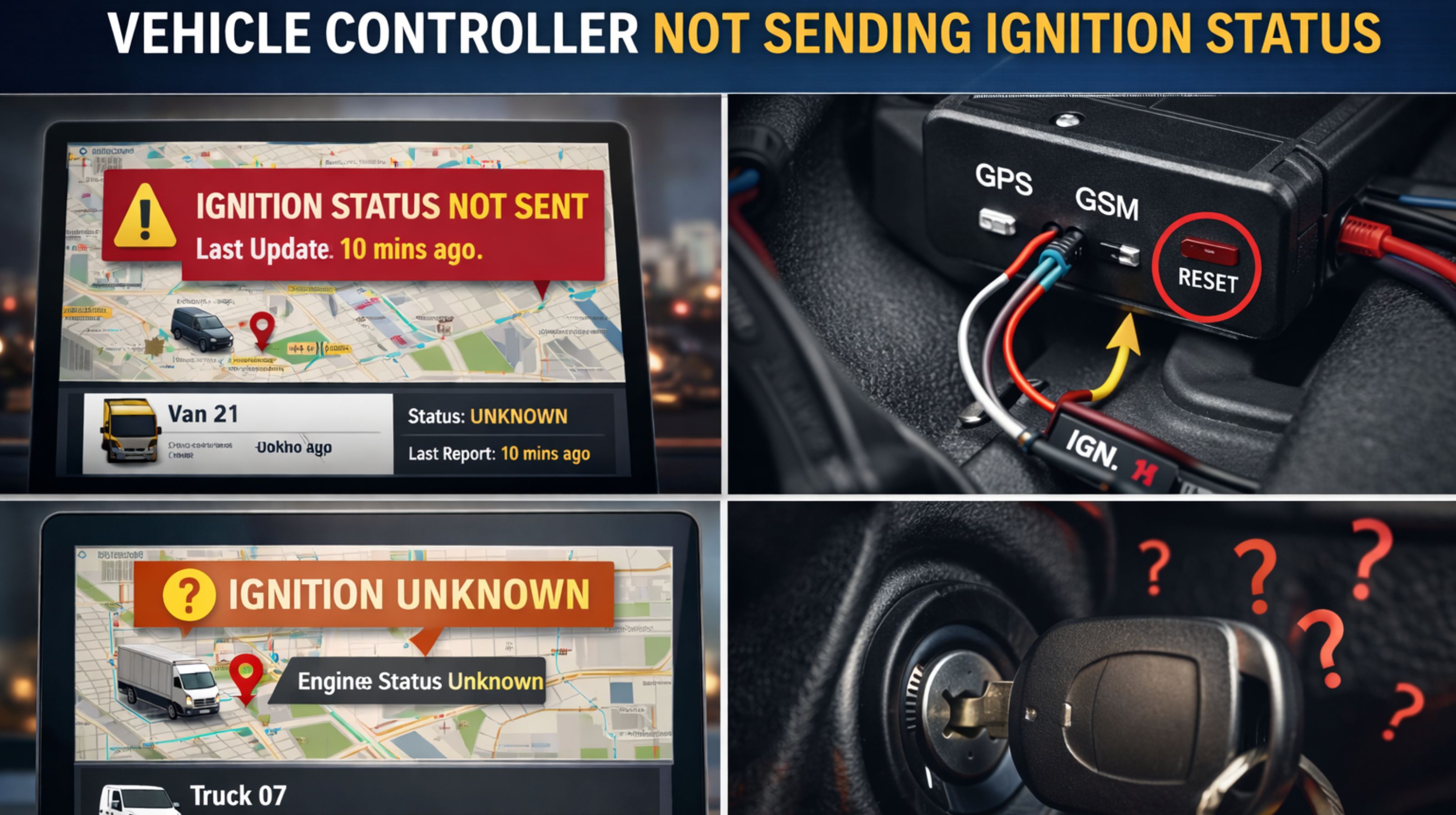
So your vehicle controller stops reporting ignition status. Suddenly, you're guessing on engine runtime, fuel burn, and compliance. It's more than a missing data point—it's a critical break between your physical trucks and your fleet management software. That's where idle costs pile up unseen and maintenance schedules start to drift without you even realizing.
What Ignition Status Loss Means for Fleet Tracking
In day-to-day ops, ignition status is basically the heartbeat of a vehicle. Lose that, and your system can't tell a parked truck from one idling in traffic. You'll just see frozen location pings, with no context. It breaks everything: geofence arrivals, idle alerts, even how you score driver behavior. The logic just falls apart.
The Real-World Impact at Scale
On a real fleet, this failure spreads. Dispatchers can't confirm if a driver has actually started their route. Fuel reports turn into rough estimates, completely missing the chunk of waste—often around 30%—that comes from unauthorized idling. What you usually notice first is a mismatch during an audit: your controller's last status doesn't match the driver's electronic log, which just triggers more compliance reviews. This gap totally undermines your fuel performance monitoring accuracy.
Common Mistakes That Escalate the Problem
The biggest mistake is thinking this is just a GPS signal problem. It usually isn't. Ignition status typically comes from a hardwired connection to the vehicle's CAN bus or a dedicated wire. So the failure is often a power issue, bad grounding, or some internal firmware glitch. Teams waste days checking cellular networks, when the real culprit is something like a corroded pin in the OBD-II port, or a controller that reset its I/O settings after a firmware hiccup.
Decision Help: Tune, Reconfigure, or Replace the Controller
Here's the boundary: if the controller is otherwise working—reporting location and speed—then the fix is probably a reconfiguration or a physical wiring check. But if the unit is older, has a history of I/O failures, or you're trying to scale a mixed fleet, those internal fixes stop being enough. At that point, you need to think about redesigning the setup with a modern device that offers reliable IoT asset monitoring. That's the only way back to stable data. A solid gps controller platform should give you the diagnostic logs to make this call.
FAQ
q: why would a vehicle controller stop sending ignition data?
a: It's usually a physical problem. Think a loose or damaged ignition sense wire, a blown fuse, corrosion at the connection, or a firmware fault that resets the controller's input settings. It's almost never the cellular network.
q: can bad ignition data cause compliance violations?
a: Absolutely. Without accurate engine-on/off times, you can't prove you're following idle regulations or even reconcile hours of service properly. That's a real risk during safety or emissions audits.
q: how do I test if the problem is the wire or the controller?
a: Grab a multimeter and check for 12V on the ignition sense wire when the key is on. If you've got voltage but the status isn't reporting, the controller's input circuit is probably faulty. If there's no voltage, you need to trace the wiring back.
q: when is it time to replace the controller instead of fixing it?
a: Replace it if the unit has multiple failed I/O ports, isn't getting firmware updates anymore, or if diagnosing the fault is costing you more in downtime than a new, more reliable device would. For modern fleets, integrating with a stable platform like gps controller for diagnostics is really the long-term solution.


Comments
Post a Comment