Vehicle Controller Frozen? Remote Immobilizer Failed – Immediate Resolution Steps
Vehicle Controller Frozen? Remote Immobilizer Failed – Immediate Resolution Steps
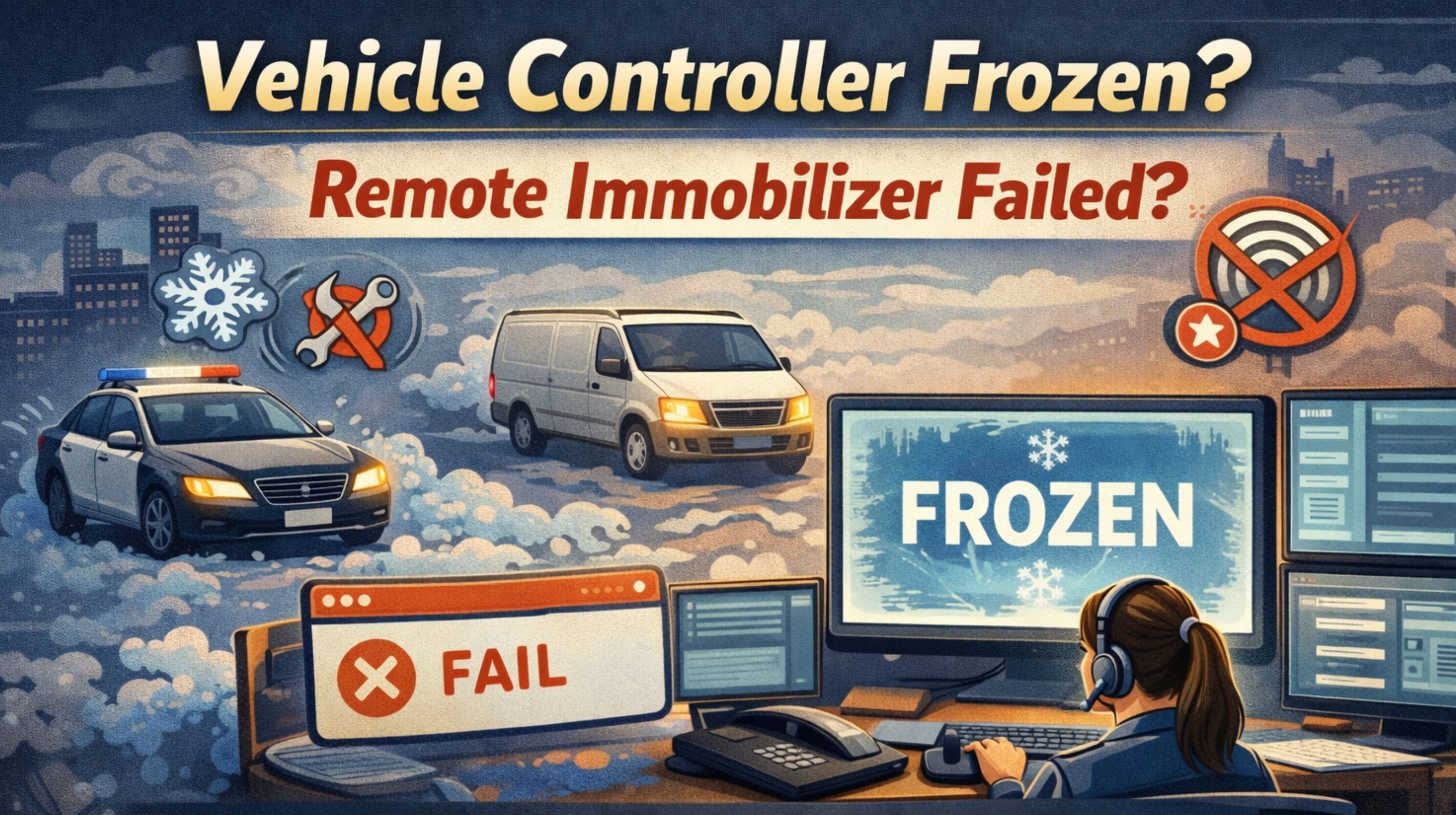
When your vehicle controller freezes or a remote immobilizer command fails, it's not a minor glitch—it's a critical security and operational failure. Honestly, a frozen controller means you've lost the ability to send commands like engine lock, unlock, or geofence enforcement. A failed immobilizer leaves a vehicle potentially operable when it shouldn't be, which creates immediate risks of unauthorized movement, asset theft, or a driver stranded with an unintended engine lock. Look, this isn't about GPS signal loss; it's about the core command-and-control link between your fleet management software and the vehicle's hardware breaking down. The consequence is a direct loss of operational authority, exposing you to security breaches, compliance violations for controlled assets, and significant revenue leakage if a high-value unit is taken offline or, worse, moves without permission.
What a Frozen Controller or Failed Immobilizer Really Means
A frozen vehicle controller signals a breakdown in the telematics gateway. The hardware device in the vehicle is powered and might still report basic GPS fleet management software data, but its instruction processing logic is just... hung. It can't execute new commands from your platform. A remote immobilizer failure is a specific, high-stakes version of this: your "engine kill" or "lock" request is sent but never acted upon. The common misunderstanding is to blame "poor signal." While weak cellular connectivity can cause command delay, a true failure often comes from firmware corruption on the device, a buffer overflow from queued commands, or a critical mismatch between the controller's logic and the vehicle's CAN bus system. The non-obvious detail—and this is crucial—is the fail-safe state. Some devices default to "immobilizer disengaged" on failure, while others lock the last state, potentially stranding a vehicle. This isn't a tracking issue; it's a control issue.
Reality Under Fleet Scale and Load
At scale, a single frozen controller is a red flag for systemic risk. Think about it: if one device experiences firmware corruption or CAN bus communication errors, others in the same batch or under similar operational stress (like constant power cycling or extreme temperature exposure) are probably vulnerable too. Under load, with hundreds of vehicles, manual verification of immobilizer status becomes impossible. You might see a 3–5 minute delay in command acknowledgment turn into a permanent "command pending" state. The real fleet observation is the audit mismatch: your software log shows an immobilizer engaged, but the vehicle just keeps moving, creating a severe compliance gap for regulated transports or high-security cargo. This scale exposes hidden exposure—what you don't know is which vehicle will fail next, turning a fleet into a portfolio of unmanaged security risks.
Common Mistakes and Escalating Risks
The primary mistake is treating this as a connectivity issue and simply re-sending the immobilizer command. That can actually make buffer problems worse or ignore the real root cause: failing hardware. Another wrong assumption? Thinking that if basic GPS tracking data is still flowing, the controller is fine. It's not; command processing is a separate module. This misunderstanding leads to dangerous escalation, where a critical security action is assumed to be in place when it absolutely is not. The risks compound from there: unauthorized vehicle movement leads to asset recovery costs and insurance complications. A stranded driver due to an unintended lock results in downtime, missed SLAs, and driver dissatisfaction. For fuel reporting, a frozen controller may stop reporting ignition-off events, leading to an 18% idle time reporting mismatch and completely skewed cost analytics. The boundary where simple "reboot" commands via SMS stop working is when hardware replacement becomes unavoidable.
Decision Help: Tune, Reconfigure, or Replace
First, isolate the problem. For a single vehicle, try a forced reboot via a secondary SMS channel if you have one. Check for any firmware update alerts from your provider. If the issue resolves, monitor it closely; it might have been a transient latency burst. However, if the controller freezes again or if multiple units show symptoms, configuration tuning just isn't enough. This is the architecture review boundary. The unstable state means missed security commands, data inconsistency between command logs and the actual vehicle state, manual reconciliation by dispatch—it's a mess with unpredictable asset security. A stabilized control architecture requires a controller with robust failover logic, predictable sub-90-second command acknowledgment latency, and a unified reporting pipeline that confirms both the command send and the vehicle's ECU acknowledgment. If your current devices can't provide this deterministic behavior—especially if they are older single-SIM models with no redundant communication pathways—then controller redesign or replacement is justified to regain controlled compliance and close that security exposure.
FAQ
q: What should I do immediately if a remote immobilizer fails?
a: Immediately dispatch local personnel to physically secure the vehicle. At the same time, use an alternate channel (like direct SMS if it's supported) to send a reboot command to the telematics device. Document the failure time and vehicle state for audit trails. Don't assume repeated commands from your main software will work.
q: Can a vehicle tracking API integration issue cause a frozen controller?
a: Yes, but indirectly. If the API feeding commands to your device network has high latency or drops packets, commands can queue up and corrupt the device's buffer. The device might appear frozen. That said, persistent "frozen" states typically point to device-side firmware or hardware failure, not just integration latency.
q: How does this failure risk scale with fleet size?
a> Risk scales exponentially. With 50+ vehicles, manual verification is impossible. A 5% failure rate means 2-3 vehicles are potentially unsecured at any time. This creates systemic compliance gaps, especially if geofencing alerts not working are also present, because you lose both location enforcement and physical immobilization control.
q: When is it time to replace the vehicle controller hardware?
a: Replace when you experience recurring freezes or immobilizer failures on the same unit, after firmware updates fail to resolve it. Also replace if an entire batch shows issues, or if your devices lack critical features like dual-SIM failover for reliable command reception, which is pretty much necessary for dependable remote immobilizer function.


Comments
Post a Comment