Unresponsive Plug and Play GPS Tracker Diagnosis and Decision
Unresponsive Plug and Play GPS Tracker Diagnosis and Decision
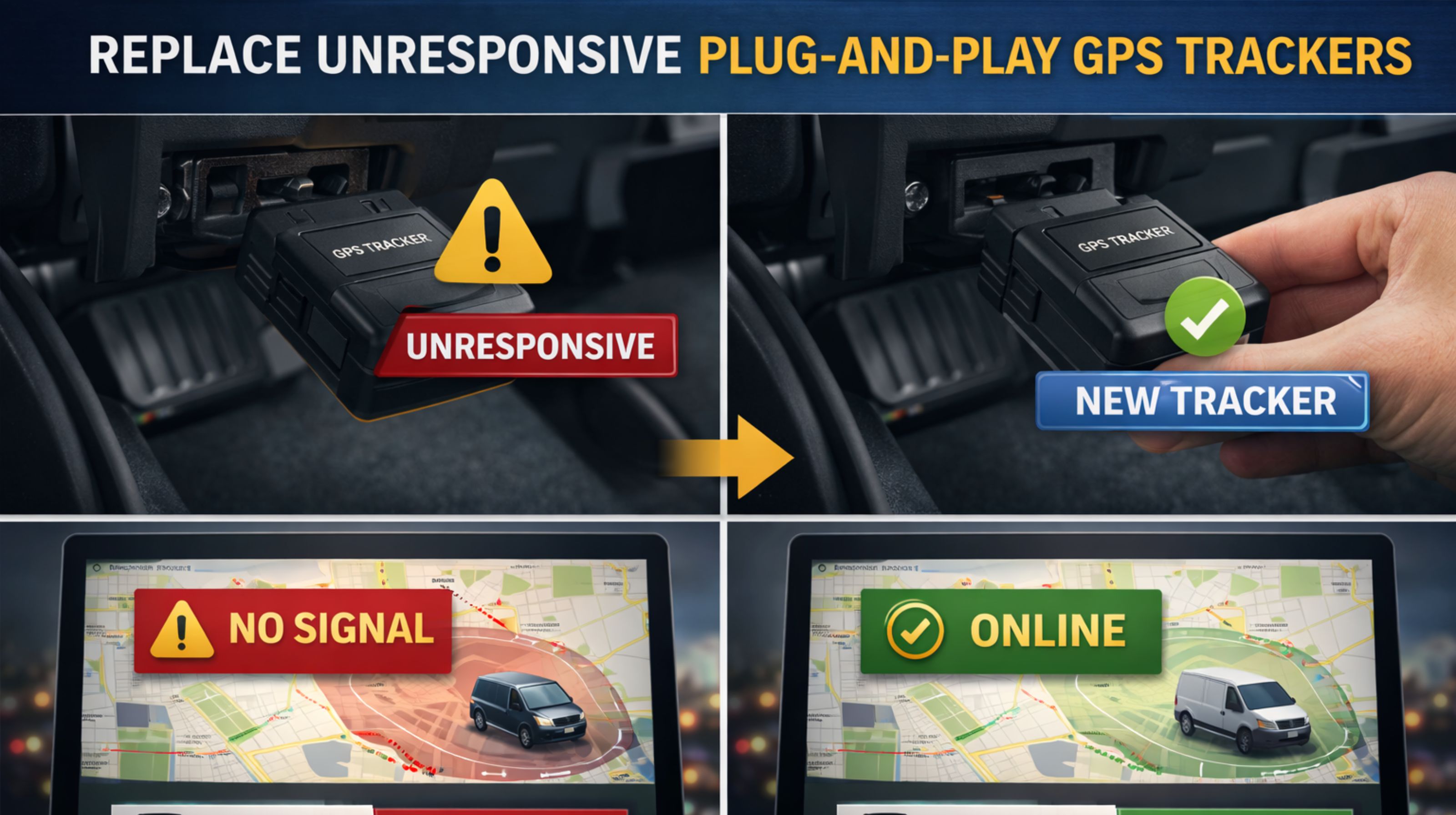
When a plug-and-play tracker goes silent, you're suddenly looking at a data blackout. It forces you into a quick choice: try to fix it, or just replace the hardware? Honestly, the first step is figuring out if it's just a weird power glitch or something bigger—like a gateway failure that's quietly pulled your vehicle off the real-time tracking map.
What Unresponsive Means in Live Fleet Tracking
In day-to-day operations, "unresponsive" really means the device has stopped sending its heartbeat or location data for longer than it's supposed to. You'll often see it in the software—the status says "active," but the last location timestamp is from hours ago. People usually catch it during a driver check-in or when someone's doing an audit.
Reality Check Under Fleet Scale and Load
At a larger scale, a single dead unit can hint at a wider problem. Here's the thing a lot of people miss: many of these trackers use cellular modules with specific carrier settings. So a regional network update can actually brick communication for a whole batch of devices, while others are fine. If you see, say, 5% of your fleet drop off at once, that's pointing to a network or firmware issue, not just random hardware dying.
Common Mistake and Escalating Risk Patterns
The biggest mistake is assuming the OBD-II port gives constant power. In reality, a lot of vehicle systems cycle that power off after a delay once the ignition is off. That puts the tracker into a deep sleep it can't wake up from. Teams lose days "testing" the device on a bench where it works perfectly, only to plug it back into the same dead port. That's how you get escalated support tickets and start missing compliance reports.
Decision Help: Fix, Reconfigure, or Replace
So, how do you decide? The line is pretty clear. If the device wakes up after a manual reset and takes a new configuration, you can probably tune it. But if it's chronically power-cycling because of the vehicle's CAN bus system, you need a different approach—like moving to a hardwired GPS device. Internal fixes won't cut it if the cellular modem is fried or the firmware is corrupted; that's a straight replacement. And for problems hitting the whole fleet, you really need a platform like gps controller that has deeper diagnostic logs to figure out where the failure is actually happening.
FAQ
q: Why did my plug and play GPS tracker suddenly stop working?
a: It's usually one of a few things: the vehicle's battery save mode cutting power to the OBD-II port, the cellular carrier shutting down an older network band (like 3G), or sometimes a firmware bug that gets triggered by a specific GPS satellite update.
q: Can a software update fix an unresponsive hardware tracker?
a: Only if the device is still talking just enough to receive an Over-The-Air (OTA) update. If it's completely silent, you'd need a physical reset or an SMS command first—and that might not even be possible.
q: How many tracker failures indicate a systemic fleet problem?
a: If you get more than 2 or 3 units from the same model, or installed in the same type of vehicle, failing in a short period, it's likely systemic. Think power, network, or firmware. It's probably not just bad luck with individual hardware.
q: When is it cheaper to replace a tracker rather than troubleshoot it?
a: Basically, when the time spent diagnosing it goes past 30-45 minutes per vehicle. Or when the risk of missing a critical geofence alert or compliance report is more expensive than the unit itself. Having a standardized, reliable platform in the first place makes this call a lot easier.


Comments
Post a Comment