School Bus GPS Tracking in India Fails Under Real-World Signal and Compliance Pressure
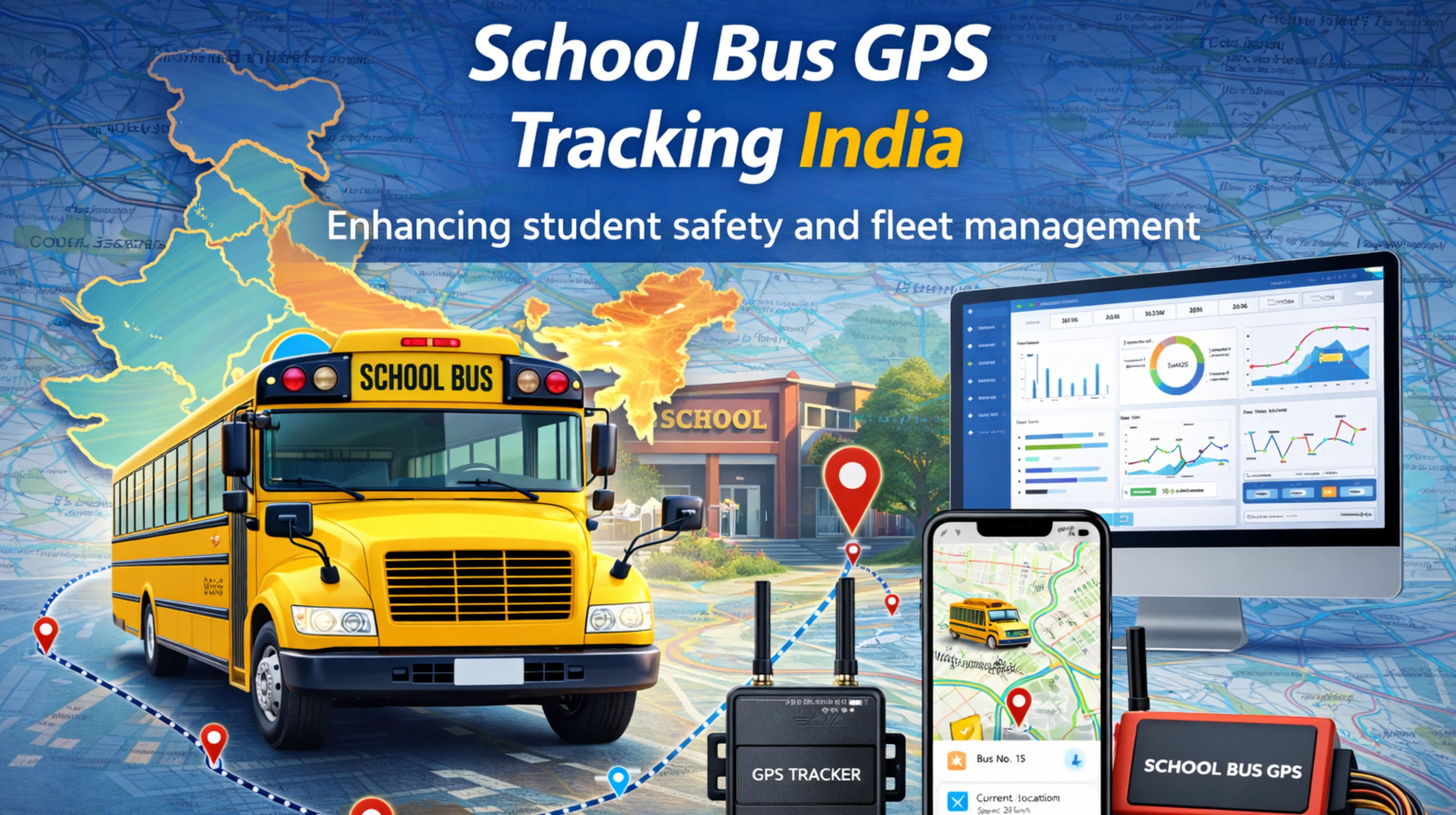
School Bus GPS Tracking in India Fails Under Real-World Signal and Compliance Pressure
So when a school bus GPS tracker in India loses its cellular connection, or when it reports a location that's minutes old, the whole safety plan just falls apart. Administrators are suddenly blind to where the bus actually is, and that critical line of communication to parents breaks down completely.
What GPS Tracking Failure Means for a Live Indian School Bus Fleet
It's not just a dot vanishing on a screen. The failure cascades. Geofence alerts for school zones don't trigger. Parents get inaccurate ETAs. And when it's time for a mandatory audit, you can't even prove the bus stuck to its route. I've seen it happen—signal bounce in dense urban areas or tunnels makes the system show a bus as idling for minutes when it's actually moving, sending everyone into a panic over nothing.
The Reality of Scaling Tracking Across a District's Vehicle Load
When you try to cover an entire district's fleet, a lot of basic tracking platforms just can't handle it. One detail people miss is the controller's polling rate. To save on data costs, a lot of systems sample location less often. That creates big gaps in the data, especially when buses are on highways. So at scale, the system might report a bus 500 meters past a scheduled stop, completely missing the fact that a pickup even happened.
Common Mistakes and Assumptions That Escalate Tracking Risk
A big one is assuming all GPS trackers manage cellular handoffs the same way. On rural or semi-urban routes, a device with a weak modem can drop connection for a long time. It stores data locally, but if that memory fills up before it reconnects, you don't just get a delay—you get permanent data loss. That breaks the chain of custody for the custom reports and analytics you absolutely need for compliance certificates.
Decision Help: When to Tune, Reconfigure, or Replace the Tracking System
Here's the line. If you're constantly cross-checking reports against driver logs, or if parental complaints about unreliable alerts are routine, then tweaking settings isn't enough. You need a system redesign, one that focuses on network redundancy and smarter, configurable alert logic. That's the point where you have to seriously look at a dedicated fleet management software platform with a robust API backbone. It stops being just a tech upgrade and becomes a necessary operational decision. A proper gps controller environment built for this scale handles the workflow—tying location pings to alert generation to parent communication—without these gaps.
FAQ
q What is the biggest problem with school bus GPS tracking in India?
a Honestly, it's the unreliable cellular data connectivity. The terrain varies so much, leading to signal loss and delayed updates that make a mockery of "real-time" safety monitoring.
q Can a GPS tracker drain a school bus battery?
a Yes, it can. If it's installed wrong, or if the device lacks decent power management, it can slowly drain the starter battery over a weekend and leave you with a bus that won't start.
q How accurate is school bus ETA with GPS tracking?
a Under perfect conditions, it's fine. But accuracy plummets with signal loss and low polling rates. Real-world stuff—traffic, cellular dead zones—often causes pretty big ETA errors.
q What happens to tracking data when the bus loses network signal?
a Better devices store it locally. But if the memory fills up, or the signal gap is too long, that data can get overwritten or lost. Then you have an unrecoverable hole in the trip history, which is a nightmare for audits.
q Is it mandatory to have GPS tracking on school buses in India?
a Many state authorities do mandate it now for safety and oversight. So reliable data reporting isn't just nice to have; it's a core compliance requirement.
q How often should a school bus GPS tracker update its location?
a For monitoring pickups and drop-offs effectively, you'd want updates every 10 to 30 seconds. But a lot of systems, to cut costs, poll much less frequently, and you lose that real-time accuracy.
q Can parents track the school bus in real-time?
a They're supposed to be able to, yes. But it hinges on a stable link between the tracker and the parent app. That's often the layer where delays and failures are most obvious—and most damaging to trust.
q When should a school replace its entire GPS tracking system?
a When you have chronic data errors, missed alerts, and failed compliance reports that keep happening even after checking the hardware. That points to a system-level flaw. It means you need to replace it with a platform actually designed for reliable real-time vehicle tracking under India's tough network conditions.


Comments
Post a Comment