Remote Engine Immobilizer Safety Compliance Standards Fleet Managers Must Meet
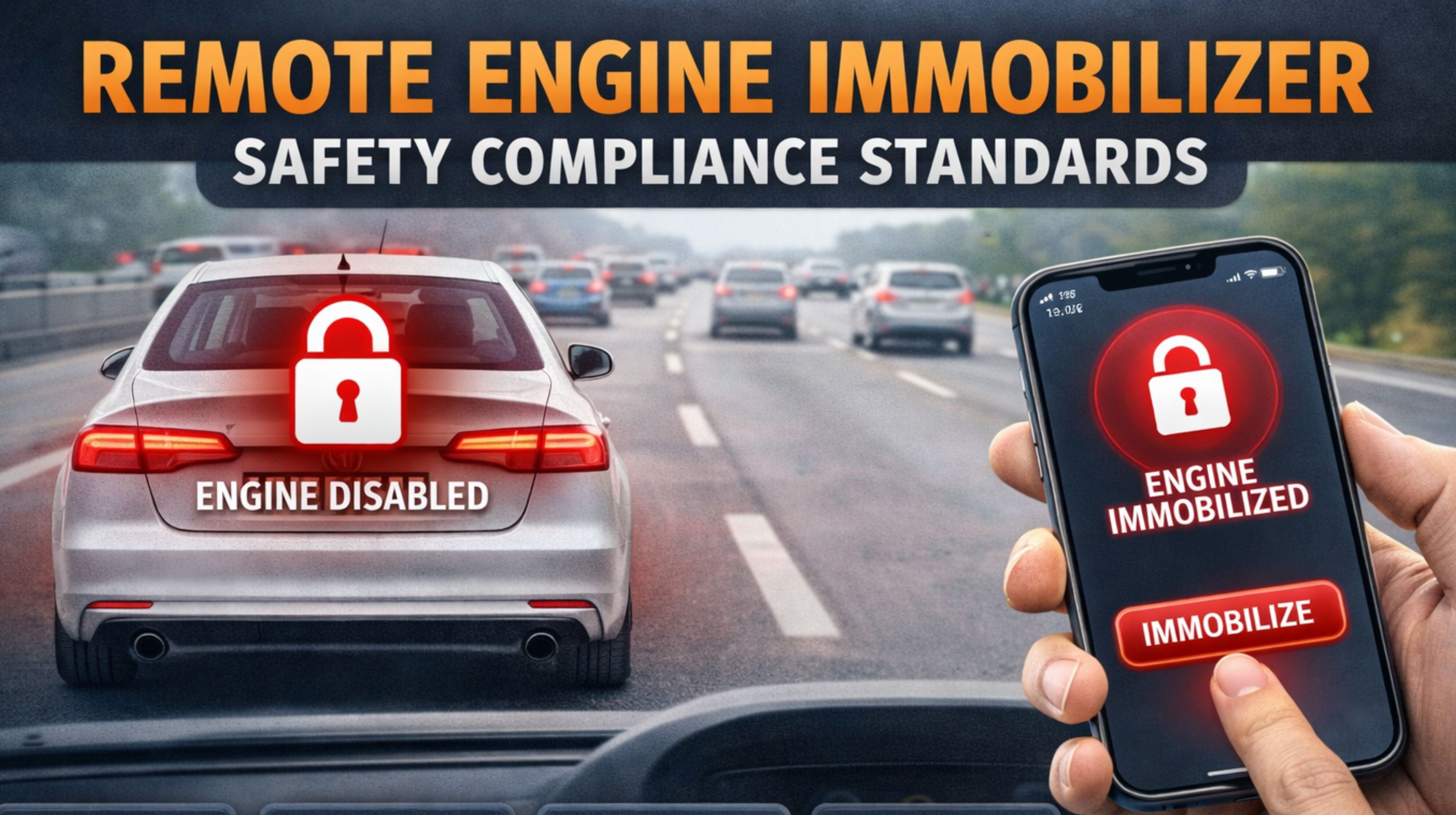
Remote Engine Immobilizer Safety Compliance Standards Fleet Managers Must Meet
Look, if you're putting remote engine immobilizers into your fleet, you're not just installing a device. You're stepping into a regulatory minefield. Get compliance wrong, and you're looking at grounded vehicles, denied insurance claims, and serious liability. It's a complex web, and nobody's going to cut you slack for not understanding it.
What Remote Immobilizer Compliance Means for Daily Fleet Ops
Forget the theory. On the ground, compliance means your system has to work perfectly every single time. It must only stop a vehicle when it's safe and authorized to do so, and it absolutely cannot mess with the brakes or steering. That balance gets tested for real—during a roadside DOT inspection, or when a driver hits the panic button. That's where you find out if your setup is actually compliant or just looks good on paper.
Real-World Safety and Cybersecurity Behavior on Vehicles
So what does compliant behavior actually look like on a live truck? First, it won't engage if the vehicle is moving above a low-speed threshold, say 5-10 mph. It keeps the hazard lights powered. And crucially, every single command is logged with cryptographic proof to a secure server. I've seen too many cases where that last part—the immutable log—was the missing piece during a post-theft investigation. Without that chain-of-custody, you can't prove what happened.
The Critical Risks of Non-Compliance and Wrong Assumptions
Here's the most common and dangerous mistake: assuming your telematics provider has this all figured out. Many don't. They use generic aftermarket interrupt circuits that can violate FMVSS 302 flammability rules because the module isn't made with the right materials. Or they lack proper hardware tamper detection. Imagine the liability if you immobilize a rig on a highway shoulder and it gets rear-ended because your system wasn't up to code. The assumption that "it works" is not a compliance strategy.
How to Scope Your Fleet's Compliance Requirements
You can't tackle it all at once. Start by mapping what you have: vehicle types, model years, and where they operate. That tells you the rule set—FMVSS in the US, ISO 27001 for your data, and now UN R155 for cybersecurity is on the horizon. Then, you have to verify that your fleet management platform actually delivers the specific audit trails and failsafe settings your insurance company is going to demand to see. It's a matching game between your assets, the law, and your software's capabilities.
FAQ
What is the key FMVSS standard affecting remote immobilizers?
That's FMVSS 302. It's about material flammability inside the cab. So if you're sticking an aftermarket control module under the dash, it has to be built with materials that won't turn into a fire hazard. A lot of off-the-shelf boxes don't meet this.
Do immobilizers need to comply with cybersecurity frameworks?
They do now, especially for connected systems. Frameworks like ISO/SAE 21434 and UN R155 aren't optional anymore for new models. They mandate secure coding, penetration testing, and locking down remote access. If someone can hack your immobilizer, they can control the vehicle.
Can an immobilizer cause a safety hazard if activated incorrectly?
Without a doubt. A poorly designed system that just kills all power can take out ABS, power steering, even airbags. You've then created a much bigger problem than the one you were trying to solve. The liability there is enormous.
How do insurance requirements influence compliance needs?
They drive it. Insurers for high-risk cargo want proof—certificates for Thatcham Cat 5 or S7, installation records from certified technicians, system audit logs. No proof, no premium discount, and maybe no coverage at all for a claim.
What's the role of data privacy laws like GDPR in immobilizer use?
Activation logs show where a driver was and what they did. That's personal data. So you need a lawful reason to process it and you have to handle it securely. This has to be baked into your overall telematics alert system design, not bolted on later.
Are there different standards for electric vehicle (EV) immobilizers?
Yes, and it's a different ballgame. With EVs, you're dealing with high-voltage systems. Standards like ISO 6469-3 come into play. It's not just interrupting an ignition circuit; you have to safely isolate the massive traction battery. The complexity and risk are higher.
What common installation mistake voids compliance?
Cutting into the wrong wiring harness or bypassing the factory security module. It's a shortcut that happens during big, rushed fleet rollouts. That can violate the vehicle's type-approval and absolutely void the manufacturer's warranty. You save a day on installation and create years of risk.
When should a fleet manager seek specialized compliance guidance?
When things get complicated. If you're running a mixed fleet across different states or countries, or if you're tying the immobilizer into other control systems like temperature monitors. That's when you need a partner like gps controller who's been through the certification process before. Trying to navigate that maze alone is a good way to get lost.


Comments
Post a Comment