OBD vs Wired GPS Tracker Failure Risks in Fleet Operations
OBD vs Wired GPS Tracker Failure Risks in Fleet Operations
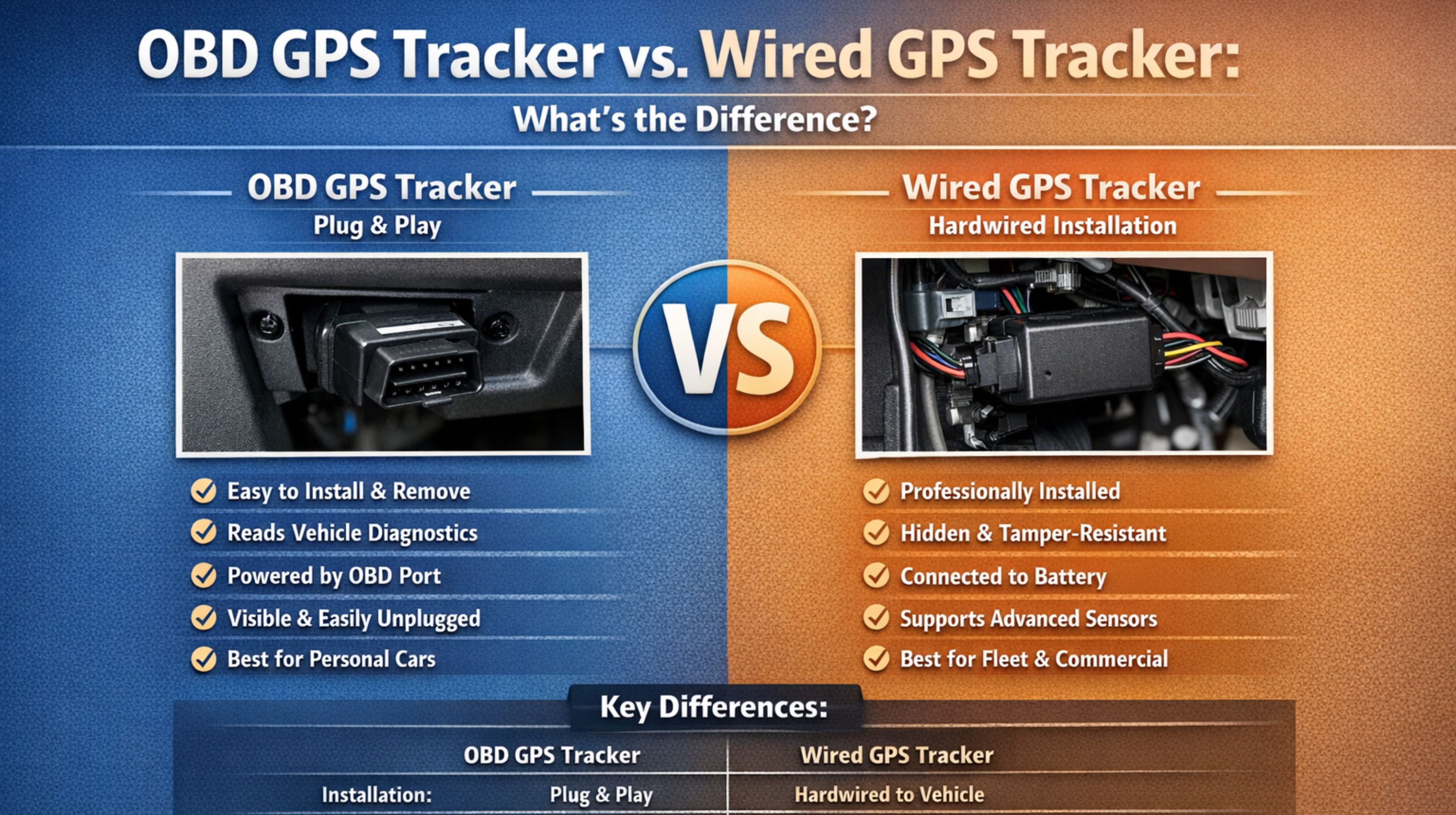
The difference between an OBD and a wired GPS tracker isn't just about installation; it's really about which hidden failure mode your fleet can actually afford. I've seen it happen—that delayed ignition-off alert from an OBD device when a driver just unplugs it, versus the silent, immediate tamper detection you get from a hardwired unit. That gap matters.
Clarity in Live Fleet Tracking
An OBD tracker plugs into the vehicle's diagnostic port for power and data. It's quick to deploy, sure, but you're stuck with the port's location. A wired tracker gets permanently hardwired into the vehicle's power, and it's often hidden away. Here's the non-obvious part that trips people up: OBD devices can keep drawing from the vehicle's battery even when the engine's off. If it's not configured right, that's a dead battery waiting to happen—a surprisingly common misunderstanding that ends up as a frantic service call.
Reality Check Under Real Vehicle Scale
At a small scale, OBD's simplicity is a perk. But when you scale up, it becomes a real liability. In a mixed fleet, drivers can too easily just unplug the things, creating data blackouts that your reports will read as vehicle downtime. Wired installations prevent that, absolutely, but now you're dependent on finding skilled technician time for every single install. And there's a boundary where OBD fixes just stop working: when you need consistent engine diagnostics or fuel monitoring from heavy machinery. The OBD port might not give you the necessary data streams, and the power connection isn't always stable under high vibration.
Mistakes and Hidden Compliance Risks
The wrong assumption here is thinking OBD is "good enough" for all reporting. For strict stuff like Hours of Service (HOS) or IFTA fuel tax compliance, even a momentary OBD power loss can create an unaccounted gap. That's an audit mismatch just waiting to happen. If you're relying solely on OBD for a mix of high-value assets, you're inviting a signalloss scenario where critical location pings get missed during key transit phases. That undermines the whole point of having IoT asset monitoring in the first place.
Decision Help: Tune, Reconfigure, or Redesign
The clear choice comes down to your asset criticality and audit tolerance. For non-critical, light-duty vehicles where driver tampering isn't a big concern, a professionally configured OBD device might be fine. But the explicit boundary—where internal fixes aren't enough—is when you're managing high-value cargo, need tamper-proof logs, or operate in compliance-sensitive environments. That's when you demand the reliability of a wired system. In those cases, having a robust gps controller platform that can support both data types becomes essential just to get a unified, trustworthy view.
FAQ
q Which type of GPS tracker is more accurate for location?
a They both use the same GPS chipsets, so the raw location accuracy is identical. The real difference is in data continuity; a wired tracker is just less likely to have the power interruptions that cause missed pings.
q Can an OBD tracker drain my vehicle's battery?
a Yes, it can, if it lacks proper sleep-mode configuration. A common fleet mistake is not setting those voltage cutoffs, which leads straight to stranded vehicles and a pile of escalated maintenance tickets.
q Is a wired tracker worth the higher installation cost for a large fleet?
a The decision scales with your risk. For 50+ vehicles, the upfront cost of professional wiring is often offset by eliminating the ongoing labor of managing hundreds of loose OBD plugs, dealing with driver tampering incidents, and untangling corrupted diagnostic data streams.
q How do I choose if I need engine diagnostics and fuel monitoring?
a For pulling basic engine codes, OBD works. But for precise fuel performance monitoring or integration with advanced telematics, a hardwired connection to the vehicle's CAN bus system is pretty much mandatory. It provides a stable, dedicated data link that an OBD port—which is sharing its diagnostic functions—can't reliably guarantee.


Comments
Post a Comment