Missing Location Data During Dispatch Creates Critical Fleet Delays
Missing Location Data During Dispatch Creates Critical Fleet Delays
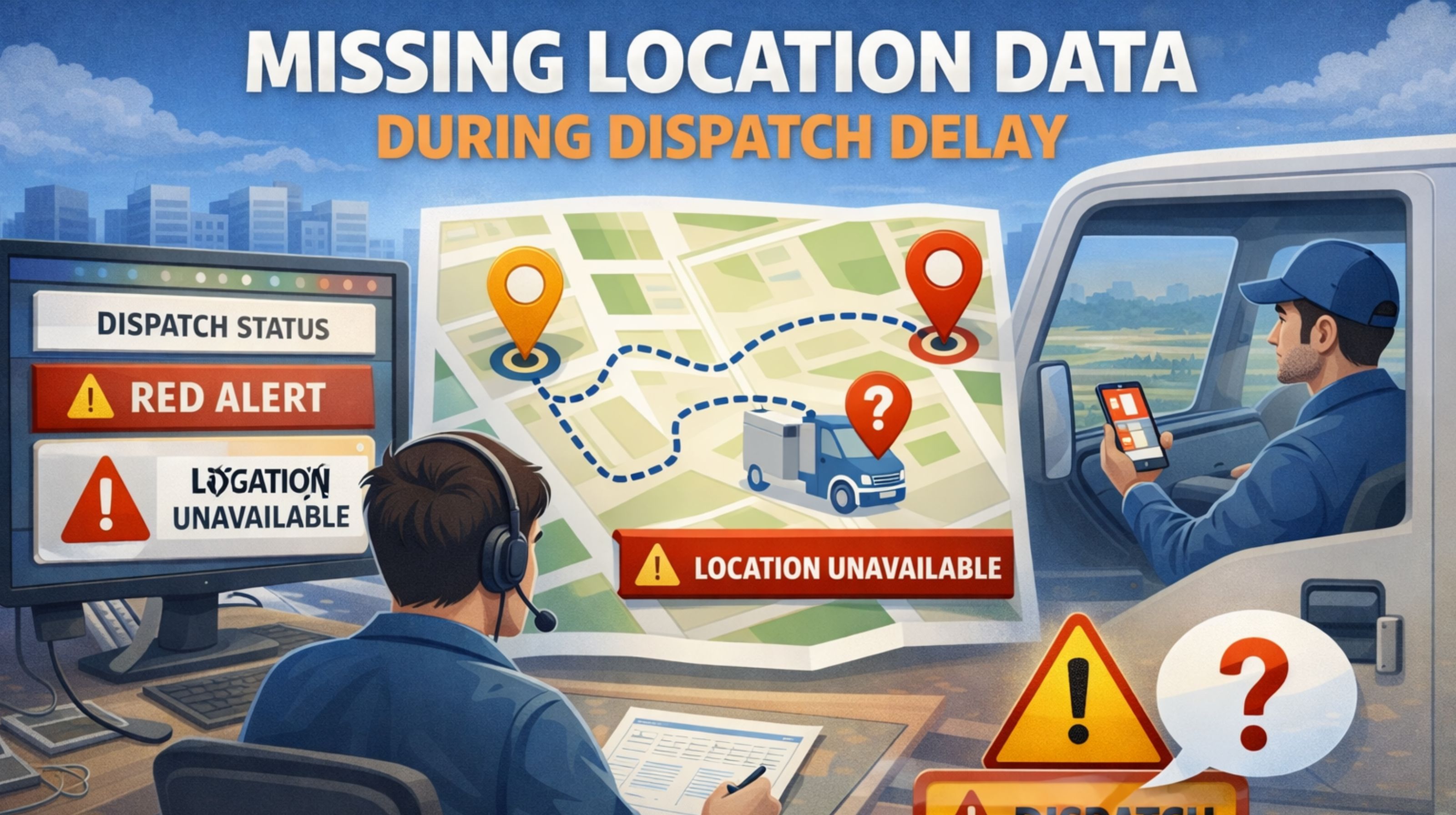
When GPS signals drop during the dispatch window, it kicks off a chain reaction of failures that's tough to stop. Honestly, it's more than a map glitch—it's a real-time breakdown. Dispatchers are left blind, and drivers end up stranded without updated orders, all because of a few missing data points.
What Missing Dispatch Data Means for Live Fleet Control
The real failure is losing situational awareness right when a vehicle's status flips to "assigned." Dispatchers are stuck looking at a stale location, maybe several minutes old. That leads to wrong ETAs and inefficient job assignments, and the ripple effect messes up the entire day's schedule before you know it.
Reality Check Under Real Fleet Scale and Load
At scale, even a 5% rate of missing location updates during dispatch creates gridlock. You'll see drivers circling blocks because the geofence alert for job arrival never triggered, or two assets being mistakenly assigned to the same location because the system couldn't confirm which was closer. The real-time vehicle tracking layer has to be rock-solid here; jittery data just means wasted fuel and frustrated drivers, plain and simple.
Common Failure Patterns and Costly Assumptions
The most damaging assumption is thinking "the data will catch up." By the time a device reconnects and sends its backlog, the dispatch decision—usually a bad one—is already locked in. Another big mistake is blaming the device alone. Often, the failure is in the network handoff between cellular towers as the vehicle moves, or in the middleware that fails to prioritize dispatch-critical location packets over other telemetry.
Decision Help: Tune, Reconfigure, or Redesign the Data Pipeline
The line is pretty clear. If missing data is sporadic and tied to specific geographic dead zones, you might get by with aggressive tuning of reporting intervals and failover logic. But if dispatchers are routinely guessing for more than 10% of daily assignments, the underlying data pipeline probably needs a redesign. This is where just swapping devices fails. The real fix requires a fleet management software and network architecture review to make sure dispatch commands and location pings share a guaranteed, prioritized data channel. A robust gps controller platform is built for this specific pressure point.
FAQ
q What causes GPS to lose signal specifically during dispatch?
a It's often a combination of things. The vehicle starts its ignition, causing a brief power cycle, and then moves out of a stable parking spot into an urban canyon. That can overwhelm a basic device's ability to get a fresh, fast GPS fix under all that time pressure.
q How does this delay create a compliance risk?
a Missed dispatch times break electronic logging device (ELD) duty status chains. It can lead to violations for inaccurate records of on-duty time, especially if the delay pushes a driver closer to hours-of-service limits without the right logging.
q At what fleet size does this problem become unmanageable?
a Beyond 20-30 vehicles, manual correction just isn't possible. The scheduling domino effect means one missing location can delay three subsequent jobs. Automated systems without resilient data links end up amplifying the error across the whole board.
q When should we stop trying to fix individual devices?
a When your maintenance logs show the same vehicles repeatedly "fixed" without any lasting change, the problem is systemic. You've crossed the line when the cost of manual dispatch correction outweighs the investment in a system-level solution with redundant location verification.


Comments
Post a Comment