Missing ELD Log Data During a Roadside Audit
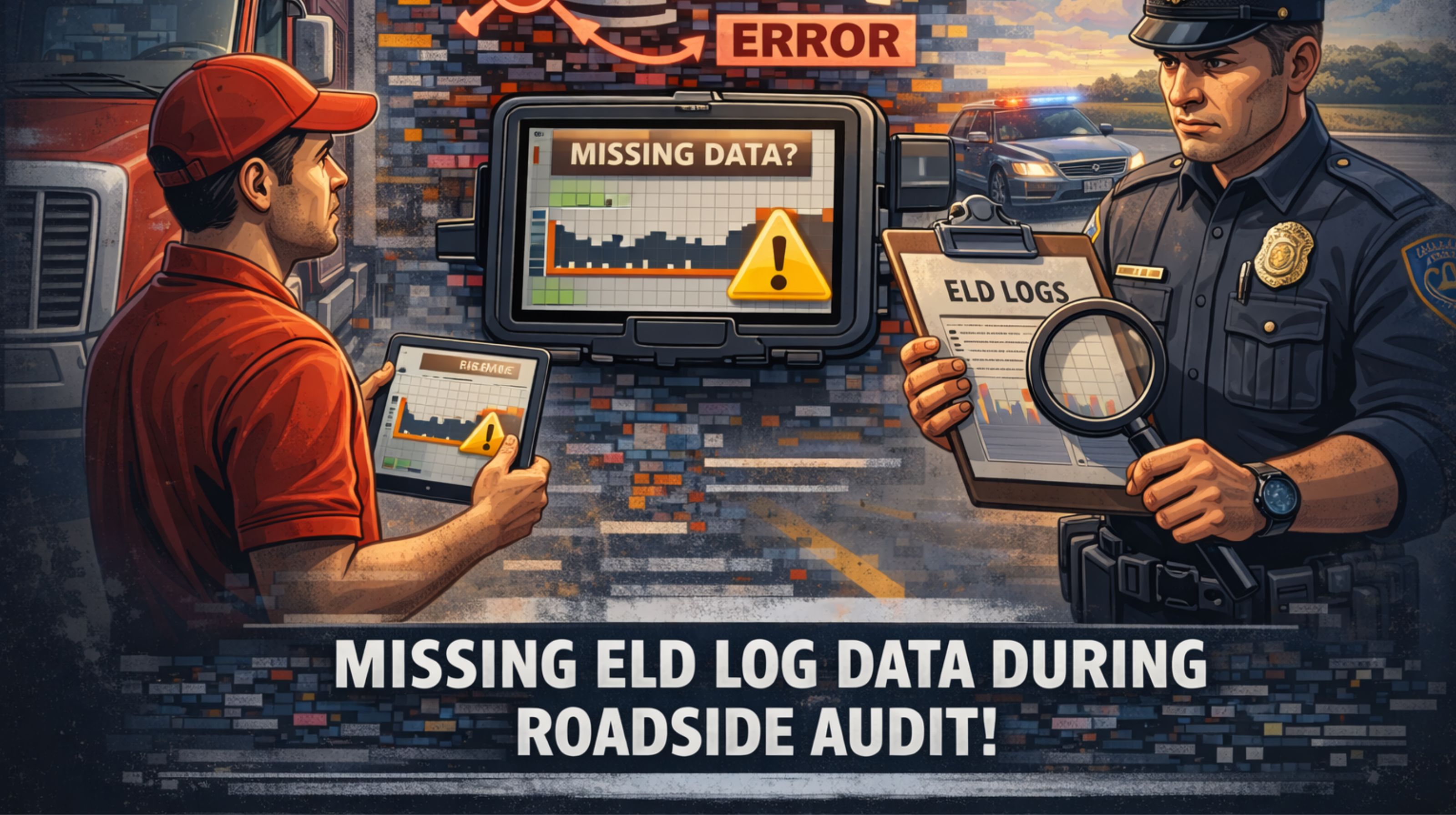
Missing ELD Log Data During a Roadside Audit
When a DOT officer asks for your logs and the screen shows gaps, you're already in violation territory. Honestly, it's not just a missed file; it's a breakdown in the whole chain from the vehicle's engine to the officer's tablet. And that's usually down to some silent device or network failure nobody caught.
What Missing ELD Data Really Means on the Road
In a live audit, missing data just means "unavailable records," and that carries the same weight as a falsified log. The officer isn't checking your server back at the office; they're looking at the ELD display right in the cab or the data file you hand over. A gap there is an automatic citation, even if the data exists somewhere else. In reality, it's often the device missing ignition-on events or failing to sync its cached data right before a roadside stop.
Reality Check Under Fleet Scale and Movement
At scale, the problem is almost never just one truck. You start seeing a pattern—maybe it's tied to specific vehicle types, older engine interfaces, or routes with terrible cellular coverage. The frustrating part is you might see perfect logs in your fleet management software dashboard, but the official ELD file for the officer is somehow corrupted or incomplete. That mismatch between your back-office data and the roadside copy is where the real risk is.
The Critical Mistake and Escalating Risk
The most dangerous assumption is blaming "spotty GPS." Look, ELD data—engine hours, motion status—comes from the vehicle's own J1939 or J1708 data bus, not the GPS signal. So a failure here is a hardware or integration fault. If you keep ignoring repeated "data sync failed" alerts, or assume the driver's mobile device will somehow cover the gaps, you're heading straight for escalating violations and potential out-of-service orders.
Decision Help: Fix the Chain or Replace the Link
The line is pretty clear. If missing logs are a one-off thing tied to a known network dead zone, then yeah, reconfiguring the device's data caching rules might work. But if the issue keeps happening across a whole vehicle class—like constant communication drops with a specific engine module—then the internal fix has basically failed. At that point, you've got to replace the faulty link, usually the ELD device or its gateway, with a certified unit that actually ensures end-to-end data integrity. That's a fundamental requirement a proper gps controller platform should be built to verify, anyway.
FAQ
q: Can I show the officer my online portal if the ELD file is missing?
a: No. DOT rules are specific: they need the official ELD output file or display. Your portal isn't an acceptable substitute during the inspection, so showing it will just lead to a citation.
q: What's the most common hidden cause of lost ELD data?
a: Probably a failing connection at the vehicle's diagnostic port. It causes intermittent power or data loss that doesn't trigger a clear alert... until you're in an audit.
q: Does adding a satellite modem prevent missing log data?
a: It helps with syncing, sure, but it's not a magic fix. The device still has to capture and store the data locally when the vehicle is running, no matter what the cellular backhaul is doing.
q: When is it time to replace the ELD device instead of troubleshooting?
a: When logs are missing for the same vehicle across multiple drivers, or when your diagnostic checks keep showing "data bus errors" that firmware updates just don't fix.


Comments
Post a Comment