Location Data Predicts SLA Breaches Before They Happen
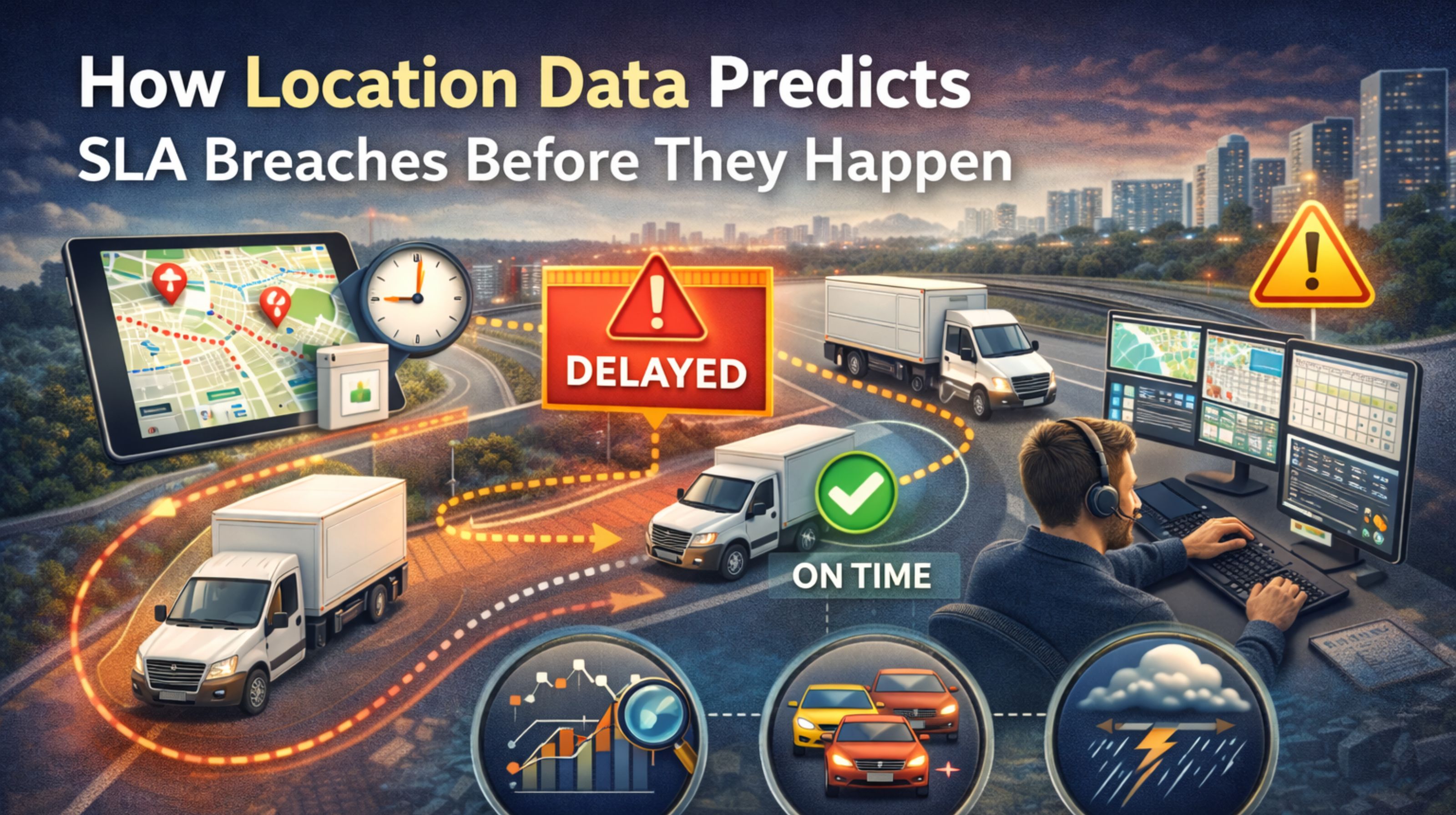
Location Data Predicts SLA Breaches Before They Happen
In fleet tracking, location data isn't just a dot on a map. Honestly, it's more like a predictive signal of operational failure. When a vehicle's GPS signal starts jittering in a known urban canyon, or its reported speed just keeps dropping below the route average for that segment... well, that's not a simple glitch. It's usually the first whisper of a potential SLA breach that hasn't even been logged. The thing is, delayed geofence arrival alerts are often the symptom, not the cause. The real root is usually a pattern of those minor location reporting lags that quietly compound into a major schedule deviation.
What Predictive Location Signals Actually Mean
So, predictive signals. What that really means is correlating raw GPS pings with historical on-time performance data for specific routes and times. It's the difference between seeing a truck is stopped and *knowing* that a 10-minute stop at that particular warehouse loading bay has, 85% of the time last month, cascaded into a 47-minute final delivery delay. To get there, your fleet management software has to process location not just as coordinates, but as contextual events against a performance baseline. It's a different way of thinking about the data.
The Reality Under Fleet Scale and Load
At scale, there's a non-obvious detail that gets people: network latency variance across hundreds of devices. Picture this: when 50 vehicles all try to transmit location data at once after leaving a dense depot area, you get packet collisions and carrier network throttling. That can introduce a 2-5 minute reporting delay that looks like congestion on the map, but is actually just a data transmission bottleneck. This artificial delay? It skews all your downstream ETA calculations. And worse, it masks the true leading indicator of a breach, which is usually just a consistent late departure from key waypoints.
Common Misunderstandings That Escalate Risk
The most common misunderstanding I see is treating all location data as equally accurate and timely. Managers will often just blame "traffic" for a breach. But then the audit trail shows the vehicle's telematics unit reported a harsh braking event and 15 minutes of idle time at a non-scheduled stop—data points that were logged but never flagged as a breach precursor by a static rule system. This reliance on the idea of perfect data leads straight to reactive firefighting, instead of allowing for pre-emptive rerouting using route optimization logic.
When to Tune Alerts Versus Redesign Monitoring
The decision boundary here is usually pretty clear. If adjusting geofence sizes and ETA buffers stops the false alarms for, say, 80% of your routes, then you're probably still in tuning territory. If, however, you're constantly making exceptions for specific clients, regions, or vehicle types, and SLA breaches still surprise you... then your monitoring logic itself is insufficient. That's the point where internal fixes stop working. You need a redesigned system that weights location consistency, stop duration outliers, and historical segment performance as primary breach predictors, not just the final arrival time.
FAQ
q How can location data predict a delay before it happens?
a By analyzing patterns. Things like a gradual speed decay on a highway segment, or a longer-than-average dwell time at a pickup point, when checked against historical trip data. The system can then extrapolate a high probability of late arrival, often before the scheduled delivery window even closes.
q What's the biggest risk of relying on basic tracking for SLA compliance?
a The biggest risk is false confidence. Basic tracking only confirms a breach after the fact. Without predictive analytics, you have no lead time to intervene, re-route, or notify the customer. That turns what could be a manageable delay straight into a financial penalty and a hit to the relationship.
q Does this require AI or just better dashboard rules?
a For most fleets, it starts with better rules that analyze multi-point data streams. True predictive modeling for complex SLAs might eventually involve machine learning, but the critical first step is integrating location data with engine data and schedules in your reporting analytics to actually spot the correlations.
q When should we consider a platform change for predictive SLA?
a When your current system can't correlate real-time location with historical performance patterns, or create proactive alerts, and manual monitoring is eating up all your dispatcher's time. At that point, evaluating a platform with deeper predictive logic—like a specialized gps controller ecosystem—stops being a mere tech upgrade and becomes an operational necessity.


Comments
Post a Comment