How to Reduce Fuel Theft Sensor Data Mismatch Errors in Fleet Tracking
How to Reduce Fuel Theft Sensor Data Mismatch Errors in Fleet Tracking
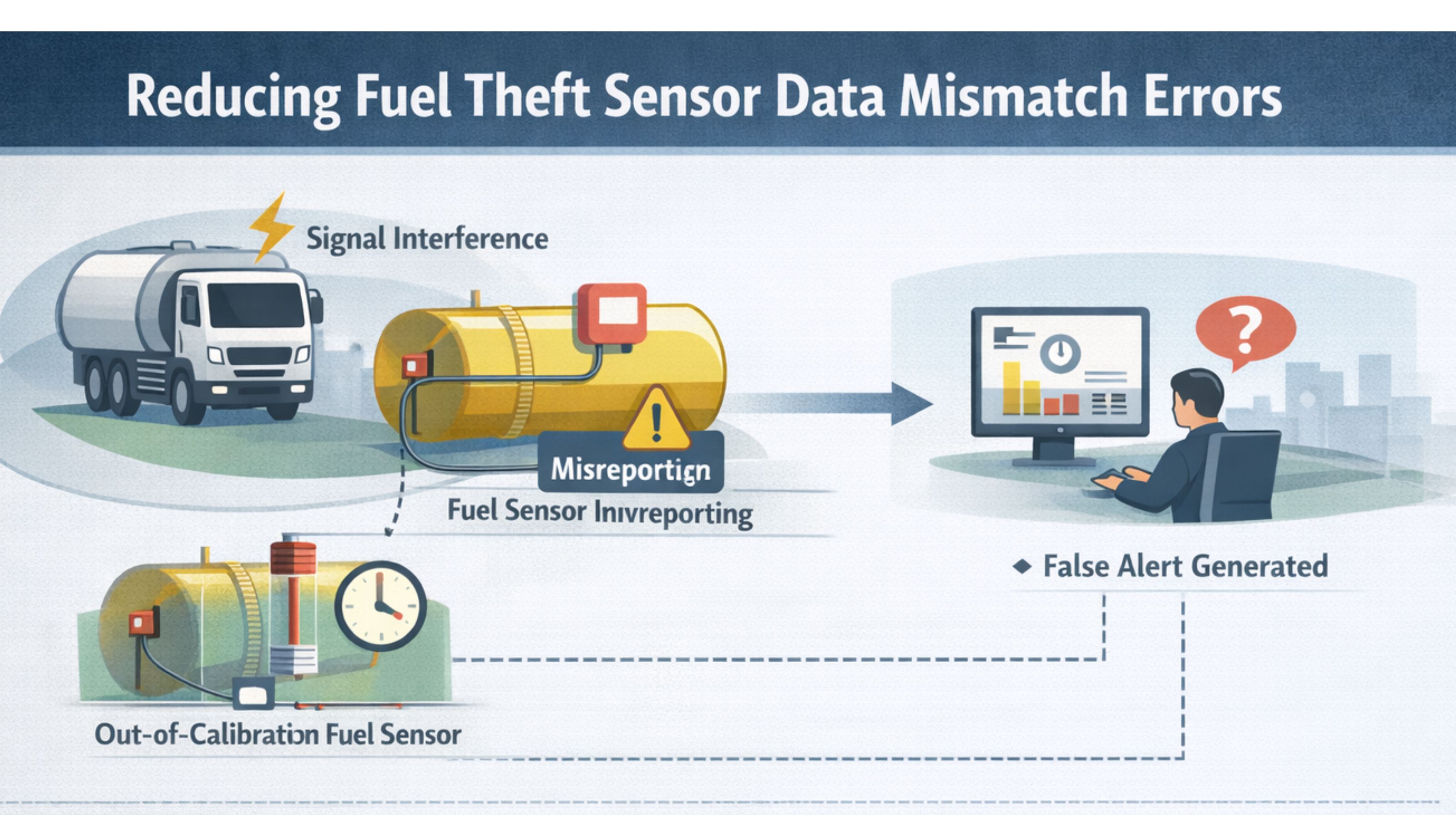
Fuel theft sensor data mismatch errors. They're a major source of false alerts and wasted investigation time for fleet managers. The problem usually comes down to a disconnect between what the sensor says and what the truck is actually doing.
What Fuel Sensor Data Mismatch Means for Fleet Operations
In practice, a data mismatch is when your system flags a sudden fuel drop or a weird refuel, but the driver's log, the odometer, or a quick dipstick check tells you something else. This creates alert fatigue. Your team starts ignoring the pings, and a real theft could slip through. It hits your bottom line and erodes trust in the whole system.
Real-World Causes of Sensor Data Errors on Vehicles
On the road, sensor inaccuracies are just part of the job. Fuel sloshing in a half-empty tank on a hilly route can look like a theft. Big temperature swings make fuel expand or contract, which the sensor might read as a refuel or a drain. One detail we often miss in the office is calibration drift. Over time, especially after a mechanic drops a tank or fiddles with a sensor, the readings just... drift. You end up with a growing gap between what's reported and what's actually in the tank.
The Risk of Relying on Unverified Sensor Alerts
The biggest mistake you can make is automating write-ups or theft reports based on a single sensor ping. If you don't understand the sensor's tolerances, you risk accusing a good driver. That destroys morale fast. The system also falls apart during legitimate high-consumption work—think extended idling with a PTO running, or brutal stop-and-go traffic. The sensor sees that heavy burn rate and just interprets it as anomalous, throwing another false positive.
Steps to Reduce Mismatch Errors and Improve Accuracy
So, what's the next step? Start by cross-referencing. Don't look at the fuel data in isolation. Pull up the vehicle's location history. Did that "fuel drop" happen right as it left a geofence? Was the ignition off? Replay the route. You need to establish a baseline for what normal consumption looks like for each truck on its usual run. For persistent, complex discrepancies across the fleet, getting reliable theft detection often means you need deeper fuel performance monitoring tools. Sometimes you need to bring in a provider like GPS Controller to help tune the alert logic and validate the hardware itself.
FAQ
What is the most common cause of a fuel sensor data mismatch?
The most frequent cause is fuel sloshing in a partially filled tank during sharp turns, braking, or on inclines, which the sensor reads as a rapid level change.
Can weather affect my fuel theft sensor accuracy?
Yes, significant temperature swings cause fuel to expand or contract, leading to false "refuel" or "theft" events if the system doesn't account for thermal compensation.
How often should fuel level sensors be calibrated?
Sensors should be checked and calibrated at least annually or after any major fuel system maintenance, as physical disturbances can alter their reading baseline.
What's the first thing I should check when I get a fuel theft alert?
Immediately review the vehicle's location history, ignition status, and driver activity from your fleet management software to see if the drop correlates with a plausible stop or driving behavior before assuming theft.


Comments
Post a Comment