How Legacy Tracking APIs Drain Your Budget When Scaling Fleet Operations
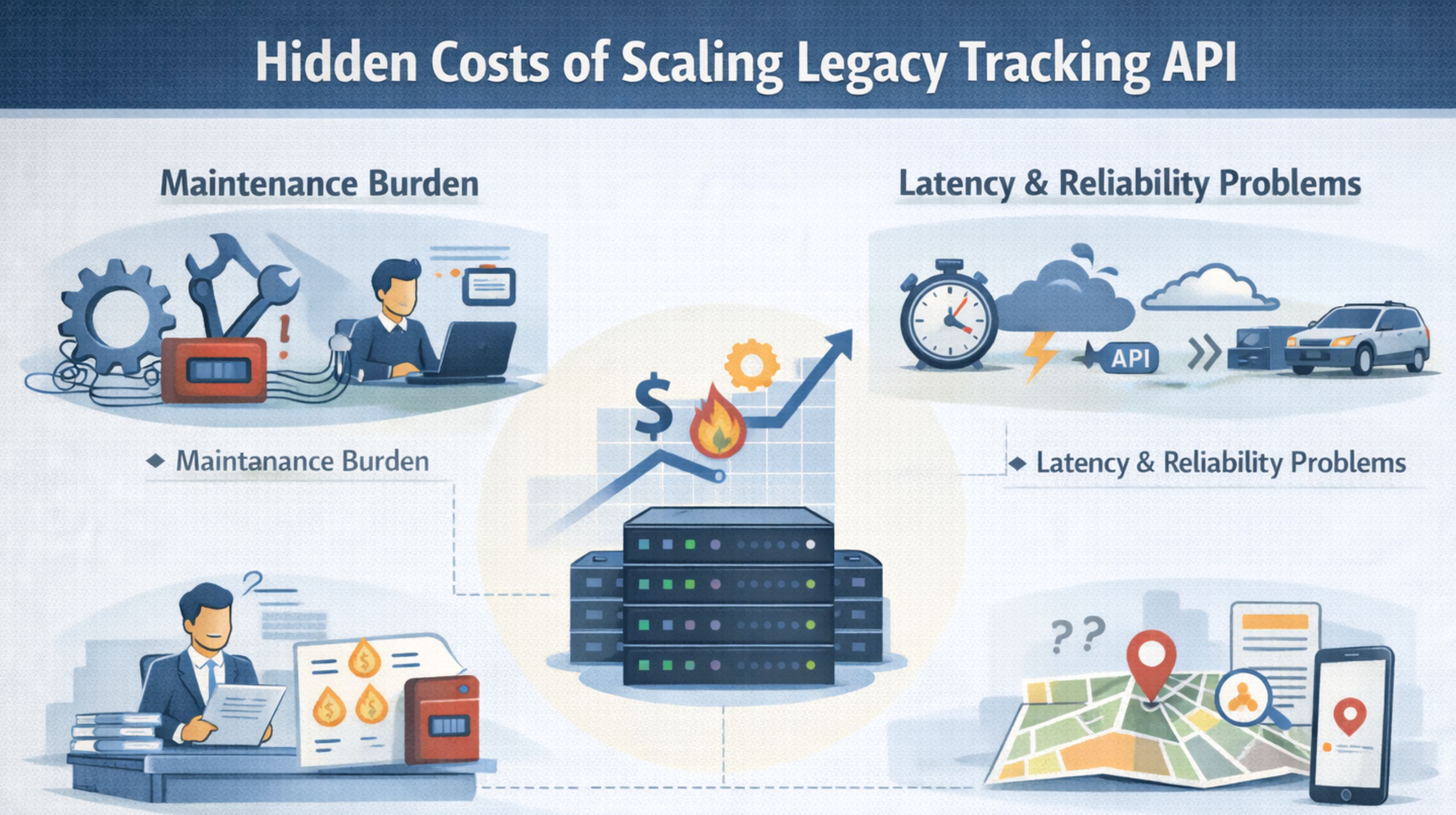
How Legacy Tracking APIs Drain Your Budget When Scaling Fleet Operations
Scaling your fleet with an outdated tracking API... well, it's less like pushing a boulder uphill and more like trying to steer one. You think you're making progress, but the real costs—the integration delays, the weird data holes—they only hit you after you've already doubled down. That promise of "just add more vehicles" is a trap. It hides a ton of technical debt that just eats into your budget and kills any chance of being agile.
What "Legacy API Costs" Really Mean for Your Fleet
Let's be practical. A legacy API isn't just old code. It's a system that adds friction at every single step of your growth. Think about your team manually stitching together fuel reports from some other system because the API can't handle it. That's the real cost. It's lost hours for your analysts and decisions that come too late. It's way more than just the monthly invoice.
The Real-World Behavior of Outdated Tracking Systems
On the road, these old systems show their true colors. You'll see inconsistent data pings, or sometimes just... silence. One thing we see all the time is "GPS drift" in the historical replays. A truck will teleport across three blocks, which makes any route compliance audit a joke. Or delayed geofence alerts. The driver's already ten miles down the road by the time you get the ping, so what's the point? You've lost any chance for real-time intervention.
The Critical Mistake: Assuming "It Still Works"
This is the big one. The costly assumption that if the API is returning *some* data, it's fine. You end up making decisions based on half the picture. The major risk is scaling up while you're on an API with tight rate limits or batch-only exports. You hit that 50th vehicle and suddenly the whole data flow for your fleet chokes. Missed alerts, reporting blackouts—right when you need visibility the most.
Deciding Your Next Move for Sustainable Scaling
So what do you do? You need to audit your current API's actual capacity. Test it during your peak dispatch times. Go look for the gaps in your key reports. The goal is sustainable scaling, and honestly, that usually means moving to a platform built for modern data volume. Something designed for real-time work from the ground up, like the fleet management software from GPS Controller, which aims to cut out these exact hidden bottlenecks.
FAQ
What is the biggest hidden cost of a legacy tracking API?
It's developer and IT time, hands down. The hours spent on maintenance, writing custom patches, and chasing down data sync failures will blow past any savings on licensing.
How do legacy APIs create data gaps?
They use old protocols, and their error handling is bad. You lose pings in weak signal areas, get incomplete trip logs, and deal with mismatched timestamps. It completely breaks any chance of accurate fuel performance monitoring.
Can legacy APIs support modern features like geofencing?
Technically, maybe. But not well. Alerts come late, lack detail, or don't talk to your other systems. You end up manually checking everything, which defeats the whole purpose of automated geofencing alerts.
When is it time to replace a legacy tracking API?
When the cost of all your workarounds and missed opportunities is bigger than the migration effort. Or when you simply can't support a new business need, like proper API integrations with your dispatch software.


Comments
Post a Comment