GPS Tracking Device Problems That Cause Fleet Data Blackouts
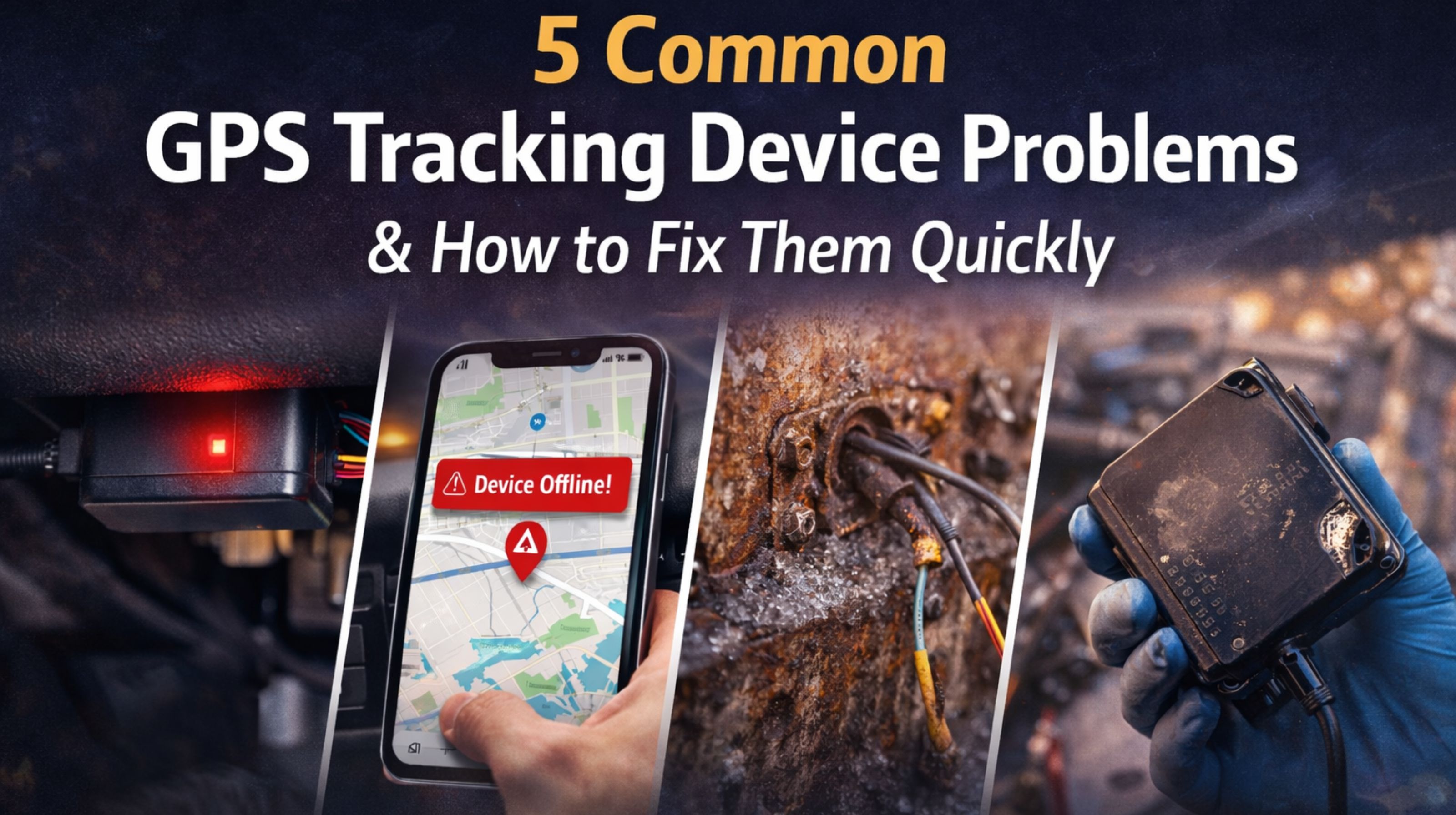
GPS Tracking Device Problems That Cause Fleet Data Blackouts
When a GPS tracker stops reporting, it's not just a dot missing on a map. It's a compliance audit waiting to fail, a driver idle time dispute you can't win, and a routing decision made with last hour's data. Honestly, the most common problems come from assuming the device is broken, when the reality is usually a mismatch between its configuration and your fleet's actual operating environment.
What GPS Signal Loss Really Means for Live Fleet Tracking
In fleet management, "signal loss" is rarely a dead device. More often, it's a pattern—vehicles consistently dropping out in the same urban canyon or during specific delivery windows. That's usually a configuration or network handoff issue. I've seen it: a vehicle shows "stationary" for 45 minutes in a known cellular dead zone, while the driver's handheld has full service. That points right to the tracker's specific antenna or network subscription being the limit.
Reality Check Under Real Fleet Scale and Load
At scale, problems compound. A 5% data packet failure rate is a nuisance for five vehicles; for a fleet of 200, it means ten vehicles are essentially unmanaged at any given moment. That skews your fuel performance monitoring and payroll data. The non-obvious detail? The controller platform's polling interval under load. Aggressive real-time tracking on hundreds of assets can cause gateway timeouts, making some devices appear offline when they're just stuck in a reporting queue.
Mistakes and Risks in Diagnosing Tracking Failures
The biggest mistake is immediately replacing hardware. That just escalates cost without solving the underlying network or API integration sync issues. A critical risk is assuming delayed geofence alerts are just "software lag." Often, they're caused by the device's motion-sensitive reporting mode. It stays in a low-power, low-frequency update state after prolonged idling, and can miss the exit event entirely.
Decision Help: When to Fix, Reconfigure, or Replace
The boundary for internal fixes is power management. If adjusting reporting intervals and network settings in your fleet management software stops the blackouts, you've solved a configuration problem. But if vehicles with healthy batteries still suffer chronic dropouts in standard operating areas, the device's cellular modem or GPS chipset likely can't handle your regional infrastructure—that's a hardware limitation. At that point, evaluating a gps controller platform's compatibility with your operational terrain isn't just helpful, it's necessary.
FAQ
q Why does my GPS tracker show the wrong location sometimes?
a This is often "last known location" caching, not a live error. The device may have lost satellite fix in a depot but keeps reporting its last valid coordinates until it reacquires signal. That can take minutes if the ignition is off and it's in power-saving mode.
q How long is too long for a tracking device to be offline?
a For active ignition, more than 15-30 minutes usually indicates a problem. For assets that power down, 24-48 hours might be normal. The real risk is inconsistent patterns. A delivery truck that goes offline every afternoon? That suggests a thermal or power issue under sustained operation.
q Can too many geofences cause tracking problems?
a Yes. Each geofence is a constant calculation on the device. An overloaded device prioritizing geofence checks can delay its primary location reporting. That creates a data lag that directly impacts real-time vehicle tracking visibility.
q When should I stop troubleshooting and get a new device?
a When the same problem recurs across multiple vehicle installations. Or when basic diagnostics like SIM swaps and hard resets give you less than 48 hours of relief. Persistent failure under normal conditions usually signals a component-level flaw.


Comments
Post a Comment