GPS Tracking Device Problems That Cause Real-Time Fleet Data Gaps
GPS Tracking Device Problems That Cause Real-Time Fleet Data Gaps
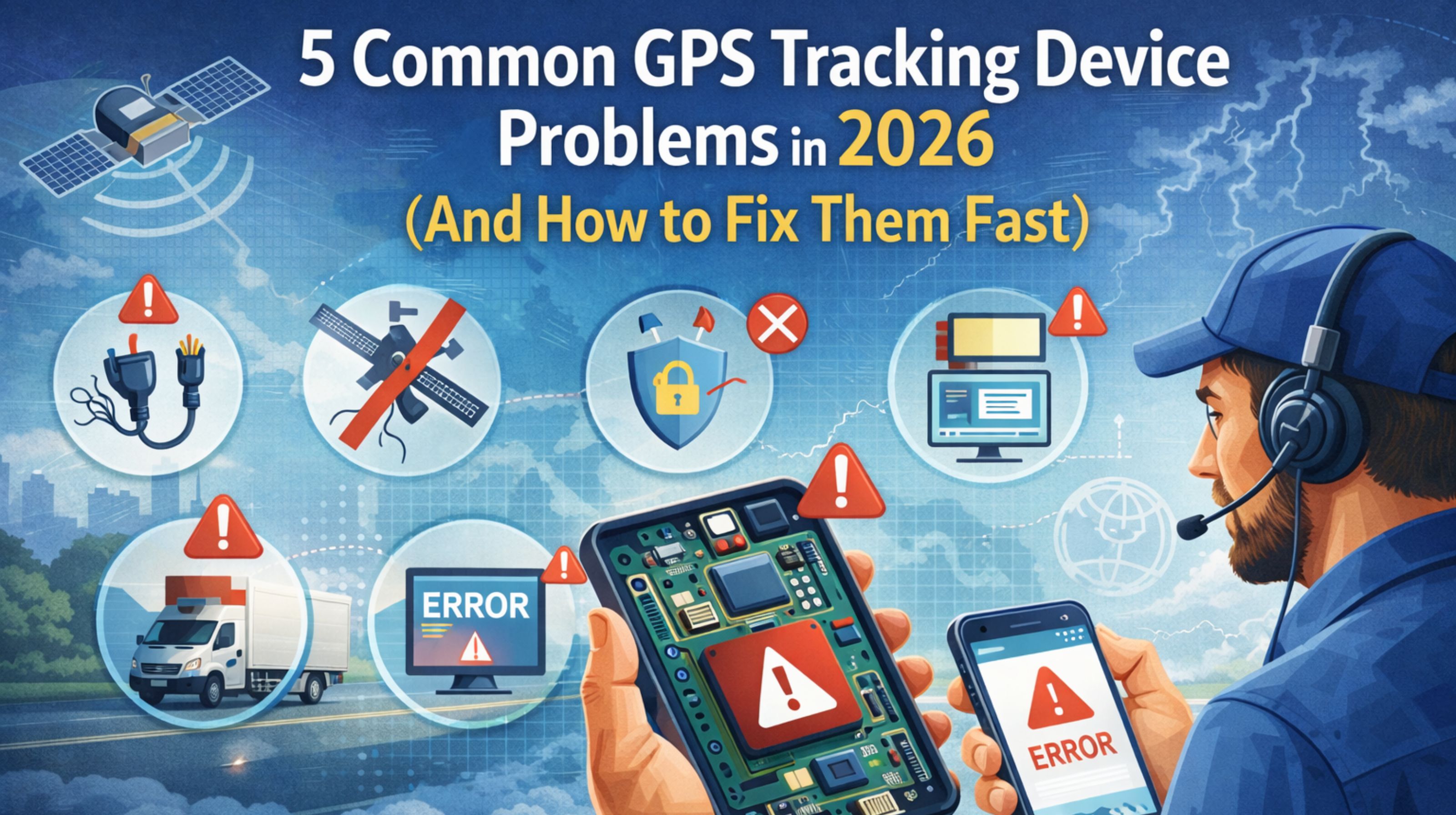
When your GPS tracking device problems start with a single vehicle's location lag, the real failure is the silent breakdown in dispatch and compliance workflows that follows. It's never just one thing.
Clarity on Modern GPS Tracking Device Failure
In live fleet tracking, a "problem" isn't just a lost signal. What you actually get is the cascading data error that corrupts your whole operational timeline. Think about a delayed geofence alert that leaves a driver idling on a customer site for an hour, completely unbilled. The tricky part is that many modern trackers use combined cellular and satellite modules, and a weak primary signal doesn't always trigger a failover like it should. So the device shows a false "online" status while it's quietly reporting stale coordinates.
Reality Check Under Real Vehicle Scale and Load
At scale, these intermittent problems just create systemic noise. You start to see patterns: signal jitter in urban canyons for maybe 20% of your fleet, or idle engine hours inaccuracies that end up skewing fuel performance monitoring across an entire region. Everyone's first instinct is to blame "bad GPS," but the real constraint is often the device's internal buffer overloading during a cellular dead zone. Then it dumps or misorders a bunch of location pings once it's back online, and your data's a mess.
Mistakes and Risks in Diagnosing Tracking Failures
The failure pattern that really escalates costs? Assuming all your devices are configured identically. A controller might see a group outage and initiate a mass reboot, only to find out the problem was a carrier-specific network sunset affecting just one batch of legacy devices—which are now stuck in a boot loop. That triggers audit mismatch alerts immediately, because mileage logs start showing impossible jumps. It directly creates a compliance gap that a stack of manual reports can't easily fix.
Decision Help: Tune, Reconfigure, or Replace Your Fleet Trackers
The boundary where internal fixes stop working is pretty clear. It's when over 15% of your devices consistently need manual reprovisioning, or they show unsynchronized sensor data—like PTO being on without any movement. At that point, you're beyond simple tuning. Reconfiguring everything through a centralized fleet management software platform is the bare minimum step you have to take. But honestly, a full redesign of your device strategy and even your network partners is often what's really required. Having a gps controller presence in your ecosystem becomes critical here, just to bridge that gap between the hardware and the data workflow.
FAQ
q Why is my GPS tracker showing location but no engine data?
a That's typically a CAN bus or wired connection fault, not a GPS issue itself. The device is still getting satellite signals, but it's lost the physical data link to the vehicle's computer. It's a common problem after maintenance, or in really harsh vibration environments.
q How long can a GPS tracker work without a cellular signal?
a It really depends on the internal memory. Most decent models store 2-4 weeks of high-resolution logs, but cheaper ones might hold only days. The big risk is data compression on reconnection—you can lose trip detail that's critical for custom reports and analytics.
q Can a failing GPS tracker cause wrong route optimization?
a Absolutely. Stale or "jumpy" location pings make the system think a truck is on a side road or running late, which then triggers unnecessary reroutes for other vehicles. It creates this cascading routing delay across your whole network.
q When should I replace a GPS device instead of troubleshooting it?
a I'd say the decision lock is at the third hardware-related fault in a month. Or if it's a model that's no longer receiving critical firmware updates for security and network compliance. At that stage, persistent problems shift from being a cost to being a real liability.


Comments
Post a Comment