GPS Tracking Delay After Hard Reset Means Deeper System Failure
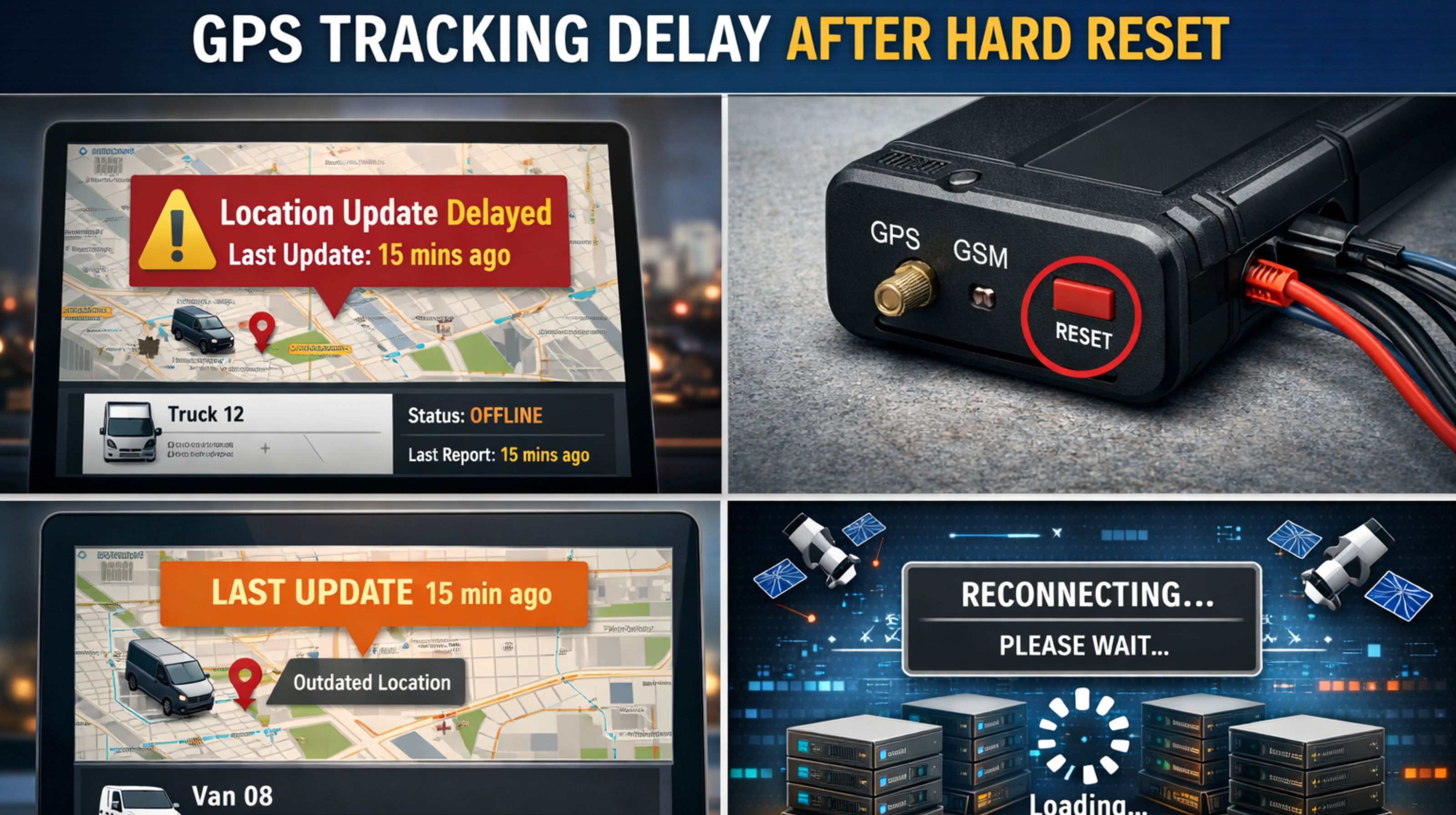
GPS Tracking Delay After Hard Reset Means Deeper System Failure
When a GPS tracker stays silent or shows significant lag after a hard reset, it's not a simple reboot issue—it's a critical signal that the device, its configuration, or the underlying network path has failed. Fleet managers often mistake this for a temporary glitch, only to face compliance gaps when audit logs show missing vehicle movements during the delay.
What GPS Tracking Delay After Reset Actually Means
In live fleet tracking, a delay after a hard reset usually means the device is struggling to re-establish a full communication handshake with the cellular network and satellites. It's not just offline; it's failing a core restart sequence. A real-world sign is seeing the device status flip between "active" and "inactive" in your fleet management software for hours, even while the vehicle is clearly moving.
The Reality Under Real Fleet Scale and Load
At scale, with hundreds of vehicles, a pattern of post-reset delays points to a systemic network or provisioning flaw. Here's the non-obvious part: some cellular IoT modules have a "network attach" timeout that can stretch to 30 minutes if the local cell tower is congested, a problem that gets magnified in dense urban depots. That creates a real compliance risk where engine-on events and the start of routes are just missing from reports.
Common Mistakes and Escalating Failure Risks
The big misunderstanding is assuming the reset itself fixed the problem, when it often just makes a faulty configuration worse. Actually, repeated hard resets can corrupt the device's ephemeris data cache, forcing a full cold start satellite acquisition that takes even longer. This mistake leads to escalation, where teams waste days swapping hardware when the real issue is something like a silent carrier APN change or a dead geofencing alerts server blocking the data flow.
Decision Help: Fix, Reconfigure, or Replace the Tracker
The clear boundary is time and consistency. If a single device shows a delay after one reset, try reconfiguring its network settings first. If the delay happens again after a second reset, or if multiple units show the same pattern, the problem is likely a carrier or backend integration failure that needs a redesign of the data flow. Internal fixes stop being enough when the delay exceeds your operational tolerance for real-time visibility—that's the point where a gps controller platform's diagnostic logs become essential to pinpoint the failure layer.
FAQ
q How long should a GPS tracker take to come back online after a reset?
a A healthy device on a strong network should report within 2-5 minutes. Delays beyond 10-15 minutes typically indicate a network or device failure, not normal operation.
q Can repeated hard resets damage a GPS tracker?
a Yes, excessively cycling power can corrupt the GPS module's memory and degrade the cellular modem's ability to register on the network, which leads to longer delays each time.
q Why do some trackers work after reset but others in the same fleet don't?
a This often points to a batch-specific SIM card provisioning issue or a firmware mismatch, where a subset of devices can't authenticate on the updated carrier network.
q When should I stop troubleshooting and replace the tracker?
a Replace it if delays persist after you've verified correct APN settings, done a SIM swap, and tried a firmware update. The decision lock is when the cost of lost tracking data exceeds the hardware cost.


Comments
Post a Comment