GPS Tracker Offline? Proven Troubleshooting for Fleet Signal Loss
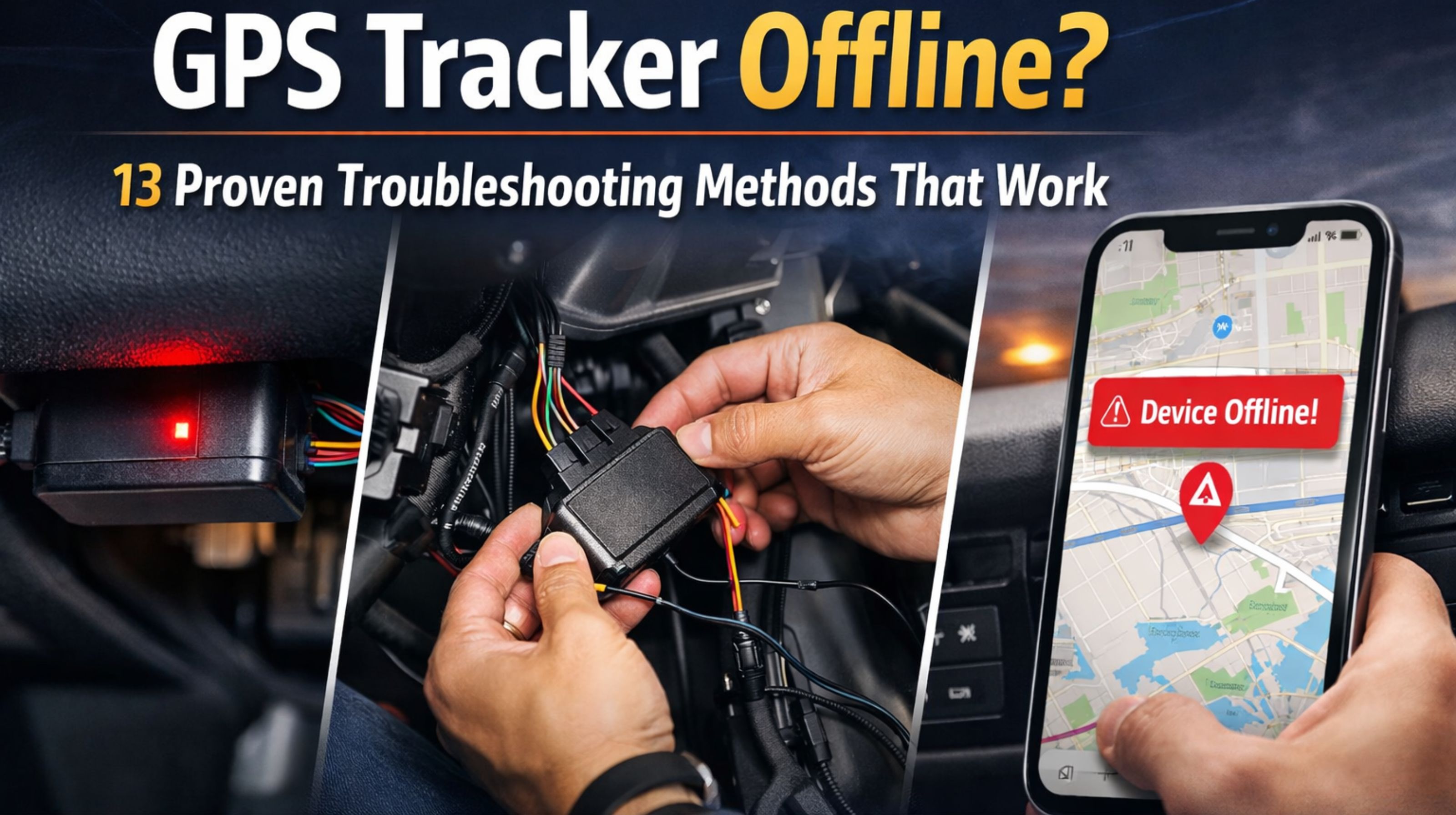
GPS Tracker Offline? Proven Troubleshooting for Fleet Signal Loss
When a GPS tracker goes offline, it's not just a missing dot on a map. It's a live signal failure that can mask unauthorized movement, idle engine waste, or a compliance audit mismatch. Your first step has to be figuring out if it's a device power failure, a network routing error, or some deeper system integration gap that your fleet management software might not flag right away.
What GPS Tracker Offline Really Means for Your Fleet
In live operations, "offline" often just means delayed data, not dead hardware. Something we see a lot is a device reporting normally in the yard but then showing a 30-minute data gap during a downtown delivery route. That usually points to cellular dead zones or network handoff failures that standard diagnostics just miss. And that's where you get a silent compliance risk—hours-of-service logs end up looking incomplete.
Reality Check Under Real Fleet Scale and Load
At scale, intermittent offline events often point to backend API or server-side queuing issues, not individual device faults. When the data load gets heavy, you might see a batch of trackers from one carrier all drop at the same time, while others stay online. That's a pretty clear sign of a carrier-specific network routing problem, or maybe a throttled data plan. It's the kind of pattern internal system monitoring often fails to catch.
Common Mistakes That Escalate GPS Offline Failures
The biggest misunderstanding is assuming a hard reset or SIM card swap is a permanent fix. That just misses the root cause. For instance, devices with outdated firmware often lose connectivity after a cellular tower update. Or, a poorly configured geofencing alert system can overload the device with location pings, draining its battery into a deep sleep state that looks just like being offline. If you escalate without checking power cycling logs first, you can waste days.
Decision Help: Tune, Reconfigure, or Replace the Tracker
The clear boundary comes from the diagnostic data. If your platform shows strong GPS fix and cellular registration attempts but no data transmission, the issue is likely network or configuration—so you'd tune APN settings and review data plans. If the device shows no power or boot cycles at all, hardware failure is probable. Honestly, your internal fixes stop when you can't access the device's own diagnostic logs. At that point, replacement is necessary, and a gps controller platform with deep diagnostics becomes critical to stop it from happening again.
FAQ
q: Why does my GPS tracker show offline when the vehicle is running?
a: This is often a power wiring or ignition sense issue. The tracker might be on a circuit that cuts power, or the device's low-voltage cutoff is activating even though the alternator is running. That usually indicates a faulty installation or a failing vehicle battery.
q: Can a bad SIM card cause a tracker to go offline randomly?
a: Yes, but random disconnects are more often due to weak carrier signal in operational areas or an expired/insufficient data plan. A physically bad SIM usually causes a permanent "no network" status, not intermittent drops.
q: How long does a GPS tracker stay offline before it's a serious problem?
a: For compliance (like ELD), any gap over 30 minutes can be a violation. For security, an offline alert should trigger within 15 minutes. The serious threshold is when multiple devices show patterned gaps, which points to a systemic network or server issue.
q: When should I stop troubleshooting and just replace the GPS tracker?
a: Replace if the diagnostic logs show persistent hardware faults, the device fails to accept configuration updates, or it's a legacy model incompatible with current network technologies (like the 2G/3G sunset). Continuing to troubleshoot obsolete hardware just wastes operational time.


Comments
Post a Comment