GPS Tracker Failure for Commercial Vehicles in India
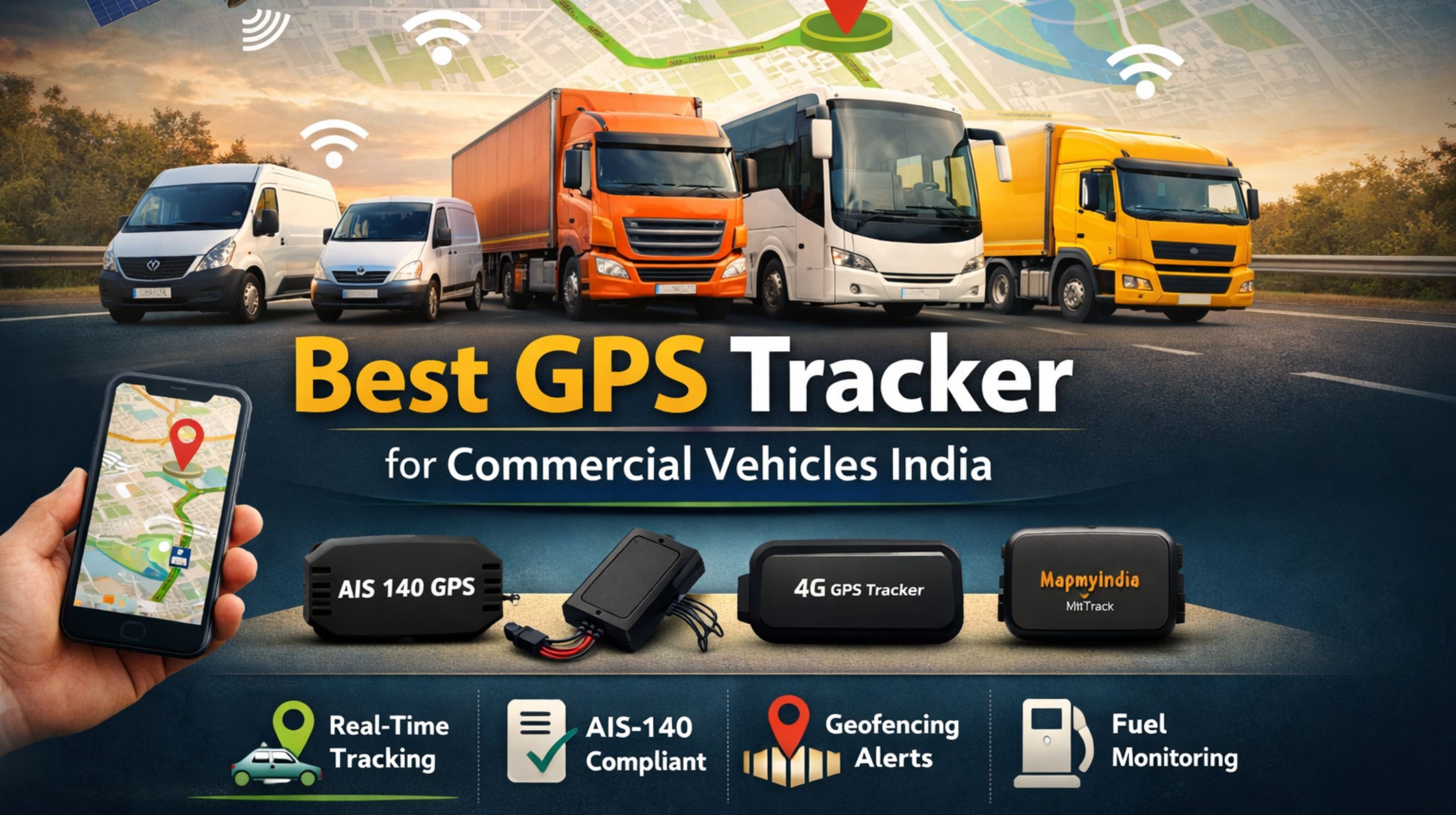
GPS Tracker Failure for Commercial Vehicles in India
Finding the best GPS tracker for commercial vehicles in India? It's less about the shiny features list and more about avoiding the signal blackouts and audit mismatches that actually cripple your fleet under real subcontinental conditions.
What "Best" Really Means in Indian Fleet Tracking
Here, "best" really means resilience. It's about a device that doesn't fail during network handovers between Jio, Airtel, and Vi towers. It needs to hold a stable GPRS stream when a truck moves from a Gujarat highway into a Rajasthan dead zone—where so many devices just give up and report an erratic last-known location instead of actual live tracking.
The Reality of Scale and Indian Road Conditions
Scaling beyond 50 vehicles changes everything. That common assumption that a tracker with a 10-second update rate will work? It fails completely. The simultaneous data burst from an entire fleet during a Mumbai depot shift change can overwhelm local cell towers. The result? Delayed geofence alerts for hours, making real-time dispatch impossible just when you need it.
Common Mistakes That Escalate to Total Failure
The biggest misunderstanding is chasing low upfront cost over network redundancy. That leads to a complete loss of visibility the moment a primary SIM fails. We've seen it: fleets with single-SIM modules go offline for days during carrier outages. That creates massive compliance gaps for FASTag and state permit logs, forcing a nightmare of manual reconciliation from paper records.
Decision Boundary: Reconfigure, Replace, or Redesign
The choice gets clear when basic tweaks, like adjusting reporting intervals, don't fix the persistent data gaps on critical routes. If your current devices can't handle dual-network fallback or provide raw, unaltered location logs for audits, then internal fixes won't cut it. You need a platform-level redesign focused on network-agnostic data piping. That's the core principle for any reliable gps controller that works here.
FAQ
q What is the most important feature in a GPS tracker for Indian trucks?
a Network redundancy—dual-SIM support—is non-negotiable. Relying on a single network guarantees signal loss and data blackouts during carrier outages or in remote corridors, which completely breaks your compliance reporting.
q How does tracker choice impact fuel theft detection?
a Low-quality trackers have poor ignition detection. They falsely report the engine is on due to voltage fluctuations, which masks real fuel theft during unauthorized night stops. It renders your fuel performance monitoring data useless for any investigation.
q Can a tracker handle both highway and dense city tracking?
a Most struggle badly. Urban canyons in Delhi or Bangalore cause severe GPS multipath error. Devices without advanced filtering will show vehicles jumping blocks away, which cripples any accurate route optimization and makes ETAs a guess.
q When is it too late to fix an existing tracker system?
a When the mismatch between reported location data and what your ground teams physically verify exceeds 15% consistently. Or when the system simply can't generate the custom, state-specific reports needed for tax audits. At that point, a full replacement cycle is the only path forward.


Comments
Post a Comment