GPS Signal Failure Means Real Fleet Tracking Gaps and Delayed Alerts
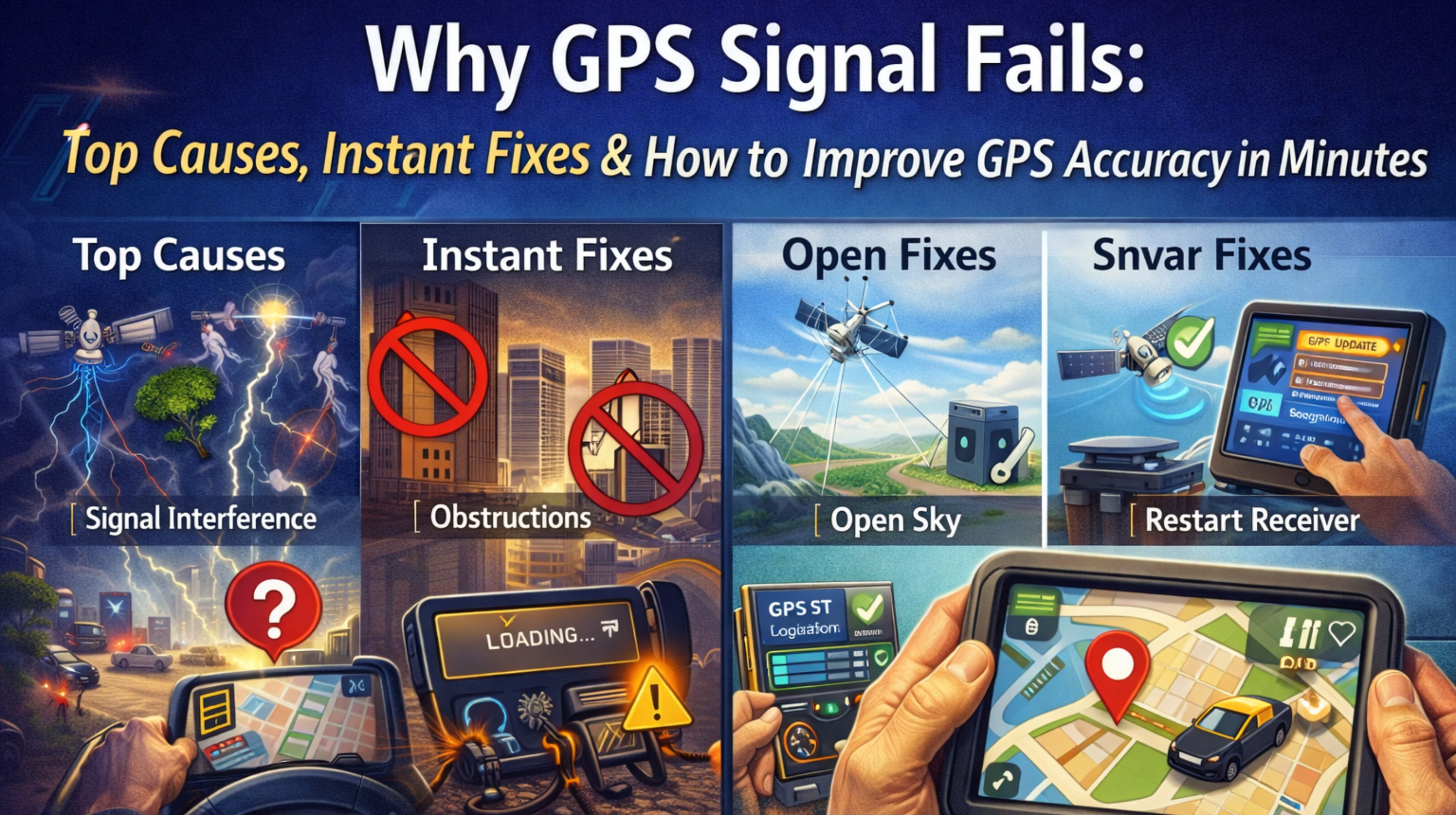
GPS Signal Failure Means Real Fleet Tracking Gaps and Delayed Alerts
A GPS signal failure isn't just a map glitch. It's a live data gap that breaks your real-time vehicle tracking, delays geofence alerts, and creates mismatches in driver logs. What you'll often see is a vehicle showing idle in a yard for hours, but the driver log shows movement—that's a clear sign of signal jitter or a complete dropout your system didn't catch.
What GPS Signal Failure Actually Means for Fleet Operations
In live fleet tracking, signal failure just means lost visibility. You stop getting location pings, which kills live ETA updates, disables theft alerts, and breaks the chain of custody for high-value assets. One non-obvious detail: many devices will cache and then send a burst of stale data when the signal comes back, creating false "movement" in your reports that doesn't line up with actual engine-on events.
The Reality Under Real Vehicle Scale and Network Load
At scale, with 50+ vehicles moving through different terrain, failures start to compound. Urban canyons cause brief dropouts, sure. But a dense fleet concentration in a single depot can also overwhelm local cell tower capacity, causing data transmission delays that look just like GPS failure. A key boundary is when over 30% of your fleet in one area gets consistent reporting lag; that's often a network design limit, not a device issue.
Common Failure Patterns and the Wrong Assumption
The big mistake is assuming all signal loss is from bad hardware. One major failure pattern is misconfigured sleep modes on the tracking devices themselves, where they power down GPS to save battery during perceived inactivity, completely missing the start of a trip. Another common mix-up is blaming "no satellite view," when the real problem is a weak or disconnected cellular antenna—that blocks data transmission even if the GPS chip has a lock.
Decision Help: The Tune, Reconfigure, or Replace Boundary
The clear first step is to audit your device configuration and check cellular network coverage maps. If failures are sporadic and tied to terrain, tuning report intervals or adjusting geofence sensitivity might help. The line where internal fixes stop working is when failures are systematic, start affecting compliance reporting, or happen with outdated device models that lack modern chipset sensitivity. That's when a platform redesign or device replacement, maybe with a modern GPS controller ecosystem, becomes necessary to get reliability back.
FAQ
q: Why does my GPS tracker lose signal in the city?
a: Signal reflection and blockage from tall buildings create urban canyons. Modern devices use GLONASS and cell tower triangulation to help, but brief dropouts are still pretty common.
q: Can a bad GPS antenna cause total failure?
a: Yes, absolutely. A disconnected or damaged antenna is a frequent hardware culprit. The device might power on but just show a constant "searching for signal" state, which cripples IoT asset monitoring.
q: How many vehicles losing signal indicates a system problem?
a: If more than 25-30% of a localized fleet group has consistent gaps, you should look into network congestion or a faulty batch of devices. Isolated incidents are usually just environmental.
q: When should I replace devices instead of troubleshooting?
a: When failures start impacting compliance audits, happen on older hardware (5+ years), or when diagnostic logs point to an irreparable chipset failure. At that point, replacement is usually more cost-effective than ongoing fixes.


Comments
Post a Comment