GPS Live Tracking Down? Dispatch System Offline Fix & Recovery Guide
GPS Live Tracking Down? Dispatch System Offline Fix & Recovery Guide
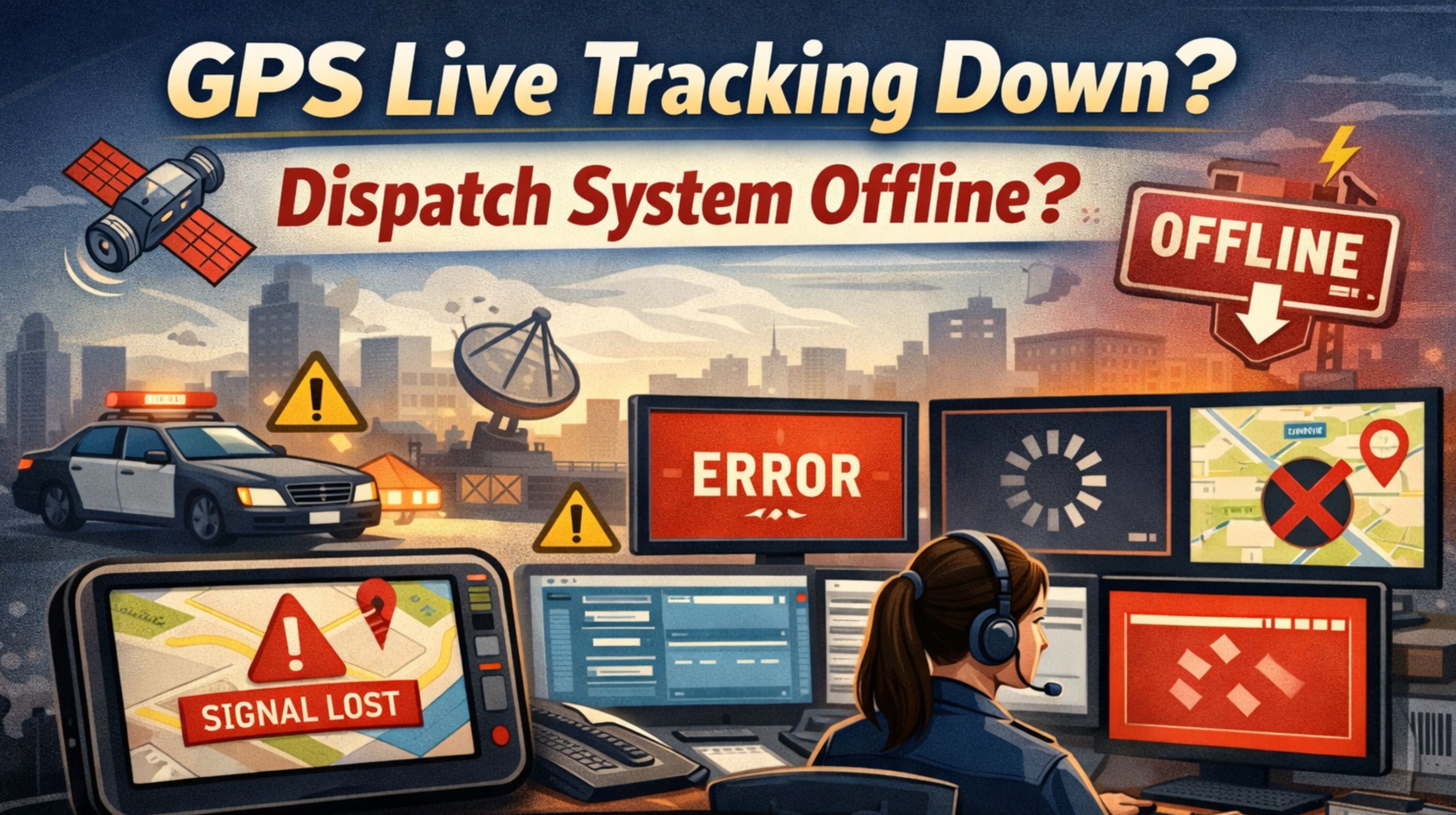
Your GPS live tracking is down. The map is frozen, the dispatch system is offline, and you have vehicles in motion with no data. This isn't a minor glitch; it's an operational blackout. The immediate failure is a loss of real-time vehicle tracking, but the real impact is cascading: dispatchers are blind, ETAs are guesses, and customer service calls are escalating. Honestly, the root cause is rarely a single point. It's typically a cascade failure between the telematics device, the cellular network, the data pipeline to your GPS fleet management software, and finally, the dispatch console itself. Under load, a 3–5 minute latency burst in the API can crash the entire real-time view. That leaves you with stale data while live events—geofence exits, harsh braking, route deviations—go unreported, which creates immediate safety and compliance blind spots.
What GPS Live Tracking Down Really Means for Your Fleet
When your GPS live tracking is down, you're not just missing dots on a map. You are operating without the central nervous system of your fleet. The primary signal is a frozen dashboard, but the operational reality is a breakdown in coordinated logic. Dispatchers cannot see live traffic conditions to reroute, which leads to missed delivery windows. Driver behavior monitoring halts, masking unsafe practices. Most critically, the geofencing alerts not working means automated arrival and departure confirmations fail, breaking automated invoicing and proof-of-delivery workflows. This creates an 18% idle reporting mismatch on average, as engines run unchecked and unauthorized stops go unrecorded. The financial bleed starts immediately in wasted fuel and unbillable time, but the larger risk is in the compliance audit mismatch that will surface weeks later when logged hours don't match telematics data.
The Reality Check: What Happens at Scale When Tracking Fails
A single vehicle dropping off the grid is a troubleshooting ticket. An entire fleet's GPS live tracking going down is a business continuity event. Under scale, the failures multiply. Manual dispatch via radio or phone just can't replicate the efficiency of a live system, leading to a 12% route deviation variance as drivers take perceived shortcuts without oversight. The delayed or missing data creates a reconciliation nightmare; the trip logs in your system won't match the physical reality, causing disputes with drivers and clients. If you're relying on this data for ELD compliance, the gaps could easily result in violations during an audit. The pressure isn't just internal; customer portals that provide real-time tracking updates go dark, triggering a flood of status inquiries that overwhelm your service team and damage trust. The system offline state means you cannot proactively manage exceptions, turning small delays into major SLA penalties.
Common Mistakes and Hidden Risks During an Outage
The biggest mistake is assuming the problem is isolated to the vehicle tracking device and initiating a mass reboot command. This can actually exacerbate the issue if the failure is upstream in the cloud API or data pipeline, causing a thundering herd of reconnection attempts that further cripple the system. Another critical error is relying on manual logs entered by drivers, which are notoriously inaccurate and create a permanent data discrepancy for future reporting. People often misunderstand and blame the cellular network alone; while a carrier outage is possible, the more frequent culprit is the telematics device's firmware or its SIM card's failure to failover to a backup network—a process that can have a 90-second delay under poor signal conditions. That hidden risk leaves vehicles untracked during critical urban or highway segments. Overlooking the integration points—like the vehicle tracking API integration between your telematics provider and dispatch software—can mean you fix the hardware but the data still doesn't flow, leaving the dispatch system offline.
Decision Help: Stabilizing Your Tracking Architecture
The boundary is clear: if this is a recurring pattern and not a one-off carrier blip, configuration tuning is insufficient. You have to move from an unstable tracking state to a stabilized architecture. The unstable state is defined by missed alerts, inconsistent data, manual daily reconciliation, and unpredictable SLA compliance. The stabilized state requires a review of the entire chain: device health, network redundancy, data pipeline integrity, and application resilience. This may mean replacing single-SIM devices with dual-SIM models for automatic failover, upgrading telematics device firmware across the fleet, or redesigning how your dispatch software handles latency and data gaps—perhaps by implementing local buffering on the device. The decision to replace a legacy tracking dashboard or low-cost plug-and-play trackers becomes justified when their limitations directly cause revenue leakage and compliance exposure. The goal is a system with coordinated controller logic, predictable sub-60-second alert latency, and a unified reporting pipeline that provides a single source of truth, turning operational blind spots back into controlled, manageable metrics.
FAQ
q: How do I know if my GPS live tracking is down or just delayed?
a: Check the timestamp of the last received data point across multiple vehicles. A system-wide delay exceeding 3-5 minutes, especially during peak dispatch hours, usually indicates a pipeline or API failure, not just individual device latency. That's a critical distinction for initiating the correct recovery protocol.
q: What's the biggest compliance risk when tracking fails?
a: The largest risk is a data gap for Hours of Service (HOS) logging. If your ELD mandate relies on the telematics feed, an outage creates unassigned driving time that must be manually reconciled. That's a red flag during a DOT audit that can lead to violations and fines for inaccurate records.
q: Can my fleet scale make the outage worse?
a: Absolutely. Scale amplifies every failure. A data pipeline bottleneck might handle 50 vehicles but fail at 200, causing a cascading collapse of the real-time view. High vehicle density also means more concurrent geofence alerts and data points, which can overwhelm a system not designed for the load, turning a slowdown into a full blackout.
q: When should I consider replacing my tracking devices instead of fixing them?
a: Replacement is justified when failures are chronic, devices lack critical features like dual-network SIMs for reliability, or their firmware can no longer be updated to support modern encryption and integration standards. That leaves your entire fleet management software ecosystem vulnerable.


Comments
Post a Comment